
Economy April 7, 2026

Companies in Riyadh Keep Staff Home Ahead of U.S. Deadline on Strait of Hormuz

Western and Saudi firms in major Riyadh business districts extend remote work amid fears of escalation linked to Iran's ultimatum

By Caleb Monroe
Companies in Riyadh Keep Staff Home Ahead of U.S. Deadline on Strait of Hormuz

Several Western and Saudi companies in Riyadh have prolonged work-from-home guidance this week for employees in key business districts, citing safety concerns tied to a looming U.S.-imposed deadline for Iran over the Strait of Hormuz. The advisories affect multiple office hubs that host major U.S. banks, global tech firms and Saudi institutions. Saudi authorities report continued interceptions of Iranian-launched projectiles, while Iranian state-linked media reported an attack on a petrochemical site.

Key Points

  • Several Western and Saudi firms in Riyadh extended work-from-home advisories this week for staff in major business districts - impacting employees in financial and corporate office hubs.
  • Advisories affect offices in King Abdullah Financial District, Faisaliah Tower, Business Gate and Laysen Valley, locations that host major U.S. banks, tech companies and Saudi institutions.
  • Saudi authorities say they intercepted the majority of hundreds of Iranian-launched drones and rockets; officials reported destroying seven ballistic missiles with debris falling near energy facilities.

April 7 - Multiple Western and Saudi firms operating in Riyadh have extended temporary work-from-home advisories this week, according to five people familiar with the matter. The moves come as businesses weigh safety risks tied to a U.S.-imposed deadline for Iran to open the Strait of Hormuz or face what U.S. officials warned would be "hell".

The precautions have been prompted by concern across Gulf states that any U.S. escalation could provoke Iran to strike further at critical and civilian infrastructure in the region. Since the war began on February 28, Gulf countries have borne the brunt of a series of attacks attributed to Iran, and many in the region fear a new phase of retaliatory strikes.

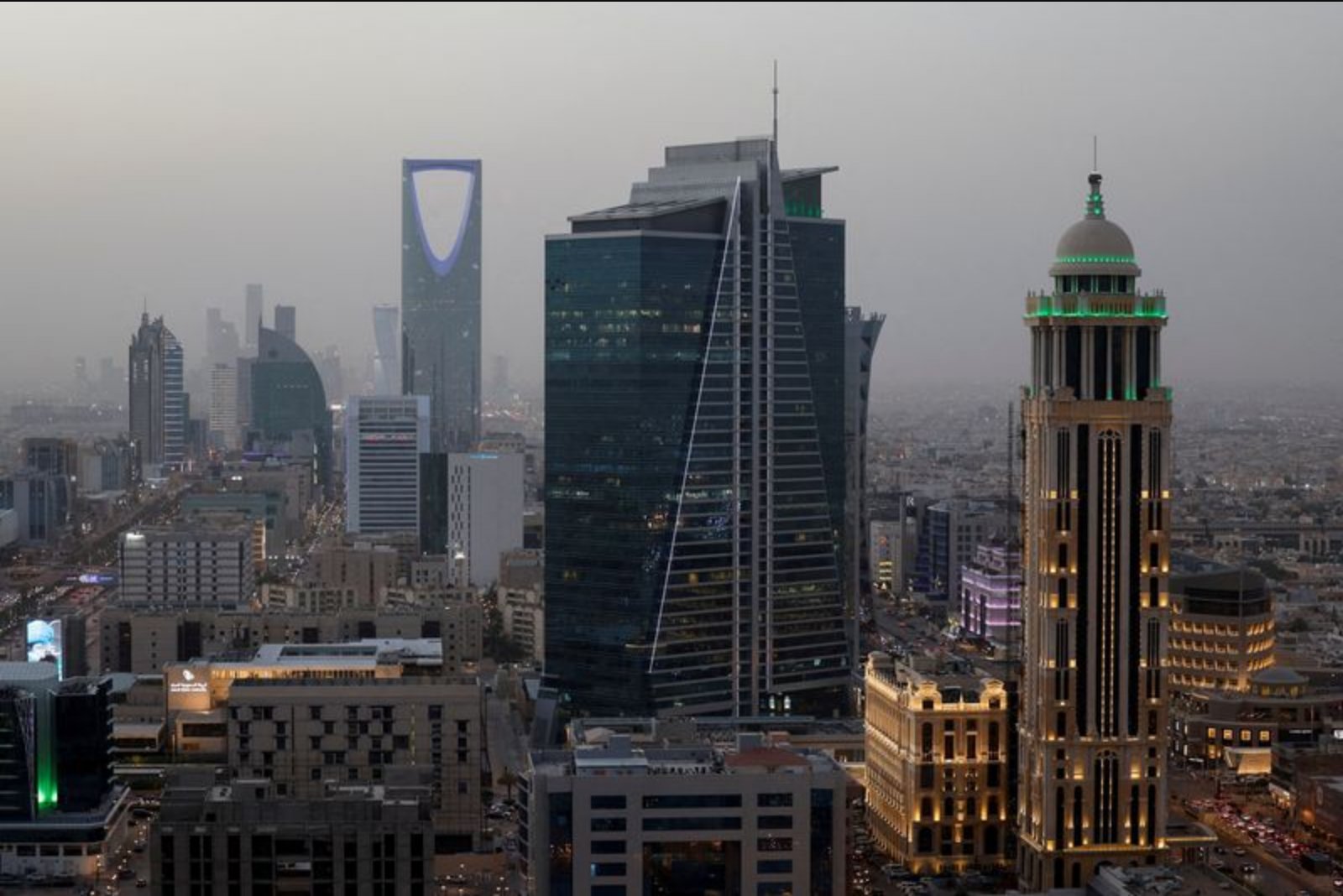
Company advisories, which were sent out on Monday and Tuesday by email or text to staff, cover employees working in several of Riyadh's principal business locations. The affected sites include the King Abdullah Financial District, Faisaliah Tower, Business Gate and Laysen Valley, the people said. Those campuses house offices for major U.S. banks and technology firms such as Microsoft and Apple, in addition to Saudi entities including the sovereign wealth fund.

Employees had been initially directed to work from home at the start of last week, the people added. That earlier guidance followed Iranian threats to target major U.S. technology firms in the region, which Tehran said would be in response to U.S.-Israeli attacks and assassinations.

Requests for comment to the Saudi government media office were not immediately answered.

Saudi Arabia has reported enduring hundreds of drone and rocket attacks since the conflict commenced, but officials say most inbound threats have been intercepted. Compared with some neighboring states, Saudi authorities state the kingdom has been less directly affected than others such as the United Arab Emirates and Kuwait.

On Tuesday, Saudi officials said they intercepted and destroyed seven ballistic missiles that had been launched toward the kingdom's Eastern Region, with debris reported to have fallen near energy facilities. Separately, Iran's semi-official Fars news agency reported that a petrochemical complex in Saudi Arabia's Jubail industrial city was attacked.

Risks

  • Heightened military escalation tied to the U.S. deadline for Iran could increase threats to critical and civilian infrastructure in the Gulf - risk to energy and industrial sites.
  • Continued targeting of office hubs and corporate campuses may disrupt operations for financial services and multinational technology firms with regional offices in Riyadh.
  • Uncertainty over retaliatory strikes and missile debris near energy facilities raises potential operational and security risks for energy production and petrochemical complexes.

More from Economy

U.S. Futures Slip as Middle East Tensions and Energy Risks Weigh on Markets Apr 7, 2026 Russian Urals Crude Climbs to 13-Year High as Iran-Linked Rally Lifts Prices Apr 7, 2026 Poland re-enters dollar bond market with three-part dollar offering Apr 7, 2026 India Maintains FY27 Deficit Target for Now, Considers Spending Cuts While Protecting Infrastructure Outlays Apr 7, 2026 Australia and China Step Up Energy Dialogue as Iran Conflict Pressures Markets Apr 7, 2026