
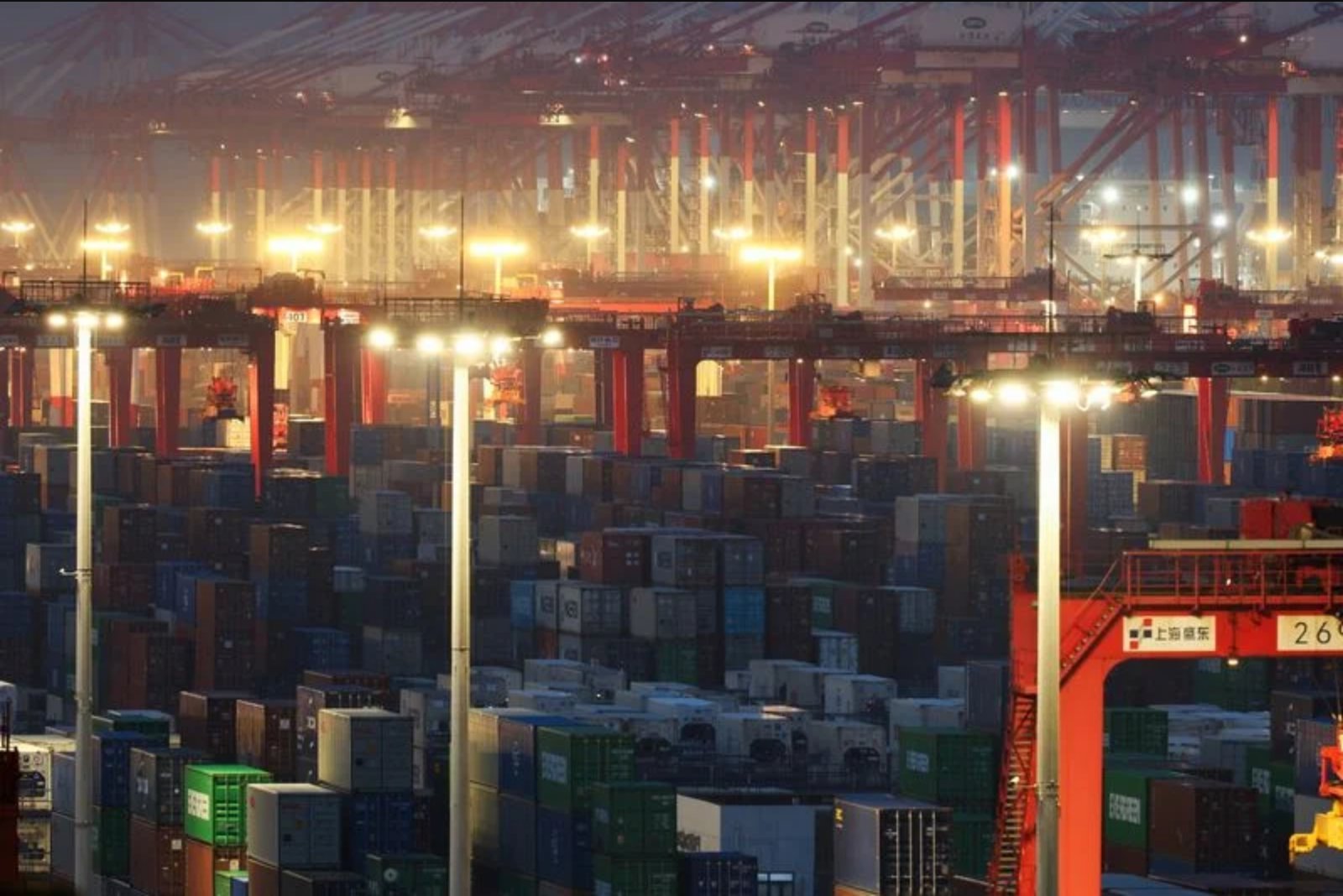
Data released on Tuesday indicates that China's export sector experienced a sharp acceleration in May. The 19.4% increase in U.S. dollar-denominated exports represents a significant jump from the 14.1% growth seen in April, outperforming the 15% gain that economists had predicted.
This momentum appears to be driven by tactical shifts in global procurement and specific high-growth technology sectors. Overseas buyers have been front-loading orders to get ahead of potential energy cost increases stemming from the Gulf war conflict. Additionally, a consistent appetite for AI hardware and semiconductors has provided a secondary pillar of support for shipment volumes.
Import figures also demonstrated strength, with a 27.4% increase compared to the previous year, rising above April's 25.3% growth rate and beating the forecasted 25% mark. Consequently, China's trade surplus expanded to $105.43 billion in May, up from $84.8 billion in the preceding month and surpassing the anticipated $92.1 billion.
Key Economic Drivers and Market Impacts
The recent trade data highlights several critical drivers currently influencing China's macroeconomic landscape:
- Technology and AI Hardware: The sustained demand for semiconductors and hardware related to artificial intelligence serves as a major catalyst for export growth, impacting the technology manufacturing sectors.
- Strategic Stockpiling: Front-loading by international buyers to hedge against energy costs linked to Middle East conflicts has provided a temporary boost to trade volumes, benefiting the shipping and logistics industries.
- Trade Surplus Expansion: The widening surplus reflects China's position as a dominant global manufacturer, which impacts global manufacturing structures and capital flows.
Risks and Economic Uncertainties
Despite the strong May figures, several underlying vulnerabilities remain that could impact various market sectors:
- Fading Front-loading Momentum: While exports were strong, separate factory activity data for May revealed a sharp decline in new export orders from the two-year peak seen in April. This suggests that the current wave of stockpiling by foreign factories may be reaching its limit as buyers wait for potential ceasefires and begin to draw down existing inventories.
- Domestic Demand Fragility: While exports helped push China's $20 trillion economy past initial first-quarter forecasts, a slowdown in momentum has raised concerns regarding weak domestic demand. This leaves the economy vulnerable to shifts in global conditions and may necessitate further policy interventions.
- International Trade Pressures and Overcapacity: There is increasing international scrutiny regarding China's trade model. The OECD noted that nearly 60% of market share gains for Chinese firms could be attributed to subsidies. Furthermore, a U.S. Federal Reserve paper indicated that China's trade surplus relative to global GDP has exceeded 1%, suggesting industrial overcapacity that could reshape global manufacturing and create tension with other emerging economies.
- Geopolitical Tensions: Although recent high-level meetings between U.S. and Chinese leadership helped reduce immediate tensions, no major breakthroughs were achieved regarding tariff disputes or cooperation on the Iran conflict, maintaining an atmosphere of uncertainty for international trade.