
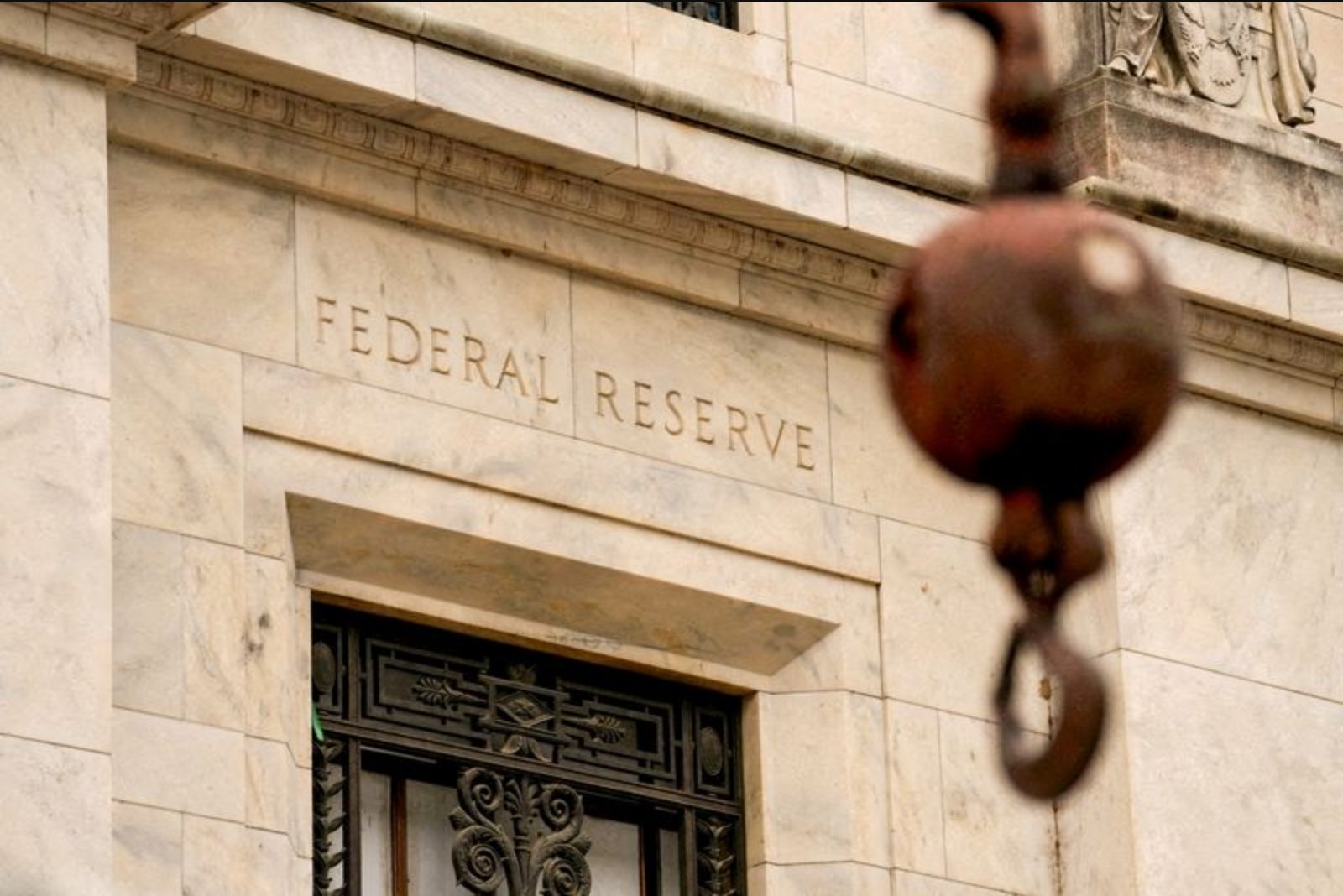
Market expectations for Federal Reserve policy have shifted since an agreement for a two-week ceasefire in the Iran conflict lowered the immediate risk of a renewed inflation surge. Traders on Wednesday reevaluated the potential for future interest-rate moves as they weighed the implications of a durable settlement in the Middle East and the possible reopening of the Strait of Hormuz to commercial shipping.
Despite the reduced near-term inflation risk, uncertainty remains. Oil prices are still about 30% higher than before the outbreak of hostilities, and recent episodes of violence - including Israeli airstrikes on Lebanon and an Iranian strike on a Saudi Arabian oil pipeline - underscored the fragile nature of the truce. Those incidents, together with minutes from the Fed's March meeting, reinforced that policymakers are not prepared to assume an uncomplicated path toward easier policy.
The Fed's March minutes indicated some officials felt it was important to signal that rate hikes remain an option if inflation does not retreat. Officials have also said that a temporary uptick in headline inflation would not by itself justify moving short-term interest rates. But the minutes also reflected the tradeoff officials face: a prolonged conflict that keeps prices elevated could compel the Fed to choose between sustaining higher rates to fight inflation and lowering rates to support the economy and household finances.
Traders appear to be splitting the difference. Interest-rate futures currently imply roughly a one-in-four probability of a cut in U.S. interest rates by the end of the year. That probability has fallen from about 65% immediately after the ceasefire was announced, but it represents a material shift from the period before the truce, when market-implied odds had moved to include some chance of a Fed hike.
Market strategists highlighted the change. "With conditions much less likely to pressure the Fed to hike this year, we think the market should be pricing in closer to one full cut in the U.S.," wrote Krishna Guha of Evercore ISI.
The ceasefire also altered expectations for other major central banks. Traders scaled back prior wagers that the European Central Bank and the Bank of England would deliver multiple rate increases in the near term following the reduction in perceived geopolitical inflation risk.
Beyond market pricing, the policy outlook hinges on incoming economic data. Data due later in the week were expected to show consumer prices rose in March at a pace not seen since the 2022 peak of the post-pandemic inflation surge that prompted aggressive Fed tightening. Fed officials have emphasized that a temporary headline inflation spike would not, on its own, call for a change in short-term policy settings.
San Francisco Fed President Mary Daly, speaking to the St. George Area Chamber of Commerce in Utah, stressed the uncertainty facing policymakers. She said it is too early to determine how the Iran war and higher oil prices will influence the U.S. economy, noting the outcome depends on the conflict's duration. "There’s a concern that maybe this will push inflation up: that’s our job, we’ll focus on that," she said. "And there’s a concern that maybe the labor market isn’t as solid, but we’re not seeing that, we’re seeing it kind of settle at a good place."
Geopolitical developments continue to shape investor behavior. With a U.S. delegation scheduled to travel to Pakistan for peace talks this weekend, traders were hedging positions to reflect both the potential for further de-escalation and the risk of renewed disruption. The recent attacks and the fragile truce mean that a definitive move toward easier policy is not guaranteed.
Context for markets
The ceasefire reduced the immediate risk of an inflation resurgence that could have pressured central banks toward further tightening. Nevertheless, oil prices remaining roughly 30% above prewar levels, recent regional attacks and the Fed's internal discussions about retaining optionality on hikes keep policy outcomes uncertain. Markets have adjusted quickly to these shifting signals, pricing a lower, but not negligible, chance of easing by year-end.