
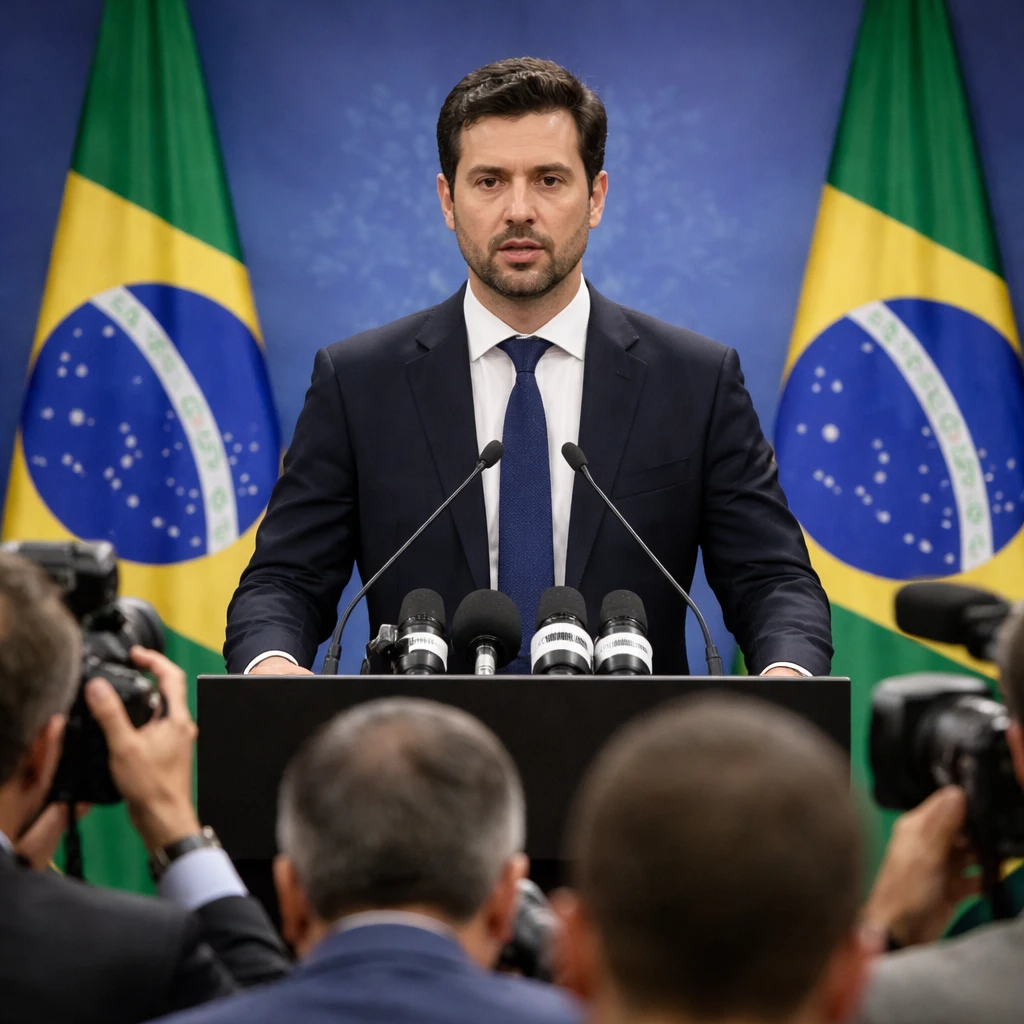
Brazil will mount a vigorous defense against a proposed U.S. tariff that would impose a 25% levy on many Brazilian imports, Finance Minister Dario Durigan said Monday. The minister said Brasília will present its most persuasive arguments to oppose the measure and voiced hope that it will ultimately not be put into effect.
Durigan said President Lula may reach out directly to President Trump, either through a letter or a phone call, to address the tariff matter. He also said he is available to hold talks with U.S. Treasury Secretary Scott Bessent, and noted that Trade Minister Marcio Rosa is maintaining contact with U.S. Trade Representative Jamieson Greer.
"We will defend the country to the end," Durigan said.
The finance minister used the same appearance to comment on several domestic economic concerns that are influencing policy decisions. He pointed to low household savings and volatility in the exchange rate as among the factors affecting Brazil's monetary policy stance.
Durigan emphasized the fiscal dimension of creating space for investment, saying it is important to rein in the growth of mandatory expenditures so resources can be freed for investment priorities. He reiterated that the government does not intend to alter the existing inflation target, while observing that there is scope for better coordination between the economic team and the central bank on a number of issues.
Context and government actions
The minister outlined a multi-pronged approach: legal and diplomatic challenges to the tariff proposal, potential direct presidential communication with the U.S. president, and bilateral ministerial engagement with U.S. economic officials. Durigan framed these steps as part of a concerted defense of Brazil's economic interests.
Domestic policy priorities
- Addressing low savings levels and exchange-rate volatility as factors influencing monetary policy.
- Containing growth in mandatory spending to create fiscal room for investment.
- Maintaining the current inflation target while seeking improved coordination with the central bank.
Durigan's comments outlined both the external challenge posed by the proposed U.S. tariff and internal constraints shaping Brazil's economic policy choices.