
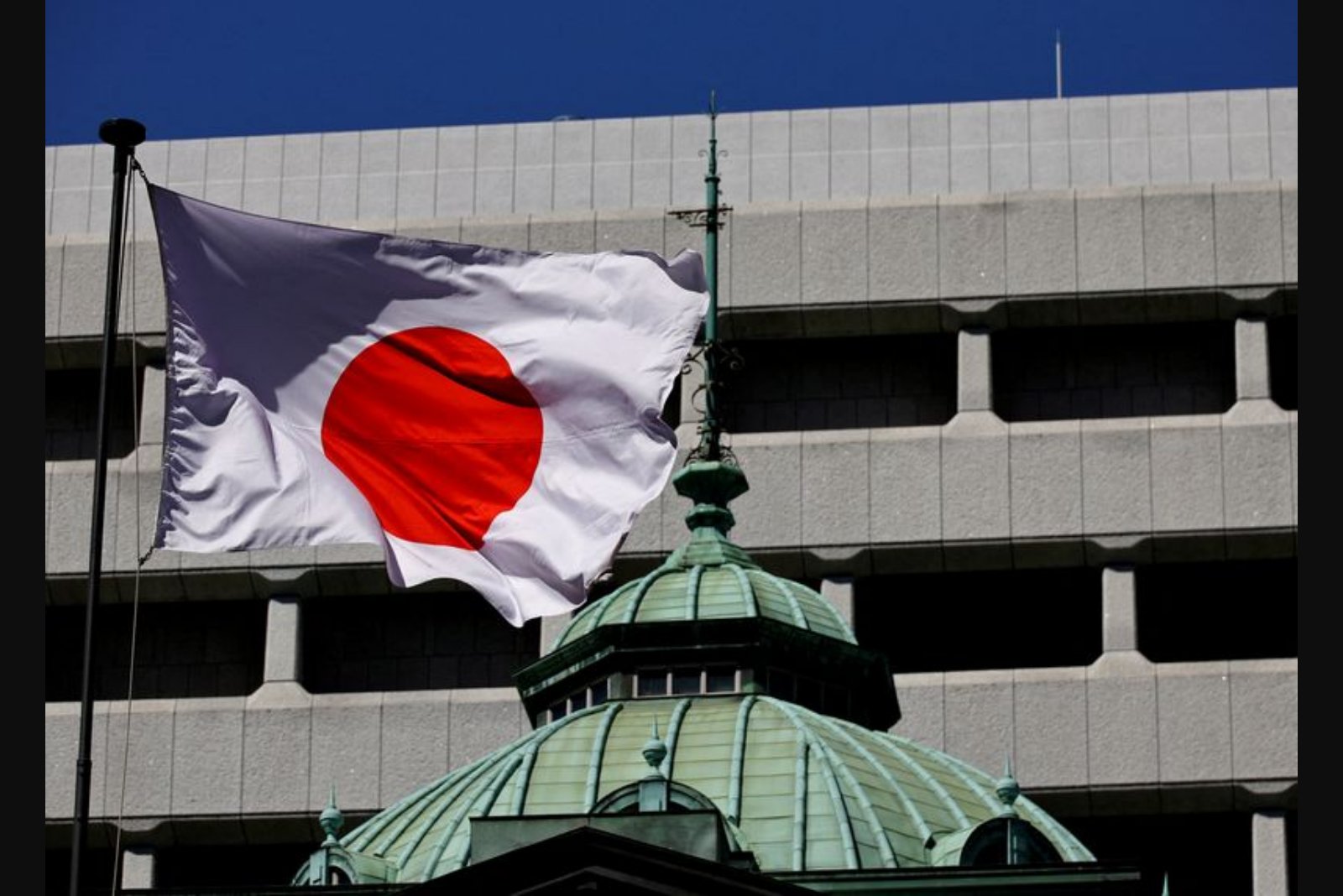
Bank of Japan Governor Kazuo Ueda chose not to pre-announce a policy rate increase for April after recent international meetings, citing the need to assess economic fallout from the Iran war. Still, his remarks during visits to IMF, G7 and G20 gatherings contained hawkish elements that leave a rate hike possible in June - if not at the April 27-28 policy review.
Ueda’s statements drew close attention because they were the last scheduled opportunity before the BOJ’s April meeting to provide forward guidance. Markets reacted mainly to what the governor did not say, trimming prospects for an April tightening sharply. Yet several lines in his public comments suggested policymakers are keeping near-term rate options open.
That ambivalence reflects a broader caution inside the BOJ. Three individuals familiar with the central bank’s deliberations told sources that officials are likely to stall until the final moments ahead of the April meeting, allowing the evolution of U.S.-Iran negotiations and their market consequences to inform the decision. "With so much uncertainty, it’s too early to decide now what to do at a policy meeting more than a week away," one source said, a view others echoed.
During the Washington trip, Ueda encountered pressure to adopt a more passive stance similar to other major central banks navigating heightened volatility from the conflict. Finance Minister Satsuki Katayama, who accompanied officials to Washington and who is viewed as aligned with the dovish prime minister, explicitly said many European and U.S. central banks appeared to be taking a wait-and-see approach, a remark that some market participants interpreted as a critique of efforts to pursue rate increases.
The International Monetary Fund also advised against rushing into policy tightening. The IMF indicated it expected limited second-round effects from the war on broader price growth, suggesting the BOJ could allow time to see through any temporary inflation impulses emanating from the region.
When Ueda addressed reporters, he framed the BOJ’s forthcoming choice as conditional on both the probability that its projections will materialise and the balance of risks. That formulation marked a change from previous episodes when the governor had offered clearer advance signals that the bank would consider or debate a rate rise. "Our decision will be based on the likelihood of our projections materialising, as well as the risks," he said.
Markets responded quickly to the absence of explicit language indicating an April hike. Probability estimates of a rate move in late April fell steeply, though those for a June increase remained substantial. Mari Iwashita, an executive rates strategist and experienced BOJ watcher, noted that the omission of the phrase "rate hike" from Ueda’s remarks was interpreted by market participants as a signal that rates are likely to stay on hold this month.
Even so, several hawkish cues contained in Ueda’s comments drew less attention but are central to understanding why a tightening remains plausible soon. Ueda emphasised that any negative growth impact from the Middle East conflict needs to be considered alongside robust corporate profits and a fiscal stimulus boost from government measures. He also argued that Japan’s circumstances differ from those of many peers because real interest rates in Japan remain deeply negative, keeping overall financial conditions comparatively accommodative.
Those observations bolster the argument for advancing policy normalization. The BOJ’s policy rate currently sits at 0.75 percent, a level that remains beneath what many consider neutral for the economy. With inflation running around 2 percent, prolonged negative real borrowing costs risk pushing the economy into overheating. Delaying increases could also allow further yen depreciation, which would raise import prices and contribute to broader inflation pressures; the currency is close to slipping below the 160-per-dollar threshold that has prompted intervention in the past.
Market pricing reflects those dynamics. While the probability of an April hike dropped to roughly 10 percent from earlier highs near 70 percent, traders assigned about an 80 percent chance that the BOJ would raise rates by June. Some strategists argued that if not in April, the bank would likely act by June or July at the latest.
Yet the decision is not predetermined. A minority of analysts still see an April possibility. Ryutaro Kono, chief Japan economist at BNP Paribas, said the governor probably had not decided on an April move and would watch U.S.-Iran talks and market reactions up to the meeting. He added that if ceasefire talks produced a marked easing of risks, a prompt April hike could not be ruled out.
Underlying the debate are competing influences visible in Ueda’s remarks: the potential for short-term shock to growth from geopolitical conflict on one hand, and persistent domestic drivers - modestly elevated inflation, solid corporate earnings and government stimulus - on the other. With those forces in tension, BOJ policymakers appear prepared to delay judgment until incoming developments clarify the outlook.
Summary
Governor Kazuo Ueda left the door open to a rate increase after IMF and related meetings, but refrained from promising an April move because of uncertainty over the Iran war and its economic effects. Markets curtailed expectations for April, though an increase by June is widely anticipated given low real rates, inflation near 2 percent, corporate profits and fiscal stimulus.
- Key points
- BOJ left both April and June options on the table, with officials likely to decide close to the April 27-28 meeting based on U.S.-Iran developments and market responses.
- Policy rate of 0.75% remains below neutral and real rates are deeply negative, supporting arguments for further rate hikes to avoid overheating and to prevent excessive yen weakness.
- Markets dramatically reduced April hike bets but still price roughly an 80% chance of a rate increase by June.
- Risks and uncertainties
- Escalation or de-escalation of the Iran war will materially affect growth prospects and market volatility, influencing the BOJ’s timing - impacting FX and bond markets.
- Market reaction to geopolitical developments could prompt last-minute changes to BOJ policy plans at the April meeting - affecting short-term rates and financial sector funding costs.
- The IMF’s assessment that second-round inflationary effects will be limited introduces uncertainty about the urgency of tightening - relevant for inflation-sensitive sectors and importers facing currency moves.
Tags: BOJ, Japan, inflation, rates, FX