
Economy April 12, 2026 11:00 PM

Bank of Korea nominee says authorities would act if won weakens excessively

Shin Hyun-song signals close monitoring of FX markets and flags Middle East conflict as key inflation risk ahead of confirmation hearing

By Ajmal Hussain
Bank of Korea nominee says authorities would act if won weakens excessively

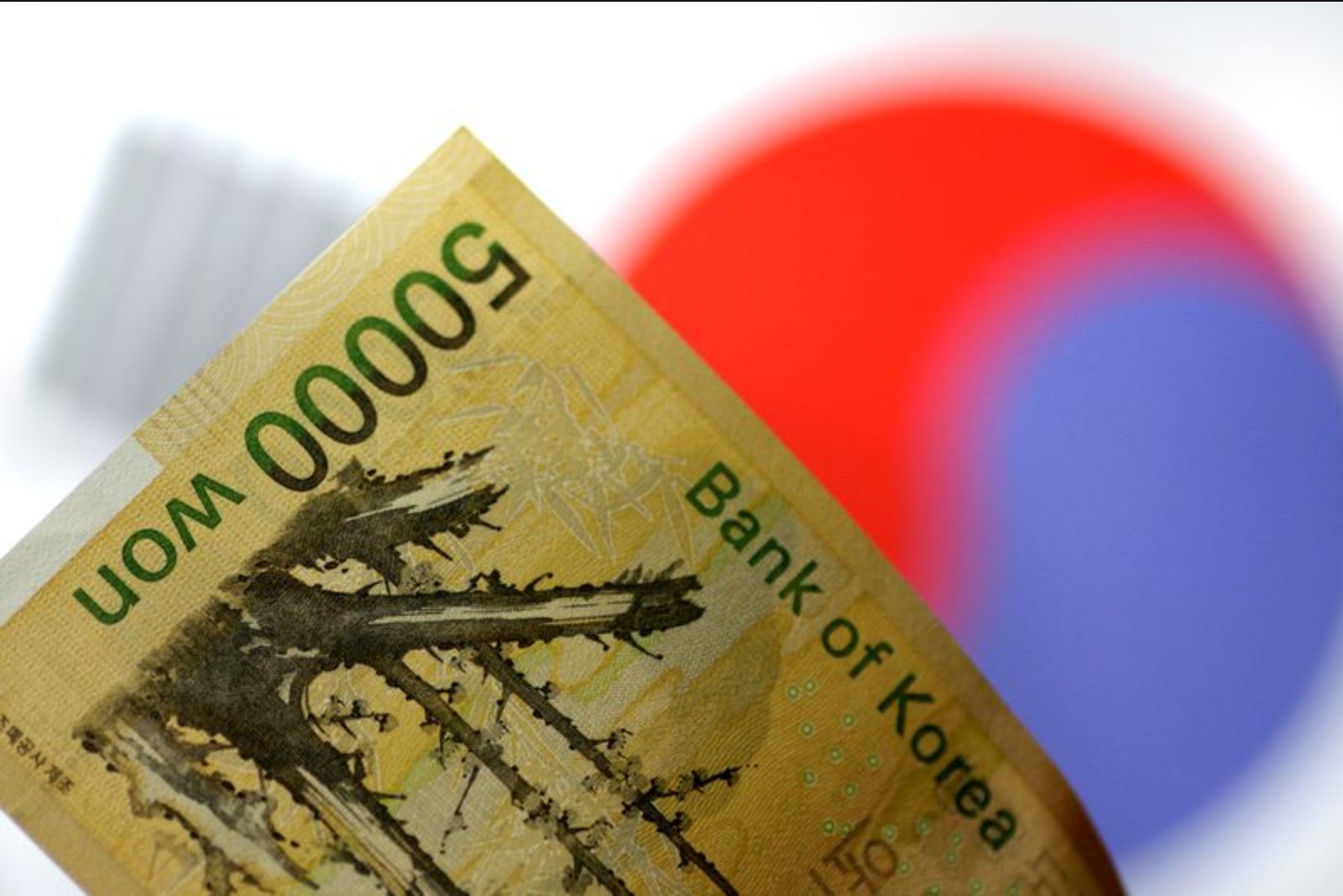
The Bank of Korea's governor nominee, Shin Hyun-song, told parliament in written remarks that authorities would respond appropriately should the won weaken excessively. He emphasized close monitoring of foreign exchange conditions, noted stable liquidity, and said inflationary pressure from the Middle East conflict will factor into future policy choices. He also cited strong semiconductor exports and an extra budget as partial offsets to growth headwinds.

Key Points

  • Shin Hyun-song, nominee for Bank of Korea governor, pledged to act if the won weakens excessively and to closely monitor foreign exchange market conditions.
  • The won fell as much as 1.1% to 1,499.7 per dollar on Monday after talks between the U.S. and Iran failed to reach a deal, and Shin said he would consider inflationary pressure from the Middle East conflict in future policy decisions.
  • Downward growth pressure is being partly mitigated by strong semiconductor exports and an extra budget; the central bank last week left its policy rate unchanged while warning of a highly uncertain path and adjusting growth and inflation projections.

SEOUL, April 13 - The nominee for governor of the Bank of Korea, Shin Hyun-song, said in written remarks submitted to parliament on Monday that a measured response would be required if the won depreciated excessively. His statement was provided ahead of a parliamentary confirmation hearing scheduled for Wednesday.

"Although dollar-won exchange rates recently fell slightly to the 1,480 level, their increases since the Middle East war had been bigger than other currencies and uncertainty is still high, so we will closely monitor foreign exchange market conditions," Shin said.

The won weakened on Monday by as much as 1.1% to 1,499.7 per dollar, following weekend talks between the U.S. and Iran that failed to produce an agreement to end the war. Shin noted that, given currently stable liquidity conditions, the level of the dollar-won rate itself did not merit undue concern. He declined to provide a specific outlook for exchange rates when asked by a lawmaker.

On monetary policy, Shin said that any heightened inflation pressure stemming from the Middle East conflict would be a primary consideration in upcoming policy decisions, according to a report by the Yonhap News Agency.

Addressing economic growth, Shin said downside pressure on growth is being partially offset by robust semiconductor exports and the effect of an extra budget.

Last week, the central bank kept its policy interest rate unchanged and warned that the path ahead is highly uncertain, while flagging a downgrade to its growth forecasts and upward revisions to inflation projections.


Contextual note - Shin submitted written comments on Monday ahead of a confirmation hearing set for Wednesday; he highlighted foreign exchange monitoring, inflation risks from the Middle East conflict, and supportive factors for growth including semiconductor exports and an extra budget. The central bank's recent decision to maintain its policy rate and to signal uncertainty in its outlook was also referenced.

Risks

  • Elevated exchange rate uncertainty linked to the Middle East conflict could pressure exporters and importers - affecting trade-sensitive sectors such as semiconductors and manufacturing.
  • Rising inflationary pressure from geopolitical developments may constrain monetary policy flexibility and influence interest-rate decisions - impacting borrowing costs across the economy.
  • A downgraded growth outlook combined with higher inflation projections creates uncertainty for investment and fiscal planning - relevant to both public finance and corporate capital expenditure.

More from Economy

Italian Bonds Come Under Renewed Pressure as Energy and Political Strains Intensify Apr 13, 2026 Oil Tops $100 as U.S. Moves to Block Iranian Ports; Markets Reprice Risk Apr 13, 2026 Iran conflict tightens BOJ’s window for a near-term rate rise Apr 12, 2026 Diplomatic Channels Stay Open After Deadlocked Islamabad Talks Apr 12, 2026 Djibouti's President Secures Sixth Term with 97.8% of Vote, State Broadcaster Reports Apr 12, 2026