
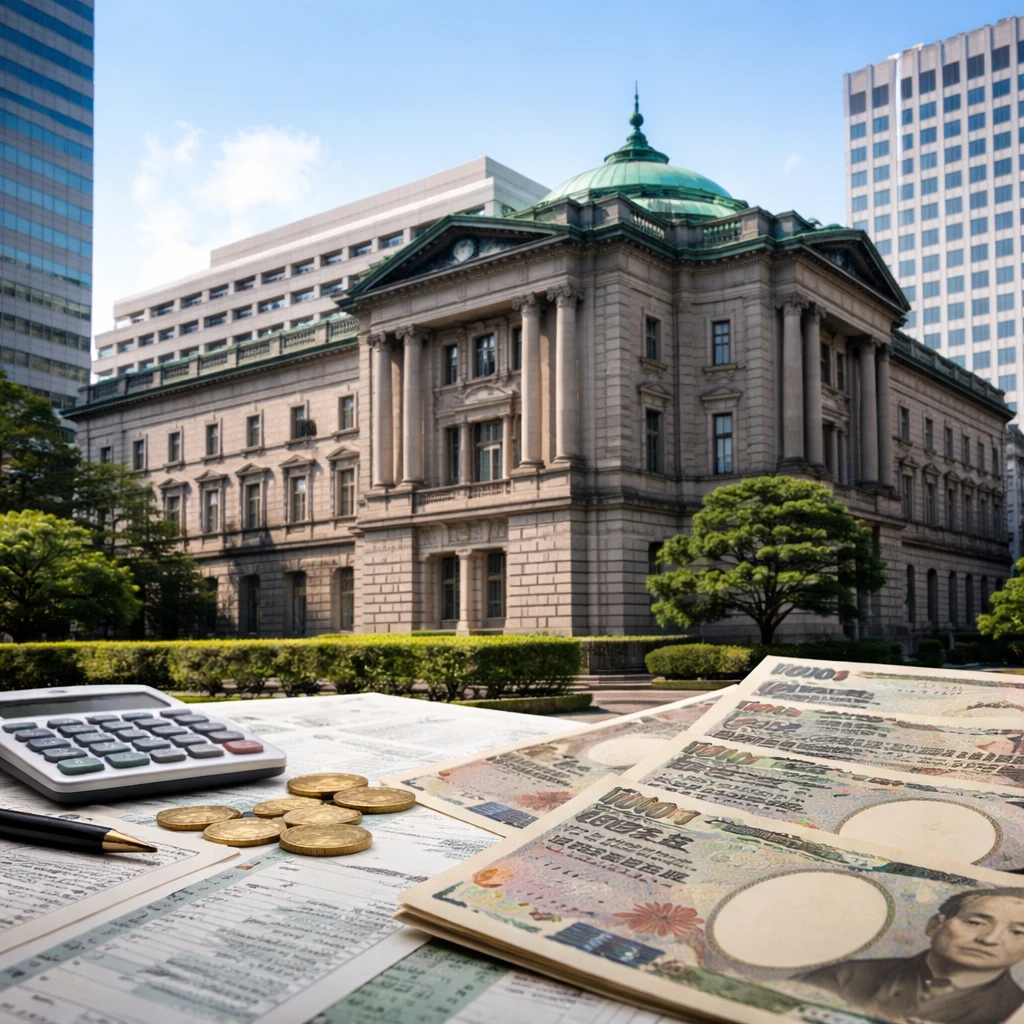
On January 23, the Bank of Japan (BOJ) decided to keep its short-term interest rate steady at 0.75%, reflecting a widely anticipated move supported by an 8-1 vote among policymakers. Alongside the decision, the BOJ upgraded its economic growth and inflation forecasts, signaling a preparedness to incrementally raise already low borrowing costs in the future.
Hirofumi Suzuki, Chief FX Strategist at SMBC in Tokyo, noted that after the recent rate hike last month and a reduction in some global economic risks, the BOJ is currently in a ‘wait-and-see’ period to evaluate the effects of its previous monetary adjustments. He emphasized that during Governor Ueda’s forthcoming press conference, attention would focus on the BOJ’s position concerning the weakening yen and the recent uptick in Japanese government bond (JGB) yields. Suzuki expects a measured and cautious tone, with indications that the BOJ is ready to coordinate with the government if bond market developments require intervention. He projected that the BOJ may proceed with rate hikes at a slow pace, possibly spaced out by six months to a year, contingent on incoming growth and inflation data.
Fred Neumann, Chief Asia Economist at HSBC in Hong Kong, characterized the BOJ's decision to hold rates post-December hike as expected, but pointed out that the bank’s updated forecasts reflect a shift towards a slightly more hawkish stance. He highlighted the revision upward of growth projections for the year ahead and subtle upward adjustments in inflation expectations over the next couple of years. Neumann suggested that Governor Ueda's press conference will attract significant scrutiny as investors seek clarity on the future policy rate path amid ongoing pressures from bond markets and the exchange rate. He noted the presence of one dissenter on the policy board during the meeting who supported further rate increases, indicating that additional hikes remain a possibility.
Kieran Williams, Head of Asia FX at Intouch Capital Markets, London, observed that despite the BOJ’s current policy stance being neutral, underlying hawkish sentiment persists. This was demonstrated by board member Takata’s dissent advocating a 25 basis point hike and recent data confirming that core consumer price inflation (CPI) remains elevated at 2.9%. Williams pointed out the FY2025 GDP forecast upgrade to 0.9% from 0.7%, alongside relatively stable inflation predictions and a lack of further bond purchases amid recent bond market volatility, suggesting a tilt towards eventual normalization of monetary policy. However, he expected Governor Ueda to maintain a cautious tone during his statements, mindful of heightened sensitivities around inflation and yen movement ahead of upcoming elections.
Senior Economist Yusuke Koshiyama from Mizuho Research & Technologies in Tokyo remarked that the overall outcome of the meeting was unchanged aside from the singular dissenting voice of Takata. He noted that previous statements from Takata and board member Tamura indicated some hawkish sentiment about inflation targets being achieved earlier than expected. However, since Tamura did not support a rate increase this time, it suggests a belief that the BOJ is not currently at risk of falling behind in its monetary policy response to yen depreciation. Koshiyama also pointed out that the inflation forecast’s lower bound has increased compared to the last report, meaning the BOJ might be open to rate hikes sooner than before, although the precise timing remains uncertain.
Currency Strategist Carol Kong from Commonwealth Bank of Australia, Sydney, interpreted the BOJ's recognition of significantly low real interest rates and raised projections for growth and underlying inflation as affirmations of the bank’s ongoing tightening agenda. She emphasized market interest in whether Governor Ueda might hint at an earlier rate hike in response to recent yen depreciation, as well as the necessity for potential bond market interventions following sharp JGB sell-offs.
Economist Kazutaka Maeda of the Meiji Yasuda Research Institute in Tokyo expressed that current political uncertainties related to elections complicate any swift BOJ policy shifts. He suggested that if the yen’s exchange rate were to fall well beyond 160 per dollar, the BOJ would have limited options but to act, prefacing that currency intervention would likely be the first step. Maeda noted that ongoing yen weakening could gradually lead to increased political acceptance of earlier-than-expected rate hikes. Regarding rising bond yields driven by political factors, he argued that it would be challenging for the BOJ to significantly increase JGB purchases without contradicting the broader policy objective of normalization.
Tohru Sasaki, Chief Strategist at Fukuoka Financial Group and a former BOJ official, interpreted the updated inflation focus as indicative that the bank intends to continue raising policy rates. He underscored that core inflation is forecasted to remain above 2%, shifting attention from risks associated with the lower bound of neutral rates towards considerations of an upper band. Sasaki anticipated that if Governor Ueda adopts a hawkish tone on inflation during the press conference, it may bolster the yen's strength. He holds the expectation of a rate increase as early as April. Sasaki also forecasted that the dollar-yen exchange rate could climb higher, around 160, at which point it would serve as justification for both the government and BOJ to raise rates. He cautioned that aggressive BOJ bond purchasing would weigh negatively on the yen, so he expects Governor Ueda to maintain a consistent message regarding JGB purchases.
Moh Siong Sim, FX Strategist at OCBC in Singapore, noted market anticipation for a more hawkish BOJ posture in light of yen weakness, but observed that the bank maintained a consistent rhetoric, resulting in a generally neutral market reaction. Sim remarked that while the market hoped yen depreciation would provoke a firmer BOJ response, the yen’s growing political unpopularity has led the government to adopt more verbal interventions aimed at restraining its decline.
The BOJ’s decision to maintain rates while updating forecasts reflects a careful approach in balancing economic momentum and inflationary pressures against market and political sensitivities. The prospect of future gradual rate hikes remains open, contingent on evolving economic data and currency market developments in the lead-up to Japan’s elections.