
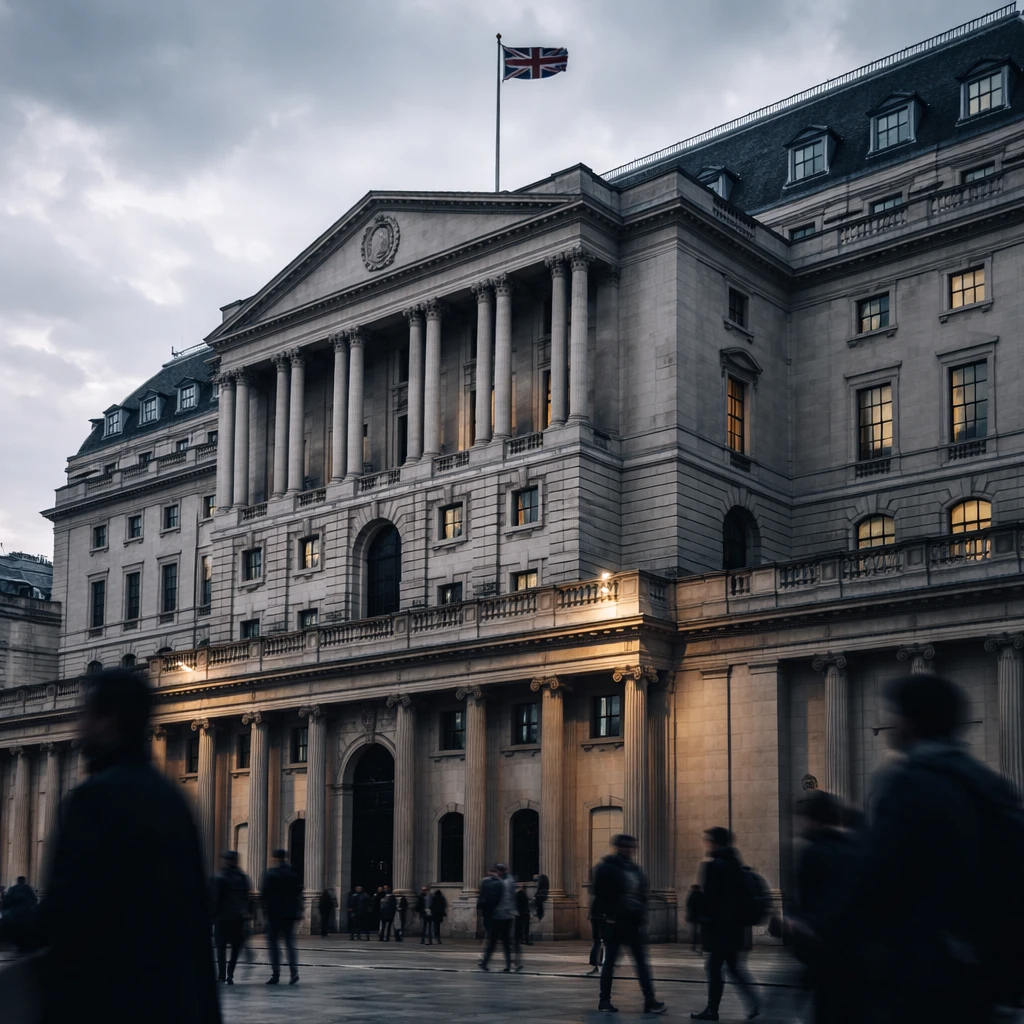
The Bank of England held its Bank Rate at 3.75% at its first policy-setting meeting of the new year earlier Thursday, choosing to pause after a prior cut in December amid inflation that remains well above the central bank's 2% objective.
Policymakers on the nine-member Monetary Policy Committee were narrowly divided. Five members voted to keep the Bank Rate unchanged, while four preferred a reduction. The decision follows a 25 basis point cut in December when the committee likewise produced a 5-4 split in favour of cutting rather than holding rates.
Officials signalled a cautious approach driven by ongoing concerns about inflation. Headline inflation was running above 3% in December, recorded at 3.4%, a level that contributed to the committee's decision to maintain a more guarded policy stance even as other economic signals soften.
Analysts at ING highlighted the domestic labour market's fraying edges, noting weak hiring conditions and rapidly slowing pay growth. Those developments weighed against headline price pressures and informed the committee's reluctance to move decisively toward further loosening at this meeting.
Looking ahead, UBS projects two Bank Rate cuts this year, pencilling in reductions in March and June, and cautions that risks are skewed toward additional cuts beyond that view. The Swiss bank also expects the Bank of England's updated projections to show consumer prices returning to the 2% target by the end of 2026.
The outcome underscores a central bank balancing act: containing still-elevated inflation while monitoring weakening labour-market indicators. The narrow vote margins at consecutive meetings reflect the committee's divided assessment of the trade-offs facing policy makers.
Context and committee votes
- The Bank Rate remains at 3.75% after the first meeting of the year.
- Five out of nine MPC members voted to hold rates; four voted for a cut.
- The December decision saw a 25 basis point cut, decided by a 5-4 vote in favour of lowering rates at that time.
Economic signals cited
- Headline inflation was 3.4% in December, above 3% and above the 2% target.
- Hiring appears weak and pay growth is slowing rapidly, according to ING analysts.
Forecasts
- UBS forecasts two cuts this year - March and June - and notes risks skewed toward further easing.
- UBS expects the BoE's updated projections to show inflation back at the 2% target by end-2026.