
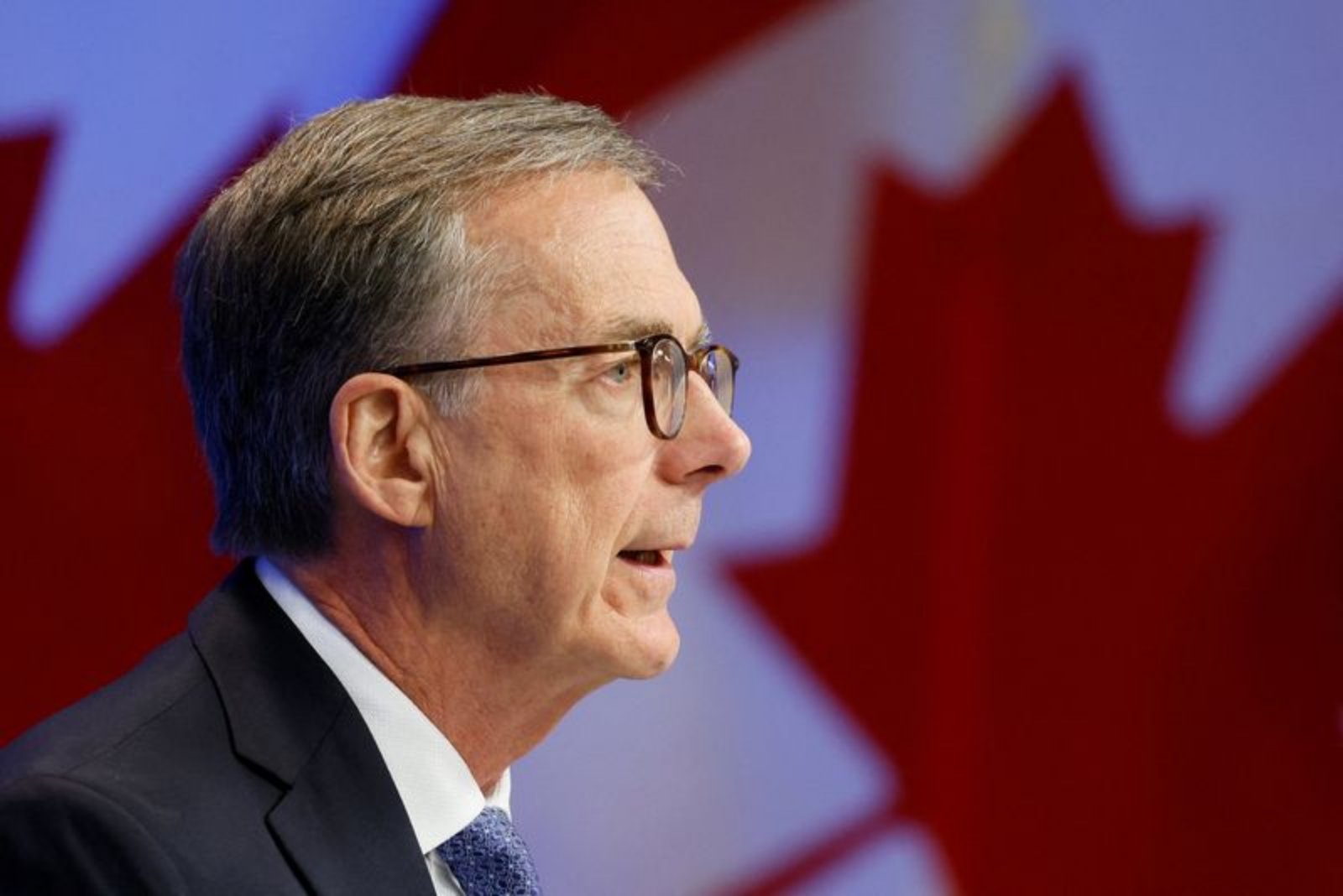
Bank of Canada Governor Tiff Macklem told Reuters he saw an unusual risk of a new economic shock, identifying heightened geopolitical tensions and shifts in U.S. trade policy as key sources of vulnerability for Canada’s outlook.
Macklem said in an interview on Wednesday that there are more forces than usual that could prevent Canada from realizing the projections laid out by the Bank of Canada. He listed a series of U.S. actions and statements - including President Donald Trump’s threats toward Greenland, his decision to remove Venezuela’s leader, and recurring warnings to impose additional tariffs on Canada - as examples of developments that compound risks to the Canadian economy.
"There is unusual potential for a new shock, a new disruption," Macklem said. "Geopolitical risks are elevated."
The governor also pointed to attacks on the independence of the U.S. Federal Reserve as another significant risk this year. He said he had recent private conversations with Federal Reserve Chair Jerome Powell and that Trump has publicly demanded that the Fed cut interest rates.
Vulnerability of Bank forecasts
On Wednesday, the Bank of Canada kept its policy interest rate on hold and published updated projections for the economy and inflation in its monetary policy report. Those projections, which foresee only modest growth in 2026 and 2027, were broadly similar to the bank’s October estimates. Despite the similarity, Macklem said the forecasts are now subject to a greater number of downside risks.
"We are feeling like there are more things that can go wrong around that forecast. That forecast is more vulnerable," he said.
Macklem pointed to a recent threat from the White House as illustrative of the kind of shock that could derail the outlook - President Trump said on Saturday he would apply a 100% tariff on Canada should it pursue a trade deal with China. The U.S. review of the United States-Mexico-Canada free trade agreement also adds to the list of factors that could alter the Bank’s projections.
Monetary policy stance and market pricing
Market expectations currently show money markets pricing in no policy rate cuts through 2026, though some investors see an increased likelihood of a rate rise in the final quarter of that year. Economists noted that Macklem’s earlier remarks at a press conference had sounded more inclined toward policy easing to support growth, though Macklem himself emphasized uncertainty about the balance of risks.
"In order to comment on the balance, you need to be able to assign probabilities to the risks. And, to be honest, I think we’re finding that difficult," he said when asked whether risks were tilted towards a cut or a hike later in the year.
Concerns about the Federal Reserve and global financial safety
Macklem said he had privately told Powell he was "doing a good job under difficult circumstances." Earlier in the month, the leaders of many of the world’s major central banks, including Canada’s, issued a joint statement in support of Powell after the U.S. administration threatened him with a criminal indictment.
He underscored the broader importance of a stable Federal Reserve for both U.S. and global economic stability. "A Federal Reserve that is providing stability to the U.S. economy is good for the U.S. economy; it’s good for the Canadian economy," Macklem said. "A Federal Reserve that is not delivering predictability isn’t going to be good for anybody."
Macklem also described shifts in investor behavior toward U.S. assets. He said foreign investors continue to seek exposure to U.S. equities but increasingly hedge against currency risk, a practice that pressures the dollar. "The unpredictability of U.S. policy has dented the U.S. dollar as the global safe asset. There’s not a lot of great alternatives," he added.
Implications
In Macklem’s view, elevated geopolitical risk, trade tensions, and uncertainty around U.S. monetary policy and institutions increase the likelihood that the Bank of Canada’s forecasts could be disrupted. These factors complicate the policy outlook and make assigning probabilities to future rate moves more difficult for the central bank.