
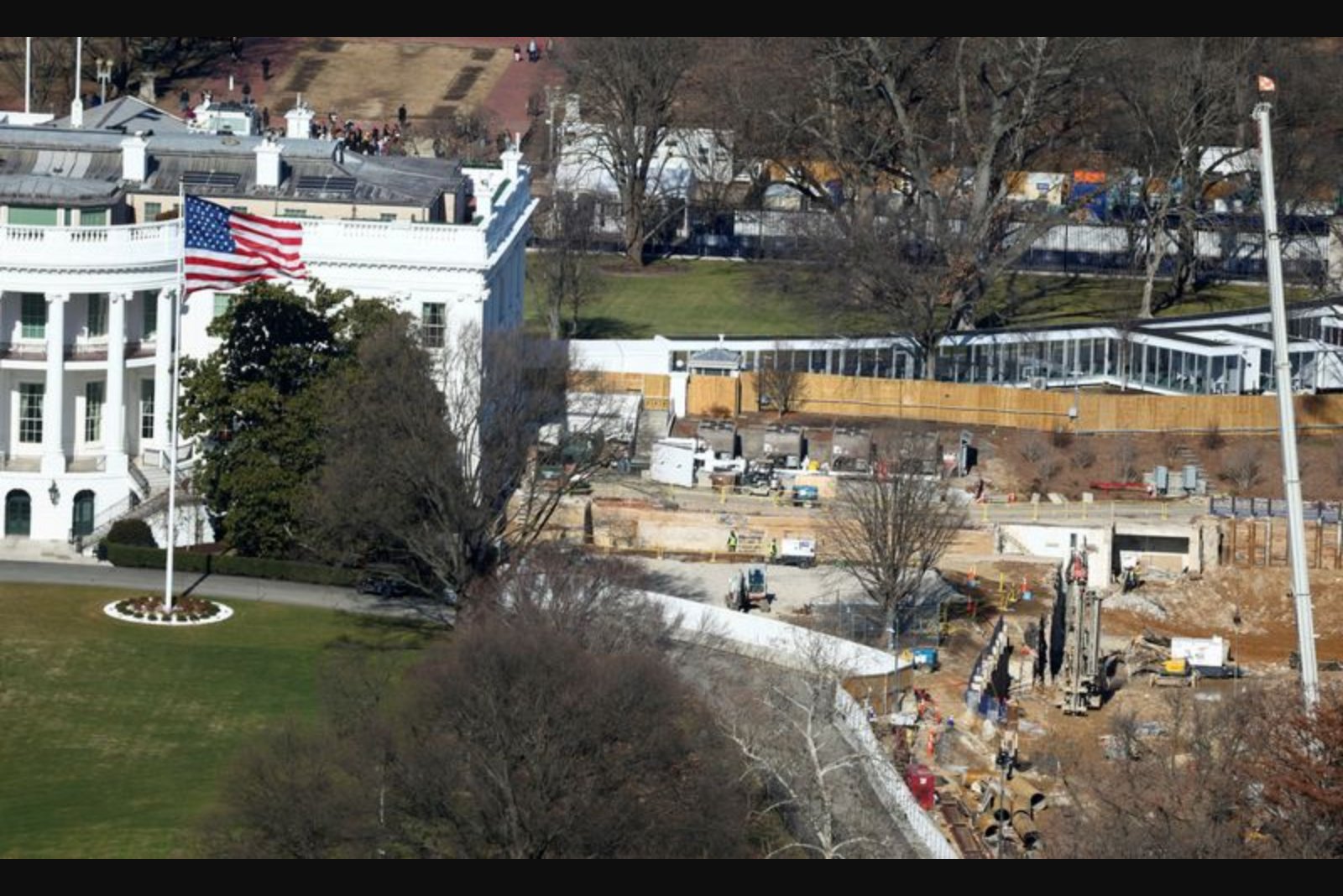
WASHINGTON, April 11 - A U.S. Court of Appeals on Saturday issued a ruling that permits construction of a new White House ballroom to continue through at least April 17. The panel extended a temporary stay on a March 31 injunction from a lower court that had ordered building activity to stop, and sought clarification from the district court about the terms of the injunction.
The March 31 order from the lower court had halted construction, but that same court also placed its injunction on hold to allow for an appeal. On Saturday, the appeals panel prolonged that reprieve through April 17 while asking the district court to clarify the underlying order that granted the injunction.
Officials at the White House have contended that the lower-court injunction left the executive residence "open and exposed," and that it posed security risks for the building, the president, and his family and staff. The administration is proceeding with a project estimated at $400 million to replace the East Wing that was demolished earlier with a new 90,000-square-foot ballroom.
President Donald Trump has described the ballroom as a defining addition to the White House and a lasting symbol of his presidency. The plan to build the ballroom follows the razing of the historic East Wing, originally constructed in 1902 and later expanded in 1942.
The National Trust for Historic Preservation filed suit in December, arguing that the president exceeded his authority when the East Wing was demolished without congressional authorization. That legal challenge is the basis for the lower-court injunction that the appeals court has temporarily stayed while the case proceeds through the appellate process.
The appeals court's order extends a temporary procedural pause rather than resolving the substantive dispute over authority to demolish and rebuild the East Wing. The panel's request for clarification from the district court indicates that further judicial steps are expected before a final resolution is reached.
Detailed context and next steps
The immediate effect of the appeals court action is to allow construction activity to continue for the time being, up to April 17, while the lower court responds to the appellate panel's request. The litigation initiated by the National Trust for Historic Preservation challenges whether the demolition and subsequent construction occurred with proper legal authorization.
How the district court clarifies its injunction, and whether the appellate court will extend or lift the stay after April 17, will determine whether construction proceeds uninterrupted or is again halted pending further rulings.