
Economy April 4, 2026

Administration Seeks Urgent Reversal of Court Order Halting White House Ballroom Work

Emergency appeal argues pause on construction exposes the executive residence to security harms as legal fight over authority and historic preservation continues

By Caleb Monroe
Administration Seeks Urgent Reversal of Court Order Halting White House Ballroom Work

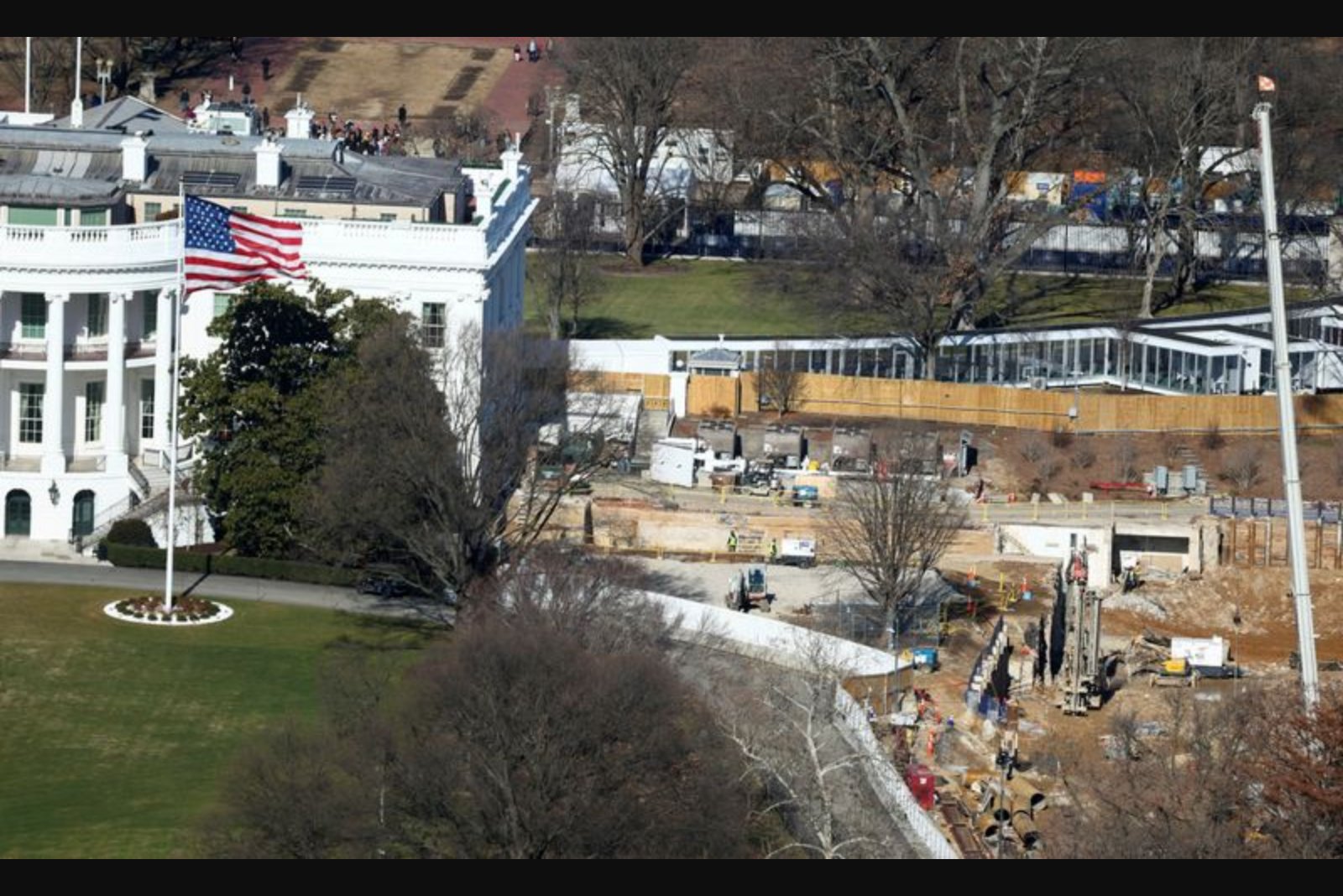
The Trump administration has filed an emergency motion with the U.S. Court of Appeals for the District of Columbia asking that a federal judge's order pausing construction on a planned White House ballroom be set aside. The motion says the stoppage creates security vulnerabilities for the White House, the President, his family and staff. The dispute centers on a lawsuit by the National Trust for Historic Preservation challenging the demolition of the historic East Wing and the $400 million replacement project, which plaintiffs say requires congressional approval.

Key Points

  • The administration filed an emergency motion in the U.S. Court of Appeals for the District of Columbia arguing that a pause on White House ballroom construction creates security risks for the White House, the President, his family and staff.
  • U.S. District Judge Richard Leon ordered construction paused on Tuesday while the National Trust for Historic Preservation’s lawsuit proceeds; Leon stayed his own order for 14 days to permit an appeal.
  • The legal dispute centers on a $400 million project replacing the recently demolished East Wing, with plaintiffs asserting congressional approval is required and the administration countering that the claims are legally baseless and lack standing.

The administration on Friday asked the U.S. Court of Appeals for the District of Columbia to overturn a federal judge's directive that construction on a new White House ballroom be suspended. In the emergency filing, officials contended that halting the project leaves the executive mansion "open and exposed" and poses "grave national-security harms to the White House, the President and his family, and the President’s staff."

The litigation began after U.S. District Judge Richard Leon on Tuesday ordered construction to pause while a lawsuit moves through the courts. That suit, brought by the National Trust for Historic Preservation, seeks to block the $400 million project being built on the site of the recently demolished East Wing. Plaintiffs argue the construction cannot proceed without approval from Congress.

Judge Leon, an appointee of former President George W. Bush, temporarily stayed his own order for 14 days to allow the administration an opportunity to appeal. The administration's new filing describes the district court as lacking constitutional authority to consider the case, characterizing the plaintiffs' claims as grounded in a "single pedestrian’s subjective architectural feelings."

The initial complaint alleges that President Trump exceeded his authority when he ordered the razing of the historic East Wing and initiated the new building. In its response, filed on Friday, the National Park Service argued the Trust’s claims are "legally baseless," that "no Trust member has standing," and that the President has unfettered authority to renovate the White House.

Details in the filings reiterate the long-standing nature of the East Wing: it was originally erected in 1902 and later expanded roughly four decades after its construction during Franklin D. Roosevelt’s presidency. The contested ballroom is part of a larger initiative by the President to alter elements of Washington’s monumental core, which also includes proposals for a 250-foot (76-meter) arch and modifications at the Kennedy Center.

The legal battle now centers on whether the district court can adjudicate the Trust’s constitutional claims, whether the Trust has members with legal standing to sue, and whether presidential authority covers the renovations at issue. The administration’s emergency request seeks immediate restoration of construction activity on national security grounds while the appellate process unfolds.

Risks

  • Security and operational risk - The administration argues that continued work stoppage could leave the White House exposed and affect the safety of occupants and staff; this has implications for government facilities and security planning.
  • Legal and procedural uncertainty - The central questions about standing and the district court’s authority introduce uncertainty for the construction sector involved in federal projects and for entities engaged in historic preservation litigation.
  • Policy and precedent risk - A judicial finding that the President lacks authority to proceed without congressional approval could affect future executive-led renovations at federal properties and alter how similar projects are managed.

More from Economy

China's energy profile cushions it from current oil shock, Goldman Sachs says Apr 4, 2026 Administration Seeks Court Reversal to Restart White House Ballroom Work, Citing Security Concerns Apr 4, 2026 Iran Conflict Is Rippling Across the Energy Complex, Not Just Oil Markets Apr 4, 2026 UBS Says Wait for Wider Spreads Before Buying the Bond Dip Apr 4, 2026 Morgan Stanley Predicts Fed Will Cut Rates in 2026 Despite Oil-Driven Inflation Spike Apr 4, 2026