
This April 4 story has been repeated without any changes to the text.
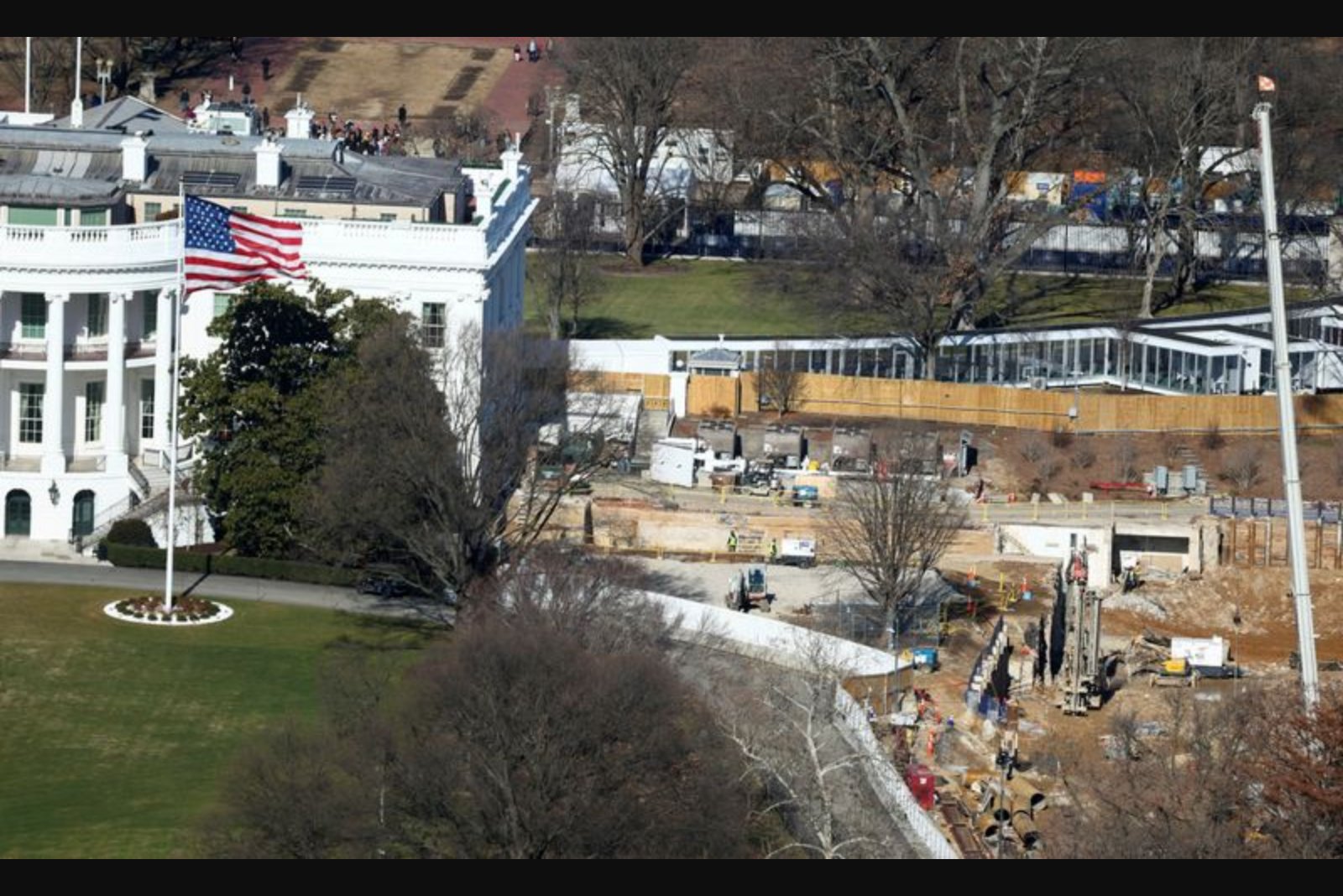
April 4 - The Trump administration has asked the U.S. Court of Appeals for the District of Columbia to overturn a district court order that halted construction on a planned White House ballroom, arguing in an emergency filing that the stoppage creates unacceptable security risks.
The emergency motion, filed on Friday, says U.S. District Judge Richard Leon’s decision to pause the work has left the executive mansion "open and exposed" and is "threatening grave national-security harms to the White House, the President and his family, and the President’s staff."
Judge Leon, who was appointed by former President George W. Bush, ruled on Tuesday that construction on the ballroom must be suspended while a lawsuit proceeds through the courts. In his order, Leon paused enforcement for 14 days to allow the administration time to appeal.
The lawsuit at the center of the dispute seeks to stop the $400 million project taking place on the site of the recently demolished East Wing. Plaintiffs say the project requires congressional approval to move forward.
The motion filed by the National Park Service urged the appellate court to set aside the district court’s decision, arguing the federal district court lacks the constitutional authority "to entertain this suit, which rests on a single pedestrian’s subjective architectural feelings."
The initial complaint was brought by the National Trust for Historic Preservation, a nonprofit organization, which alleges that President Trump exceeded his authority when he razed the historic East Wing and commenced construction on the new building.
In its Friday filing, the administration described the Trust’s claims as "legally baseless" and said that "no Trust member has standing." The emergency motion also asserts that "the President has complete authority to renovate the White House."
The East Wing was originally constructed in 1902 and was expanded four decades later during Franklin D. Roosevelt’s presidency. The proposed ballroom is part of a broader effort by President Trump to reshape elements of Washington’s monumental core, a program that also includes plans for a 250-foot (76-meter) arch and changes at the Kennedy Center.
The case puts questions about executive renovation authority, historic preservation, and the scope of judicial review into direct conflict, and it now moves to the appellate level where the administration has asked for expedited relief on security grounds.