
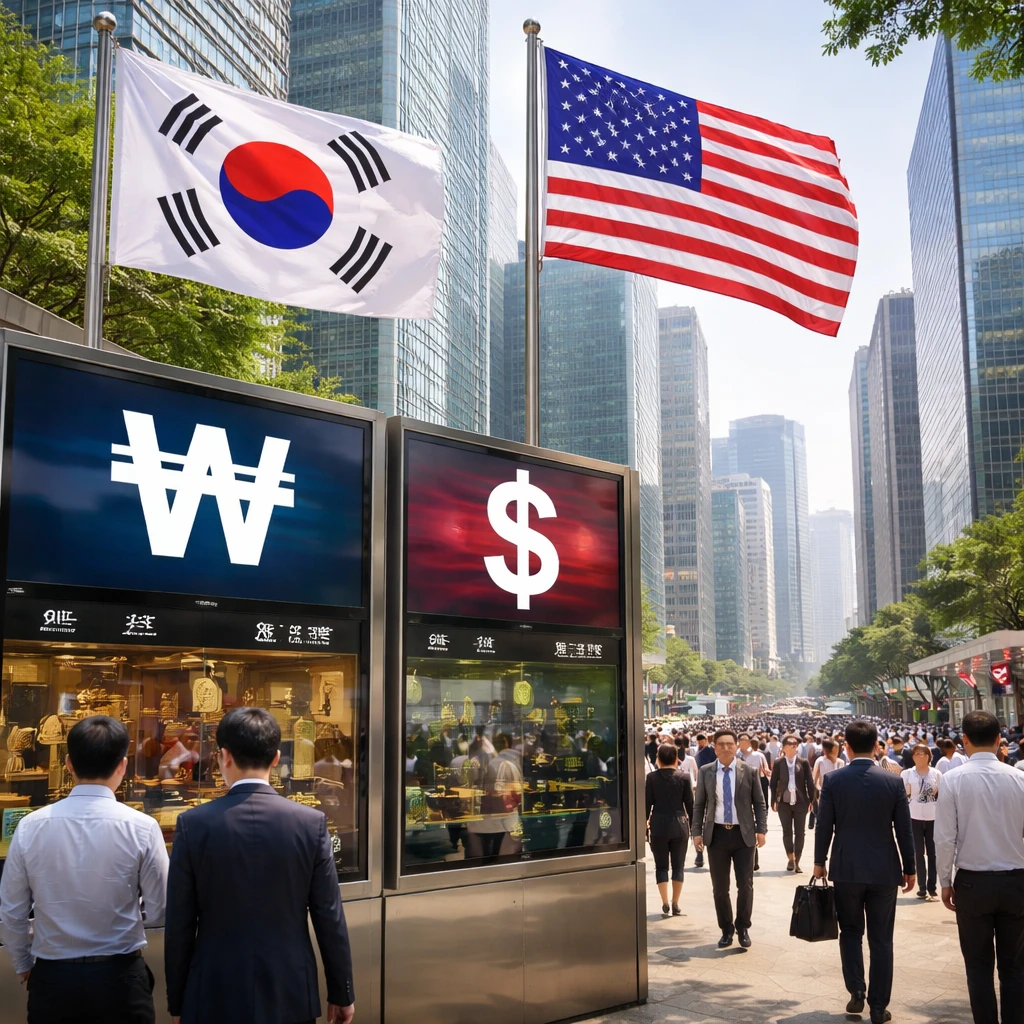
Washington, January 14 - U.S. Treasury Secretary Scott Bessent on Wednesday addressed the marked depreciation of the Korean won, engaging in discussions with South Korean Finance Minister Koo Yun-cheol. Bessent noted that the currency's recent decline does not correspond with South Korea's robust economic fundamentals.
The Korean won experienced a notable rebound following Bessent’s remarks, appreciating by as much as 1.15 percent to 1,462.0 against the dollar. This upswing interrupted a sequence of ten consecutive declines, during which the currency had fallen to its weakest point since December 24.
The Treasury Department released a statement indicating that the two officials had met on Monday to discuss key issues including critical minerals and prospects for strengthening economic collaboration. Emphasizing the significance of a stable foreign exchange environment, Secretary Bessent highlighted that excessive market volatility is undesirable. He reaffirmed South Korea's position as a critical partner for the United States in Asia, particularly given its economic performance in sectors that support the U.S. economy.
Bessent reiterated on the social media platform X that the downward trend of the Korean won was inconsistent with the nation’s underlying economic strength. Concurrently, South Korea’s finance ministry confirmed the meeting took place, emphasizing their joint attention on foreign exchange market conditions. Earlier on Wednesday, Finance Minister Koo Yun-cheol committed to implementing measures aimed at reducing volatility in the domestic currency market and addressing imbalances in the demand and supply for U.S. dollars. These remarks were made during a virtual forum focused on foreign exchange policies held in Seoul.
In November, Seoul and Washington reached a trade agreement that included reductions in U.S. tariffs on imports from South Korea. This accord is tied to a $350 billion investment commitment by South Korea into strategic sectors within the United States, a package that followed several months of negotiations centered on foreign exchange considerations relating to the investment.
According to the Treasury Department, Bessent expressed optimism regarding the smooth implementation of the trade deal during his meeting with Minister Koo. Discussions included ensuring the agreement's full and faithful execution, further underpinning economic cooperation between the two nations.