
Currencies January 14, 2026

Treasury Secretary Highlights Discrepancy in Korean Won's Recent Depreciation Relative to Economic Fundamentals

Bessent discusses currency volatility and trade agreements with South Korean counterpart to bolster U.S.-South Korea economic relations

By Avery Klein
Treasury Secretary Highlights Discrepancy in Korean Won's Recent Depreciation Relative to Economic Fundamentals

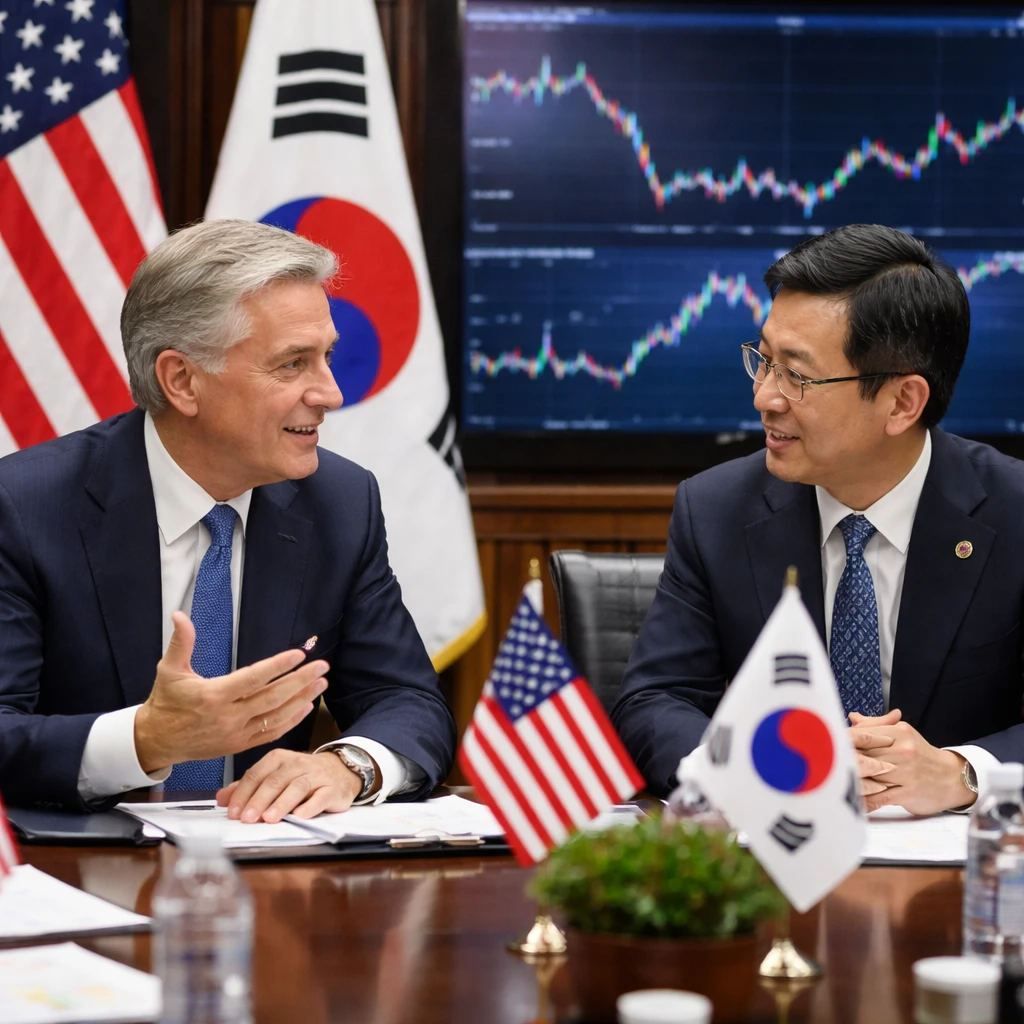
U.S. Treasury Secretary Scott Bessent addressed the recent decline in the Korean won, emphasizing that its depreciation does not align with South Korea's robust economic fundamentals. Following discussions with South Korean Finance Minister Koo Yun-cheol, Bessent reiterated the importance of stable foreign exchange markets and the strong bilateral economic partnership between the United States and South Korea. The won rebounded significantly after his remarks amid ongoing initiatives to manage currency volatility and uphold trade agreements.

Key Points

  • U.S. Treasury Secretary Scott Bessent asserted that the recent depreciation of the Korean won is not supported by South Korea's strong economic fundamentals, highlighting concerns over currency volatility.
  • Following Bessent's remarks, the won appreciated by up to 1.15%, ending a ten-session losing streak and recovering from its weakest point since late December.
  • The U.S. and South Korea are engaged in enhancing economic collaboration, including a trade agreement finalized in November involving tariff reductions and significant South Korean investment in U.S. strategic sectors.

On January 14, U.S. Treasury Secretary Scott Bessent publicly remarked on the recent weakening of the Korean won, pointing out that the currency's depreciation was inconsistent with South Korea's solid economic fundamentals. This statement followed a meeting with South Korean Finance Minister Koo Yun-cheol, where both officials addressed the won's performance and broader economic cooperation.

Following Bessent's comments, the won experienced a sharp recovery, appreciating as much as 1.15% to 1,462.0 per U.S. dollar. This rebound came after the currency had declined steadily over ten sessions, reaching its lowest level since December 24. The U.S. Treasury emphasized that excessive volatility in foreign exchange markets is undesirable and reiterated South Korea's vital role as a partner, given its strong economic output and key industries that support the U.S. economy.

During their meeting on Monday, the two officials also discussed the significance of critical minerals and explored avenues to expand economic collaboration. Secretary Bessent highlighted on social media platform X that the won's current depreciation does not correspond with the country's fundamental economic strength.

Similarly, the South Korean finance ministry confirmed that the meeting involved discussions about foreign exchange market conditions. Earlier in the day, Minister Koo vowed to implement measures aimed at curbing increasing volatility in the domestic currency market and addressing imbalances in dollar demand and supply. These remarks were made during a virtual forum in Seoul focusing on foreign exchange policies.

In November, Seoul and Washington finalized a trade agreement that reduces U.S. tariffs on imports from South Korea. In exchange, South Korea committed to investing $350 billion in U.S. strategic sectors. This agreement was reached after several months of negotiation, particularly regarding the foreign exchange implications of the investment framework.

The Treasury Department confirmed that Bessent expressed optimism about the smooth implementation of the trade deal during his discussion with Minister Koo, emphasizing the importance of its full and faithful execution.

Risks

  • Excessive fluctuations in the Korean won could affect trade and investment flows between South Korea and the United States, potentially impacting sectors reliant on currency stability such as manufacturing and exports.
  • Persistent imbalances between dollar demand and supply in South Korea's domestic currency market may lead to increased market intervention or regulatory measures, influencing financial market conditions.
  • Delays or challenges in implementing the agreed trade deal or aligned foreign investment commitments could create uncertainty in economic relations and affect strategic industry sectors.

More from Currencies

Dollar Extends Post-Nomination Rally as Markets Weigh Fed Direction Feb 2, 2026 Bitcoin Slides Below $80,000 as Ether Drops Sharply; Dollar Firm on Fed Chair Pick Jan 31, 2026 UBS Urges Caution as Dollar’s Slide Meets Political Headwinds and Mixed Economics Jan 30, 2026 Morgan Stanley Sees EUR/USD Reaching 1.23 in Q2 2026 as Dollar Faces Unconventional Pressure Jan 30, 2026 Japan’s Yen Support Limited to Warnings, MoF Records Show Jan 30, 2026