
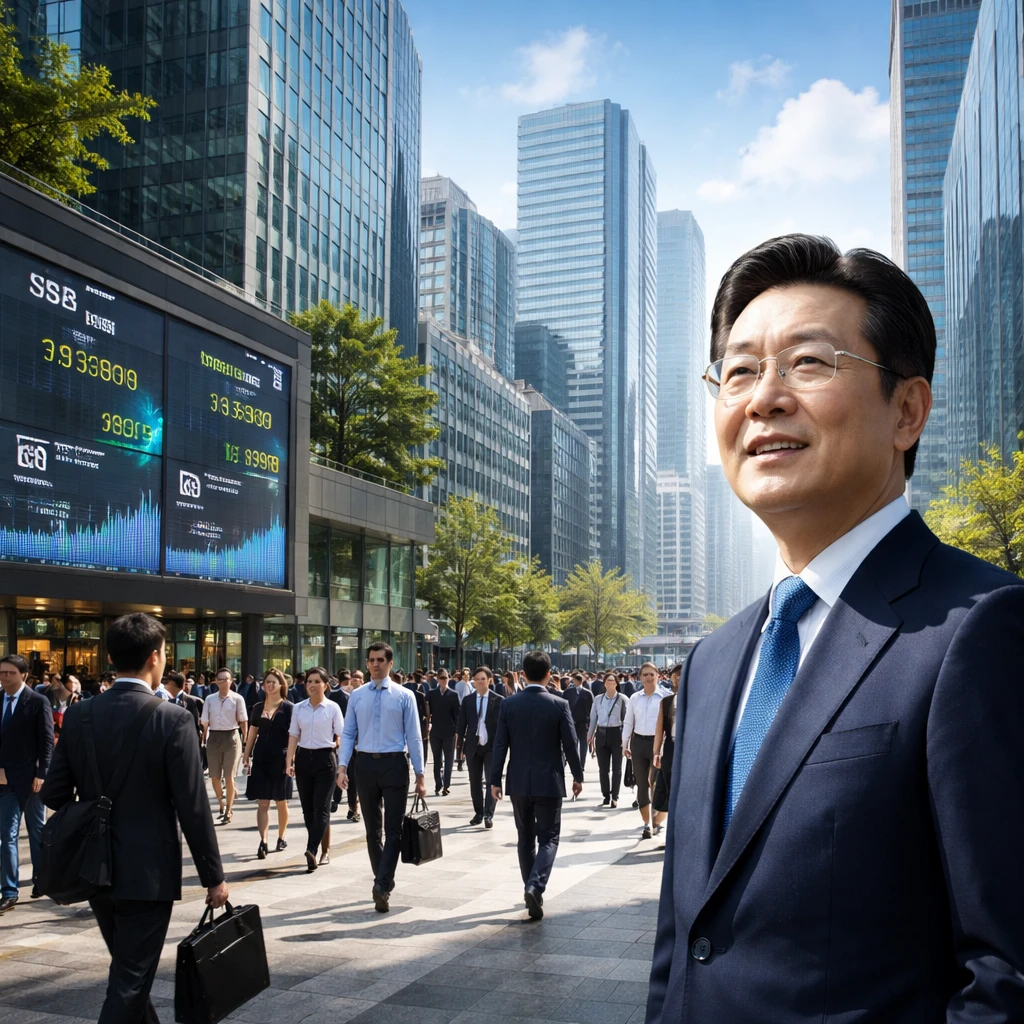
During a press conference on January 21 in Seoul, South Korean President Lee Jae Myung shared projections signalling a near-term appreciation in the won, anticipating the exchange rate against the U.S. dollar to narrow to around 1,400 in the upcoming one to two months. This outlook comes amid recent fluctuations where the won briefly weakened to its lowest level since December 24, trading near 1,481.4 per dollar before regaining ground.
President Lee elaborated that while domestic policy initiatives have sought to cushion the won's slide, they alone may be insufficient to reverse the currency's depreciation. The weakness in the Korean won appears partly linked to a broader regional trend, including depreciation pressures on the Japanese yen. Nevertheless, the won is performing relatively better compared to some regional currencies. Ongoing efforts to identify sustainable policy tools aim to support exchange rate stability going forward.
Following the president's remarks, the won appreciated by about 0.5%, reaching approximately 1,468.8 per dollar as traders adjusted their positions in response to the news. Market participants noted a sharp fall in the dollar-won exchange rate, which had been pressured by long dollar positions prior to the comments.
On the equity front, President Lee addressed the domestic stock market's status, highlighting its status as the best performing globally in the previous year, boasting a 76% increase. Nonetheless, he maintained that South Korean stocks remain undervalued relative to global peers. Key factors traditionally contributing to the so-called "Korea Discount"—a phenomenon describing South Korea's tendency for lower stock valuations due to perceived national security risks, political uncertainties, corporate governance issues, and market practices—are gradually being resolved.
The Korea Stock Price Index (KOSPI) has experienced notable gains this month, rising by around 15%, driven predominantly by strong performances in semiconductor and automotive sectors. Investor optimism is underpinned by expectations about artificial intelligence-related technologies spurring growth in these industries. The index steadied near 4,880 points mid-session, recovering from earlier declines.
President Lee remarked on the prospect of the KOSPI breaching the significant 5,000-point milestone, attributing this potential surge to unexpected scale advancements in artificial intelligence and semiconductor fields.