
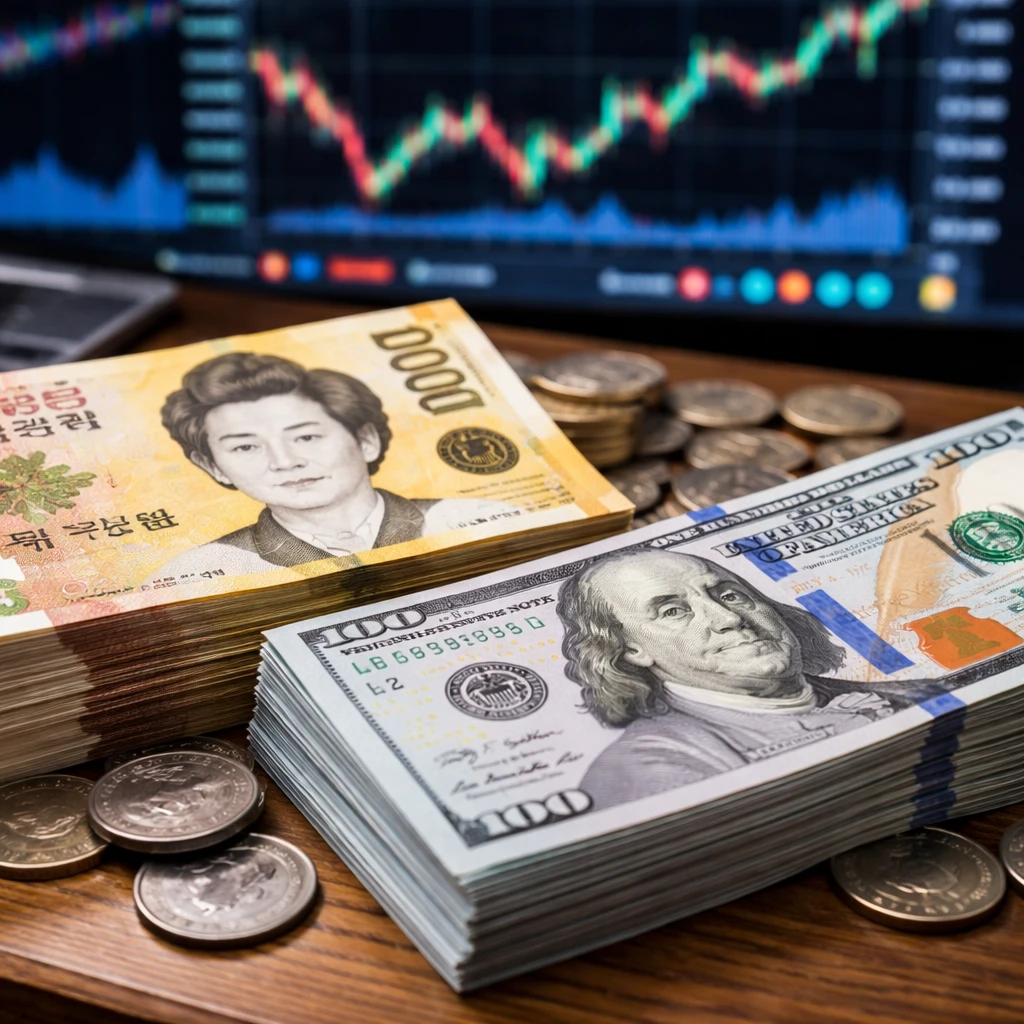
South Korea's ambitious investment initiative targeting $350 billion into strategic sectors of the United States, established as part of a bilateral trade agreement, faces a probable delay in its commencement until after the first half of 2026, according to statements from Finance Minister Koo Yun-cheol. This postponement is expected to prevent significant early outflows of U.S. dollars from the South Korean economy, helping to preserve won stability during a sensitive period.
Under the terms negotiated in November, South Korea committed to this substantial investment in exchange for relief from tariffs imposed by the Trump administration on South Korean imports. A key component of the agreement includes a limit on annual outflows of U.S. dollars set at $20 billion, designed to contain potential volatility.
Minister Koo, speaking in a Friday interview, emphasized the unlikelihood of large-scale investments materializing within the first six months. He pointed out procedural hurdles, such as site selection, design, and construction phases — particularly referencing speculative projects like nuclear power plants — which would extend the timeline and likely curb initial capital movements below the $20 billion cap.
"Even if a nuclear power plant is chosen, the subsequent stages of finding an appropriate location, system design, and building must take place, meaning initial capital outflows will be relatively limited," Koo explained. He further noted the current foreign exchange environment is not conducive to substantial investment activities this year.
The South Korean won has experienced persistent depreciation pressures, reaching levels near 16-year lows against the U.S. dollar, approaching 1,473.8 won per dollar. Despite favorable export performance and an impressive 76% surge in the stock market last year, the currency's weakness remains a significant concern for government officials.
Koo warned market participants against challenging the authorities' commitment to maintaining foreign exchange stability. Noting increased depreciation pressure in the forex market beyond expectations, he pledged swift implementation of recent market-stabilizing policies to counteract potential herd behavior that could further undermine the won. "This is not a scenario we will tolerate," he asserted.
The United States has acknowledged South Korea's efforts to prevent excessive weakening of the won, an outcome neither side desires. U.S. Treasury Secretary Scott Bessent recently discussed with Minister Koo that the currency’s downward trend did not align with South Korea’s underlying economic fundamentals.
Plans remain in place to activate the investment package as promptly as possible, with the government preparing to submit to parliament a bill aimed at establishing a special fund tied to this initiative, beginning parliamentary review in February. However, there is an element of uncertainty surrounding these efforts due to anticipation of a U.S. court ruling regarding the existing tariffs.
No formal investment projects have been finalized under the deal, but discussions suggest possibilities including nuclear power plant development, as mentioned by U.S. Commerce Secretary Howard Lutnick.
Despite government attempts to mitigate currency depreciation, such as encouraging the National Pension Service to sell U.S. dollars and prompting exporters to convert their foreign earnings sooner, the exchange rate remains close to critical psychological thresholds. Officials have attributed much of the demand for dollars to strong South Korean investor appetite for overseas equities, motivated by a widening interest rate gap between the U.S. and South Korea, which has reached a two percentage point differential—the largest since 1999.