
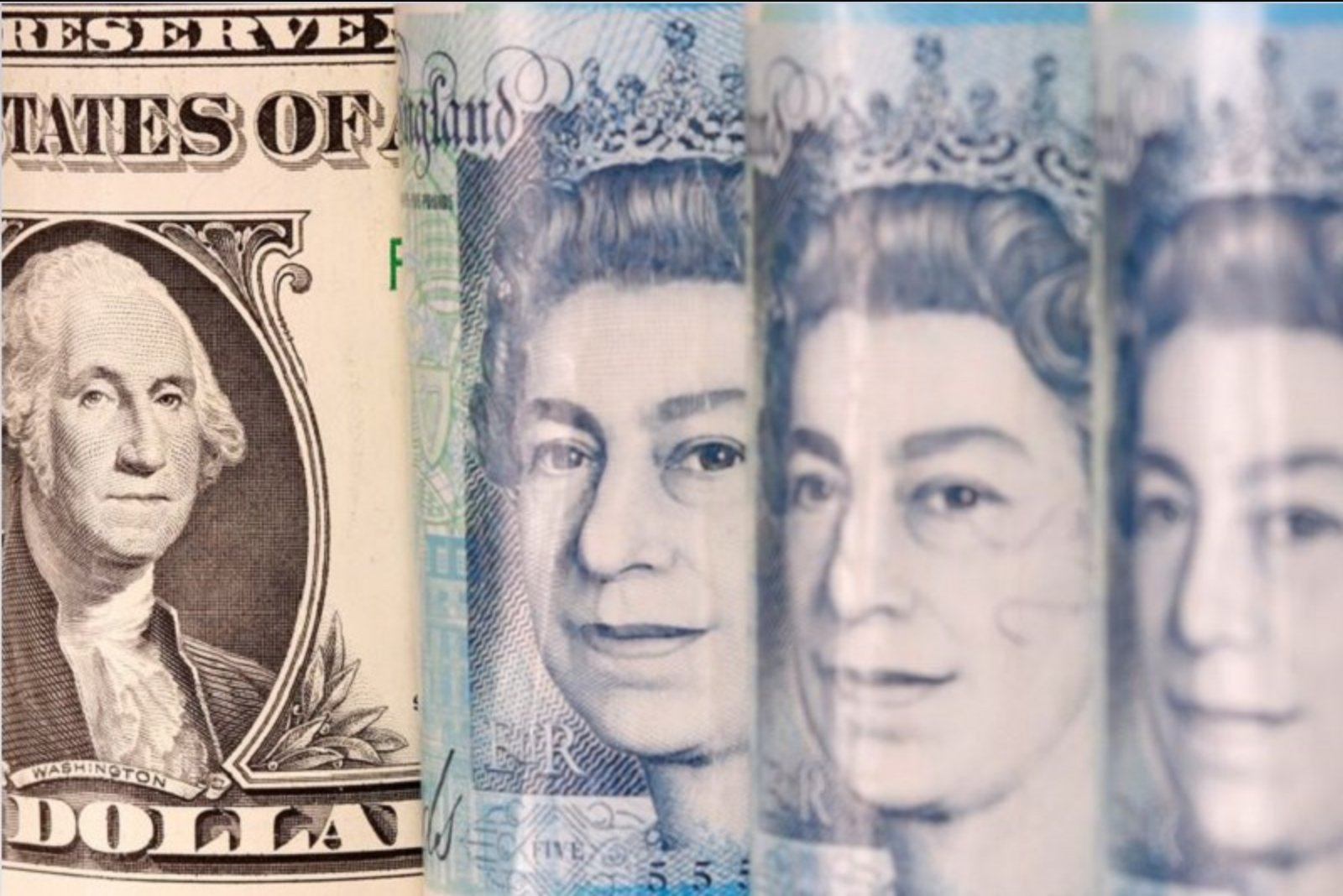
Sterling traded close to $1.3432 on Wednesday morning, adding to a 1.26% gain recorded in the previous session after Iran said it would implement a two-week ceasefire and permit safe passage through the Strait of Hormuz. By 05:35 ET (09:35 GMT) the GBP/USD pair was moving inside a $1.3284-$1.3446 intraday band, following Tuesday’s rally that began from an open of $1.3240. The pound’s 52-week trading range sits at $1.2721 to $1.3869.
The ceasefire announcement prompted a broad shift into risk assets. Equities rallied, yield curves steepened and the U.S. dollar retreated from recent gains. That pullback in the dollar came after it had risen just over 3% through March, and fed into an improved tone for higher-beta currencies and regional FX pairs.
ING strategist Chris Turner said a continued decline in the dollar index toward 98.50 remains a possibility, while cautioning that a move below 98 would be premature given uncertainty about whether the truce will hold. Market pricing has also shifted toward the prospect of Fed easing later in the year; roughly 14 basis points of rate cuts for December are currently reflected in pricing.
On the U.S. policy front, Vice Chair Philip Jefferson said on Tuesday that monetary policy remained "well-positioned." Investors were also awaiting the minutes from the March 18 Federal Open Market Committee meeting, due later on Wednesday.
The euro was little changed at $1.1683 following a 1.3% advance on Tuesday from $1.1542. During Wednesday trade the EUR/USD pair oscillated between $1.1594 and $1.1709. ING sees 1.1730/1.1750 as the best-case levels for the euro this week, though it remained shy of the pre-conflict benchmark of 1.1800.
Eurozone producer price index and retail sales figures for February were due Wednesday, but market participants generally expected these releases to be unlikely to move the broader FX complex.
In Central and Eastern Europe, Hungary’s forint led regional gains with EUR/HUF approaching the 375 level that prevailed before the conflict began. EUR/PLN and EUR/CZK have recovered roughly half of their earlier conflict-related losses; ING noted that, as lower-beta currencies, these pairs may take longer to return fully to pre-conflict levels of about 4.220 and 24.250 respectively.
In Asia, the People’s Bank of China set a lower USD/CNY fixing, which pushed the onshore rate below 6.83 and signalled official support for renminbi strength. That move is expected to benefit China-linked currencies, including the Australian dollar, the South African rand and the Brazilian real.
The Korean won also showed supportive fundamentals, underpinned by a record $23 billion monthly current account surplus. Should energy prices remain subdued, that dynamic could push USD/KRW back toward the 1450/60 area, according to market commentary.