
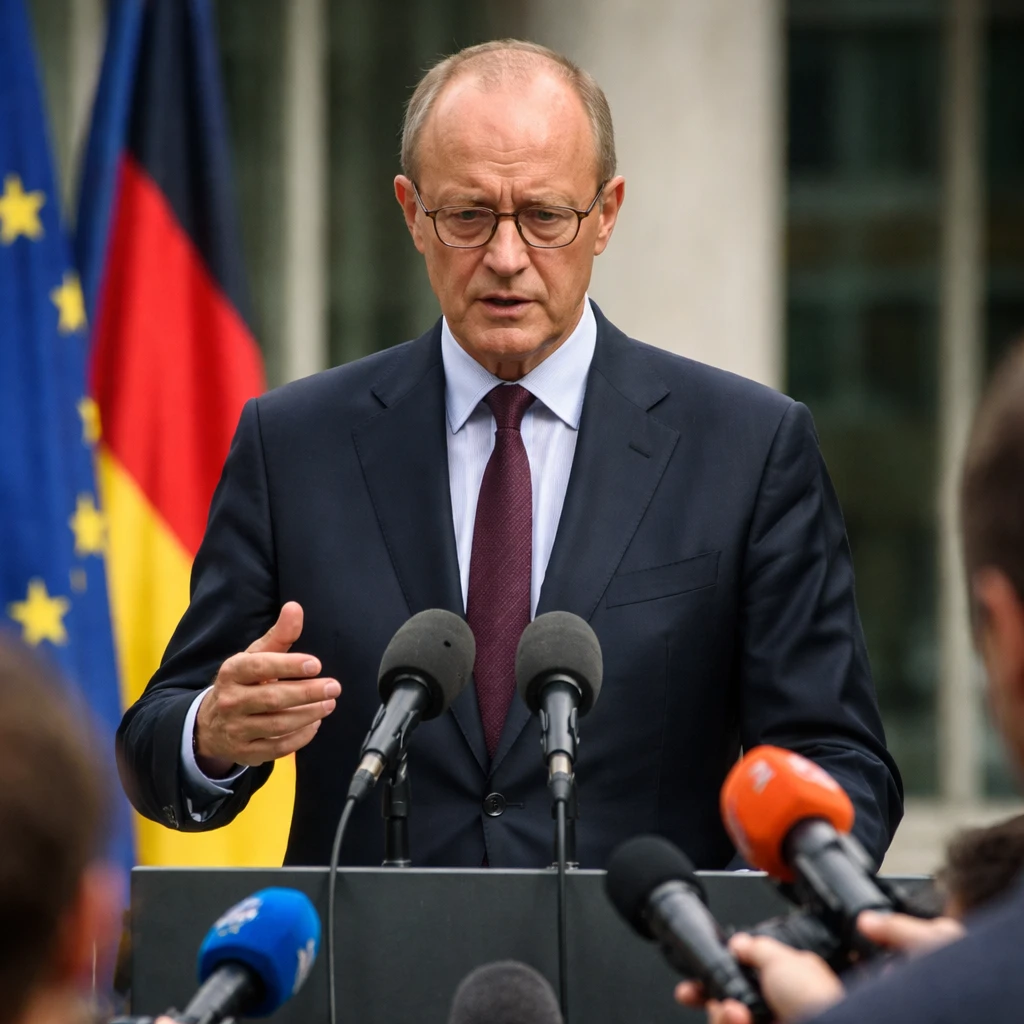
German Chancellor Friedrich Merz said he is closely monitoring the decline of the U.S. dollar and raised concerns about the consequences for Germany’s export-focused economy.
"We will have to assert ourselves globally against a weak dollar and a strong euro," Merz told reporters in Berlin on Wednesday. "We simply have to become more competitive and stronger, especially given the currency exchange rates."
Merz pointed to the recent movement in the currency markets, where the euro climbed above the $1.20 threshold this week as the dollar weakened. He noted that President Donald Trump, speaking in Iowa on Tuesday, said he was comfortable with the dollar's recent fall, a development that pushed the U.S. currency to its lowest level since early 2022.
The chancellor said he has been observing the dollar exchange rate "with concern for quite some time," describing the currency shifts as "a considerable additional burden for the German export industry."
Merz also addressed the status of last year’s EU-US trade agreement, which has not yet been fully implemented. He cautioned the Trump administration against actions that could create further uncertainty around tariffs.
"This uncertainty about tariffs is not only hurting transatlantic trade it’s also hurting investment in America," Merz said. "That’s why the American government should also have an interest in ensuring that the agreements we reached last summer are honored and not jeopardized by daily announcements that things might be changed."
Context and implications
Merz framed the current currency environment as an additional challenge for German exporters, tying the issue directly to competitiveness concerns. He emphasized that maintaining clarity and continuity in the EU-US trade agreement is important for trade flows and investment decisions on both sides of the Atlantic.
Merz’s comments linked currency moves, political statements, and trade policy uncertainty as interconnected pressures affecting exporters and transatlantic economic ties.