
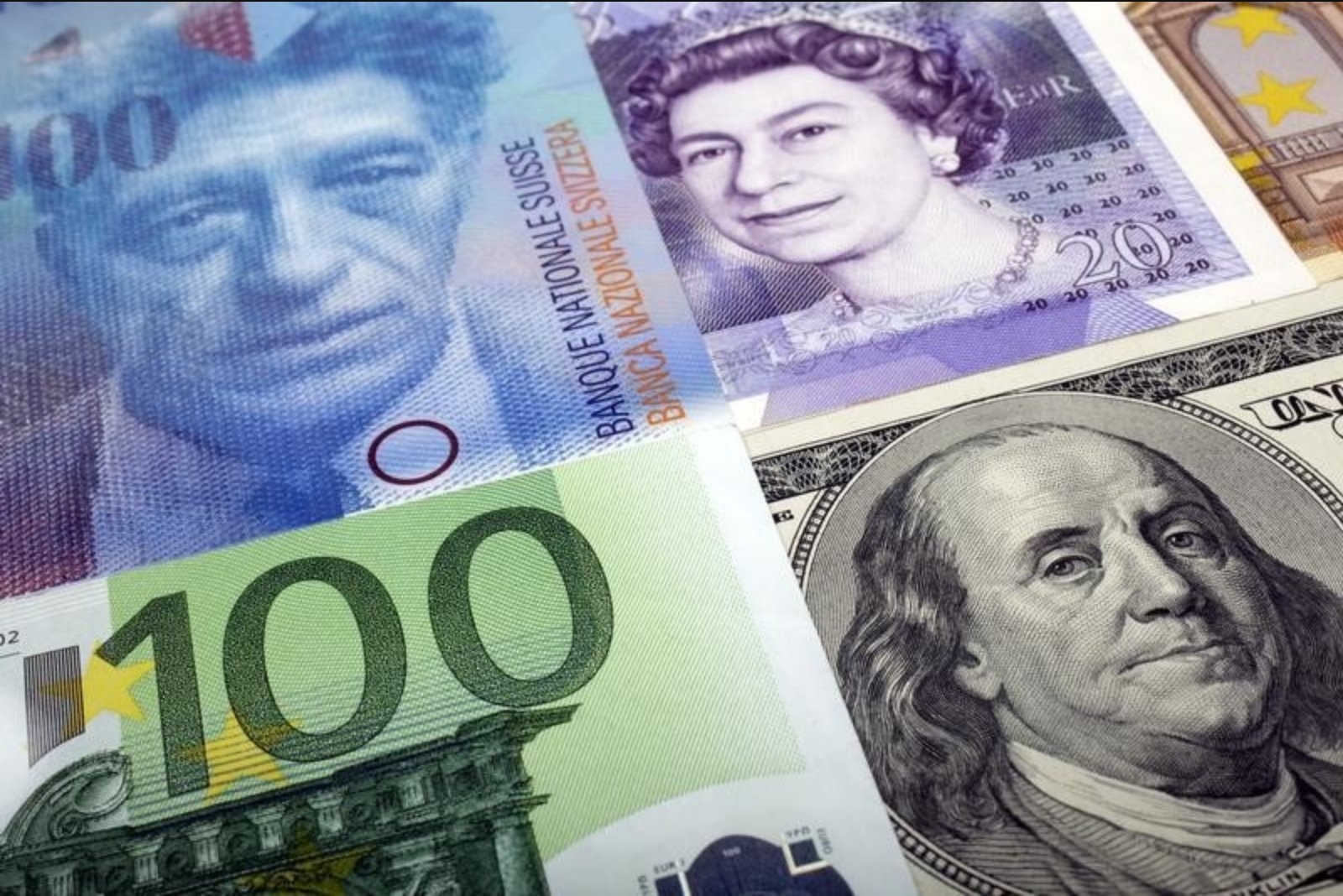
The U.S. dollar weakened notably on Monday as the Japanese yen surged on renewed market chatter about possible coordinated action by U.S. and Japanese authorities to support the yen. The move came ahead of the Federal Reserve's two-day policy meeting that ends on Wednesday, when investors will scrutinize guidance on the timing and pace of potential rate cuts.
At 04:10 ET (09:10 GMT), the Dollar Index - which measures the greenback against a basket of six currencies - was trading 0.4% lower at 96.975, a level not seen since mid-September. The slide in the dollar accelerated following a sharp drop on Friday, with the bulk of the losses occurring against the yen.
Market attention focused on signs of official involvement after reports that the New York Federal Reserve conducted rate checks on the dollar/yen pair around midday on Friday, a step the market often interprets as a signal that authorities are in close communication and could be preparing to act. The USD/JPY pair plunged 1.7% on Friday and moved lower again at the start of the week.
"Suspected Japanese intervention to sell USD/JPY has come at a weak time for the dollar after last week’s geopolitical fracturing," analysts at ING said, adding that the current move did not reflect a deterioration in the dollar's underlying fundamentals. ING further noted that this week's FOMC meeting could prove slightly dollar bullish.
The U.S. central bank is widely expected to keep interest rates unchanged at the conclusion of its meeting on Wednesday. Investors will examine Chair Jerome Powell's remarks for clues on when policy easing might begin, and ING reiterated its house view that rate cuts are likely at the March and June FOMC meetings - while acknowledging the clear risk that such cuts could be delayed by perhaps three months.
In Europe, the euro benefited from flows away from the dollar and signs of improvement in the wider eurozone economy. EUR/USD traded 0.2% higher to 1.1853, pushing through the 1.1800/1.1810 area that analysts had identified as key resistance. ING noted that the combination of last week's geopolitical developments and potentially large dollar sales from Japan helped drive the pair above that band.
There were limited signs of macroeconomic support for the euro. The German Ifo business climate index remained at 87.6 in January, unchanged from the prior month and slightly below expectations that had pointed to a rise to 88.3.
Elsewhere in major currency moves, GBP/USD edged up 0.1% to 1.3663. The Swiss franc found demand, with USD/CHF down 0.4% to 0.7773. ING cautioned that USD/CHF slipping below 0.7800 is likely to be a concern in Zurich, as the trade-weighted Swiss franc moves toward new highs and market pricing for negative rates in Switzerland could re-emerge as the Swiss National Bank grapples with a strong franc.
In Asia, the yen's advance was pronounced. USD/JPY traded 1.1% lower to 154.02 on Monday, adding to the 1.7% drop seen on Friday and taking the Japanese currency to its strongest level since late November. The move produced short covering after weeks of heavy bearish positioning.
Speculation around joint action intensified after U.S. authorities conducted checks with market participants - a step often read as a prelude to intervention - and Japanese officials reiterated warnings against excessive currency moves. The yen's reversal was sharp, following a period of weakness that had accelerated after the election of Prime Minister Sanae Takaichi earlier in January. Expectations that her administration would pursue aggressive fiscal spending alongside continued accommodative monetary policy contributed to the yen's earlier decline to over 18-month lows.
Outside the major pairs, USD/CNY slipped 0.1% to 6.9571. The Australian dollar and New Zealand dollar also strengthened modestly, with AUD/USD up 0.2% at 0.6911 and NZD/USD up 0.2% at 0.5960.
The immediate market narrative centers on intervention risk and central bank signaling. Traders are parsing each comment from officials and each data point for hints about policy paths and the potential for coordinated action in foreign exchange markets. With the Fed meeting imminent, the interplay between official communications and market positioning is likely to remain the dominant theme for currency markets in the near term.