
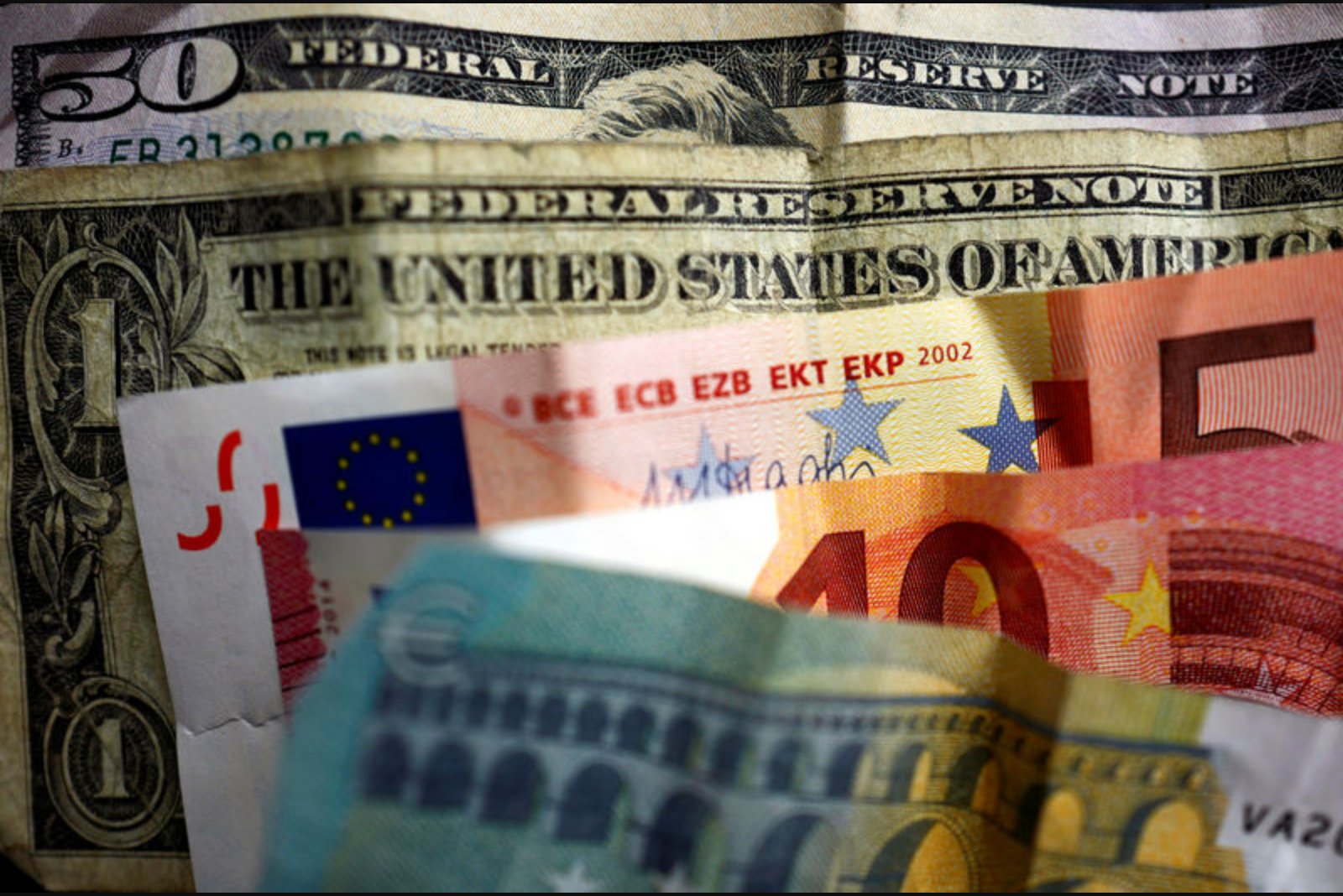
The U.S. dollar made modest gains on Tuesday as foreign exchange markets braced for the start of the Federal Reserve’s two-day policy meeting later this week. At 04:20 ET (09:20 GMT), the Dollar Index - which measures the greenback against six major currencies - was trading 0.1% higher at 96.990, after having recorded a four-month low on Monday.
Investors are approaching the Fed meeting with the expectation that the central bank will maintain its current policy settings, leaving interest rates unchanged while it seeks clearer evidence on the trajectory of the U.S. economy. Economic growth has shown resilience and unemployment remains relatively low, factors that have supported the case for holding rates steady for now.
Analysts at ING reiterated their medium-term view while warning of potential shifts in timing: "Our house view has been that the Fed will cut rates at the March and June FOMC meetings," said the note, "but the clear risk is that [a cut] will be delayed by perhaps three months." The firm further highlighted political developments that could influence market perceptions of the central bank’s independence, noting concerns arising from the criminal investigation of Chair Jerome Powell, an effort to remove Fed Governor Lisa Cook, and the upcoming nomination process for Powell’s successor.
ING added: "Both the data and Chair Powell’s robust defence of central bank independence indicate little prospect of a 28 January Fed rate cut. The key question is, can the President’s pick for Chair convince the rest of the committee that further action will be needed." With a no-change outcome widely priced in, market participants may instead focus on commentary and the implications of political news for the Fed’s operational independence.
On the economic calendar, the ADP weekly employment change and the Conference Board’s January consumer confidence reading were expected later in the session, while next week’s U.S. nonfarm payrolls release is the event that market-watchers consider most consequential for the near-term interest-rate outlook.
In currency-specific moves, the euro pared some of its recent advance. EUR/USD was down 0.2% at 1.1861, giving back ground after touching a four-month peak of 1.19075 on Monday. ING commented on technicals in the pair, noting a downside gap to 1.1834 that could act as support should the pair attempt to clear the range highs at 1.1910/20. The firm added that it currently expects those highs to hold and suggested EUR/USD could finish the quarter nearer to 1.17.
Sterling also eased modestly. GBP/USD slipped 0.1% to 1.3670, retreating from near four-month highs seen in the previous session. ING observed that part of sterling’s relative strength this week may reflect asset managers who had been heavily short GBP/USD and who found those positions exposed after the recent sell-off in the dollar.
In Asia, the yen gave back some of its prior gains. USD/JPY was 0.3% higher at 154.69 after a sharp fall in the prior session that had been driven by rising speculation about possible government intervention in currency markets. That earlier move followed comments from Prime Minister Takaichi warning against excessive volatility in the yen. Despite last week’s swings, the currency remained near levels that in the past have prompted official intervention.
Concerns about the fiscal direction under Prime Minister Takaichi had spurred a significant selloff in Japanese government bonds, and that pressure on the JGB market in turn weighed on the yen.
Elsewhere in Asia, USD/CNY gained 0.1% to 6.9577, trading close to two-and-a-half-year highs, while USD/KRW also rose 0.1% to 1,446.98. The South Korean won remained broadly steady amid comments from U.S. President Donald Trump that he would raise tariffs on certain imports from South Korea to 25%, citing a delay in Seoul’s enactment of a trade deal with Washington.
Antipodean currencies softened slightly. AUD/USD slipped 0.1% to 0.6910, and NZD/USD declined 0.2% to 0.5962.