
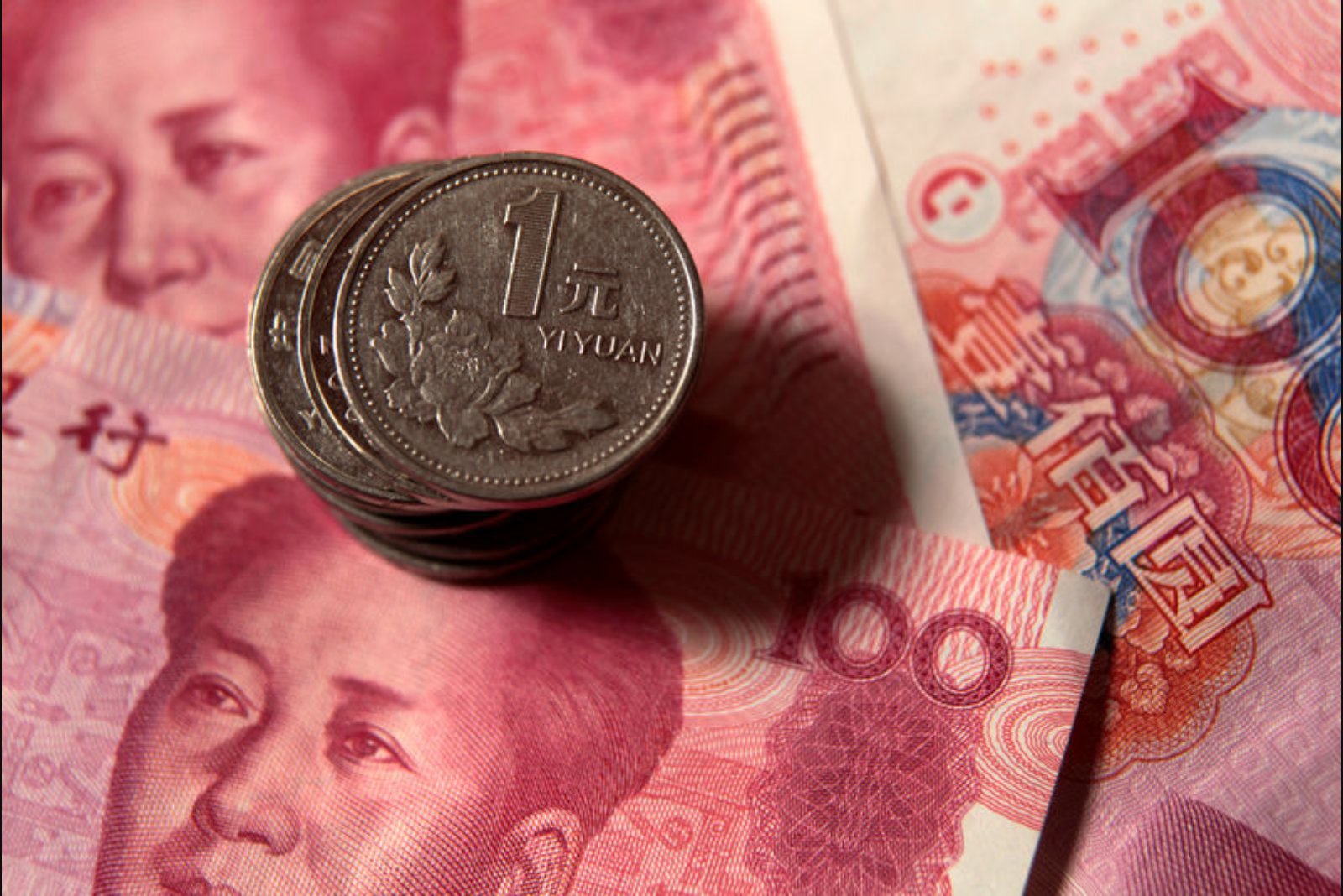
The Chinese yuan has shown renewed demand recently, and that momentum could exert a meaningful influence on global foreign exchange markets over both the short and long term, according to research from Bank of America Securities.
On Tuesday the People’s Bank of China set the yuan's daily midpoint at 6.9533 per U.S. dollar, a fixing 75 pips firmer than the previous day. The official fix moved past the 6.96 level to its strongest point in nearly 33 months, underscoring an upswing in CNY strength.
BofA updates forecasts and cites drivers
In a note dated Feb. 4, analysts at BofA Securities said they have adjusted their USD/CNY outlook in response to the recent appreciation. “Recent CNY appreciation momentum - backed by robust exports and firmer policy signals - leads us to revise end‑Q3 and Q4 USD/CNY forecasts to 6.7, from 6.8,” the analysts wrote.
The bank argued that the impact of a strengthening yuan could extend beyond the bilateral USD/CNY rate. BofA highlighted signs that appreciation is spilling into broader trade-weighted measures, including the People’s Bank of China’s CFETS basket, and increasingly correlating with emerging market currencies.
While the bank emphasized that correlation does not equal causation, it nonetheless noted the pattern is becoming difficult to ignore. Dollar softness is reinforcing a backdrop of stronger EM FX, the note said, and both bilateral and trade-weighted CNY metrics appear to be moving more closely together.
Trade shifts, Europe exposure and currency interplay
BofA pointed to trade dynamics as a structural influence on currency relations. High U.S. tariffs have incentivized a diversion of Chinese exports away from the United States and toward Europe, a shift reflected in a widening European Union trade deficit with China that the bank says is approaching levels seen during the Covid period.
Part of that deterioration in the EU trade balance with China also reflects a weaker CNY versus the euro. Yet despite these flows, EUR/CNY itself sits at a decade-high, a development that adds pressure on European exporters and has generated renewed demands for appreciation of the CNY. BofA cautioned that while robust export momentum from China to Europe is likely to continue in the near term, growing EU scrutiny and anti-dumping measures represent a medium-term headwind.
“As these frictions build, EUR/CNY could begin to face downward pressure,” the bank added, signaling that the interplay of trade policy and currency dynamics may alter the path for the euro-yuan relationship.
Political signals and longer-term considerations
Beyond market mechanics, BofA flagged political signaling as a consequential factor. It cited recent remarks attributed to President Xi indicating China should develop a “powerful currency” that could be “widely used in international trade, investment and foreign exchange markets, and attain reserve currency status.” The note also referenced a prior 2020 speech in which President Xi said, “It’s completely possible for China to reach a high-income country standard at the end of the 14th five-year plan in 2025 and to double total economic size, or per capita income, by 2035.”
The bank warned that a concerted push to raise the international prominence and value of the renminbi could risk significant overvaluation of the currency and pose threats to financial stability. In that context, BofA highlighted the role of technological competition between China and the United States, arguing that the outcome of the AI race will be important for productivity prospects and the sustainability of relative FX valuations.
On the durability of the U.S. dollar's global position, BofA suggested the most plausible outcome is continued USD dominance and a U.S.-based financial system over the next decade. “This seems a reasonable consideration,” the bank said. As an alternative, greater internationalization of the renminbi could shift global purchasing power, although BofA characterized a full-scale move to make CNY the global measuring stick as unlikely. Instead, it suggested a hybrid approach that expands CNY use across the Global South and Asia might reduce the need for a strategy based on sharp appreciation of the yuan. “This seems unlikely, but a hybrid approach, expanding CNY in the Global South and Asia region may reduce the need for a strong CNY appreciation strategy,” the note said.
Implications for markets and policymakers
BofA’s analysis implies several areas of attention for market participants and policymakers. A stronger CNY could reshape trade balances, affect emerging market currencies via correlation channels, and intensify scrutiny of European exporters. Meanwhile, policy signaling from China and the interaction between technology competition and economic productivity are factors the bank views as relevant to the medium- and long-term sustainability of FX valuations.
The bank’s revised USD/CNY forecast and emphasis on trade-weighted appreciation underscore that currency dynamics are being driven by a mix of export flows, policy signals, and broader global macro trends rather than a single isolated cause.