
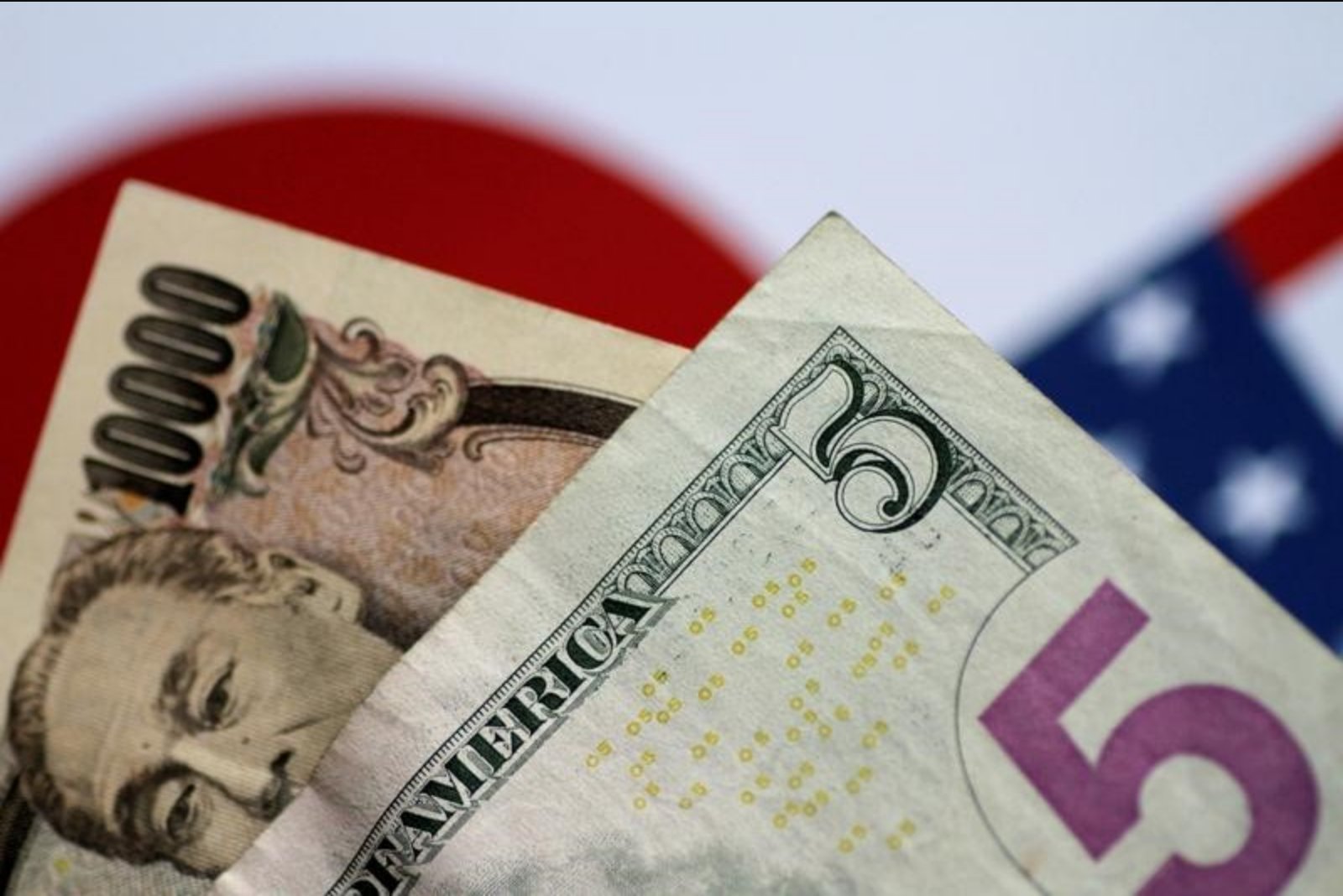
Asian foreign exchange markets were largely calm on Thursday as the U.S. dollar retreated after the Federal Reserve kept its policy rate unchanged and described the U.S. economy as "solid." The central bank's decision and accompanying outlook trimmed dollar strength, but the bigger market focus remained on the Japanese yen and the possibility of a coordinated intervention to stabilize the battered currency.
Investor caution also weighed on regional currencies. Market participants exhibited greater risk aversion amid worries over stretched fiscal spending in developed economies, and nerves were heightened by reports that U.S. President Donald Trump was contemplating additional measures against Iran. Those concerns contributed to a generally muted tone across Asian FX.
Dollar reaction to Fed decision
The dollar index and related futures declined in the range of 0.2% to 0.4% on Thursday, leaving the greenback close to a near four-year low reached earlier in the week. The Fed's move to keep its benchmark rate at 3.75% was broadly anticipated. In describing the outlook, Fed Chair Jerome Powell characterized the U.S. economy as "solid" and said that risks to both inflation and employment had eased.
Attention during Powell's post-meeting remarks turned to questions about the Fed's independence. Powell declined to answer reporters' questions on that topic. The concern stemmed in part from a criminal investigation opened by the Trump administration into a long-running renovation of the central bank's buildings - an inquiry that Powell has described as politically motivated. A report from CNBC stated that Powell had not yet complied with demands from that investigation.
Yen remains the focal point
Across Asia, the yen held onto recent gains. The USD/JPY pair fell about 0.3%, remaining near a three-month low after Japanese Prime Minister Sanae Takaichi warned against excessive volatility in the currency. Market participants were further cautious after reports indicated U.S. and Japanese officials were discussing a possible joint operation to intervene in FX markets to support the yen. That prospect has discouraged aggressive short positions against the Japanese currency.
Other notable Asian currency moves
- The Australian dollar was an outlier to the upside, with AUD/USD rising roughly 0.4% to approach a near three-year high. The move followed hotter-than-expected Australian inflation data that fueled expectations of an imminent interest-rate increase by the Reserve Bank of Australia.
- The Chinese yuan's USD/CNY rate steadied near its lowest level since May 2023.
- Singapore's USD/SGD was largely unchanged after the Monetary Authority left policy settings unchanged, matching expectations.
- The Taiwan dollar's USD/TWD pair held flat through the session.
- The Indian rupee saw the USD/INR rate slip slightly after the pair had earlier touched a record high above 92 rupees.
Overall, Asian FX markets displayed limited directional conviction as participants balanced the dollar's retreat against persistent uncertainty around policy, geopolitics, and the potential for coordinated action to support the yen.
What traders are watching next
Market attention is likely to stay on developments around Japan-U.S. communications on intervention, any further signals from the Fed about policy and institutional independence, and incoming regional economic data that could alter rate expectations, particularly in Australia.