
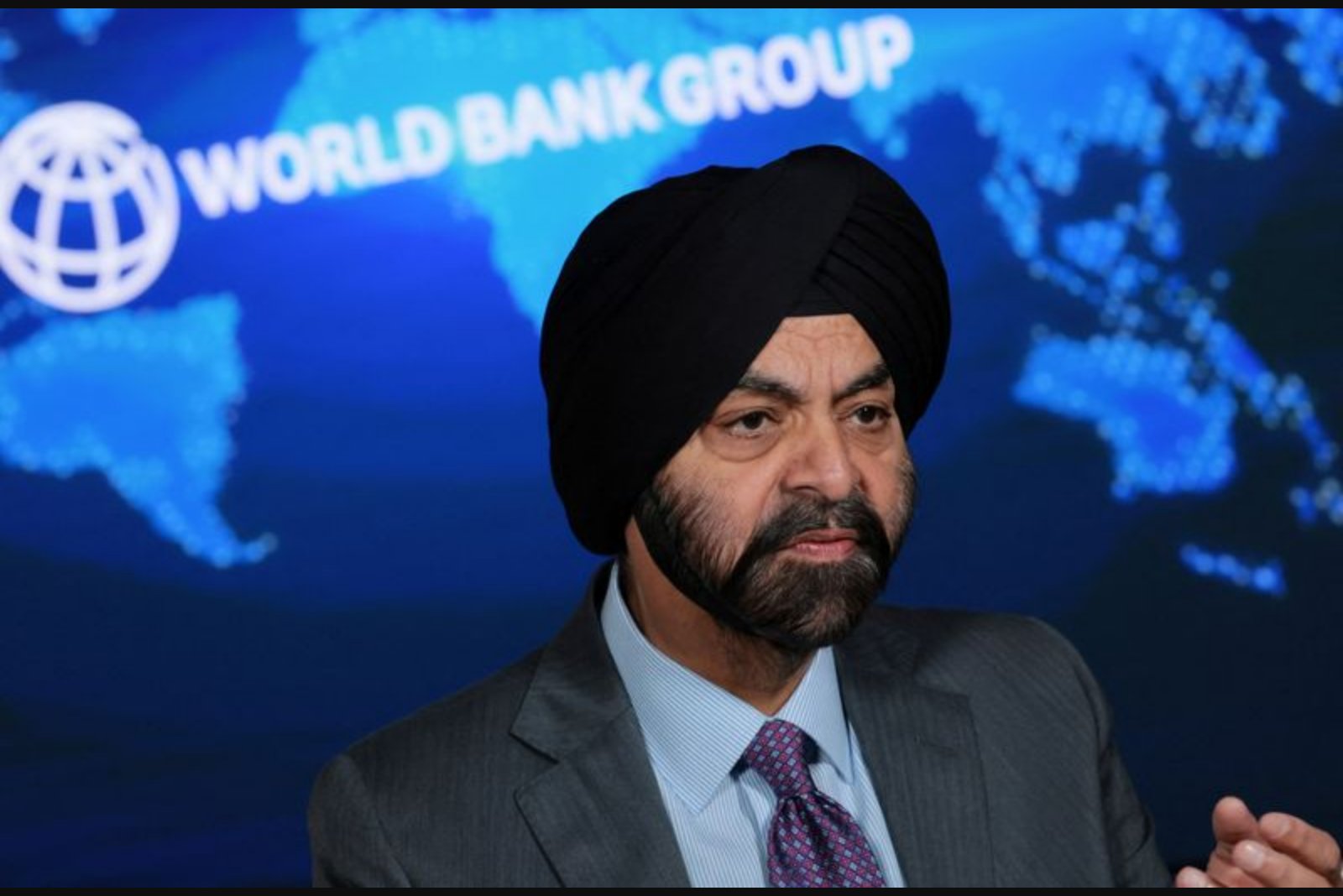
WASHINGTON - World Bank President Ajay Banga is raising the alarm about a looming employment crisis in developing countries, arguing that the international community must mobilize now to prevent a generational shortfall in jobs even as near-term geopolitical shocks capture attention.
Banga told Reuters that roughly 1.2 billion people will reach working age in developing economies over the next 10 to 15 years. At the current pace of job creation, those economies are expected to generate only about 400 million jobs, leaving what he described as a deficit of 800 million positions.
Addressing the dual challenge of immediate shocks and long-term development tasks, Banga acknowledged the difficulty of sustaining focus on structural priorities in the face of repeated crises since the COVID-19 pandemic. He stressed, however, that it is essential for finance officials to keep addressing longer-term needs such as job creation, expanding electricity access and securing safe water supplies for vulnerable populations.
"We have to walk and chew gum at the same time. Short-velocity cycle is what we’re going through. Longer velocity is this jobs circumstance or water," Banga said in a taped interview. His comment underlined the tension between immediate policy responses and investments with benefits that accrue over many years.
War Dominates This Week’s Meetings, but Structural Risks Loom
Thousands of finance officials are gathering in Washington this week for the spring meetings of the World Bank and the International Monetary Fund. The agenda is being shaped by the U.S.-Israel war with Iran and associated regional tensions, which officials say threaten to slow global growth and push up inflation.
Recent developments include a two-week ceasefire announced by President Donald Trump last week, which came just hours before strikes that were said to have the potential to cause extensive damage. While that ceasefire has halted most attacks, Banga and other officials note that it has not ended Iran’s effective blockade of the Strait of Hormuz, a move that has produced the biggest-ever disruption to global energy supplies. In addition, a parallel conflict persists between Israel and Iran-backed Hezbollah in Lebanon.
Action Items to Boost Employment Prospects
At the center of the World Bank’s agenda is a plan to work with developing-country governments to remove long-standing policy and regulatory obstacles to investment and job formation. The bank’s Development Committee has outlined measures intended to streamline governance and ease conditions that have discouraged private-sector expansion and hindered employment growth.
Topics on the reform table include:
- Transparency and streamlining of permitting processes
- Anti-corruption measures
- Labor law reform
- Clarifying and updating land law
- Reducing impediments to opening businesses
- Enhancing logistics systems and trade facilitation
- Addressing non-price barriers in trade
Banga expressed confidence that these reforms can create both employment and dignity for young people while opening new markets for private companies that serve their needs. He cautioned, however, that while a perfect outcome in the next 15 years is unlikely, failing to act could worsen illegal migration and instability. United Nations data cited by Banga noted that more than 117 million people were displaced worldwide as of 2025.
Private Sector Momentum and Sector Priorities
Banga pointed to examples of companies from developing economies that are already expanding beyond their home markets, including Reliance Industries and the Mahindra Group from India, and Dangote in Nigeria. He said discussions with officials in developing countries showed a clear interest in building more and better-quality jobs for the coming generation.
The World Bank has prioritized both human and physical infrastructure required to underpin employment growth. Initiatives in progress or planned include connecting 300 million households in Africa to electricity and enhancing health care. In coordination with other development banks, the World Bank is preparing a push to extend secure access to clean water to one billion more people.
For investment priorities, the bank identified five sectors that it believes can absorb private capital and generate employment without relying heavily on global trade structures or outsourcing from developed economies: infrastructure, agriculture for smallholder farmers, primary health care, tourism and value-added manufacturing. Banga noted that these sectors are less likely to be immediately disrupted by rapid advancements in artificial intelligence.
"The problem is, we can’t do this alone. We’ve got to get this snowball to roll downhill, gathering a lot of snow as it goes along, to reach that amazing number of 800 million," he said, calling for collective action to leverage private-sector investment and scale solutions.
Looking Ahead
The World Bank’s emphasis on attracting private capital will continue through the year, with further focus on leveraging public reforms and bank-supported projects to draw investment. Banga said the bank will sustain the cycle of promoting human capital and basic infrastructure while putting additional emphasis on private-sector engagement at upcoming meetings, including those scheduled for the fall in Bangkok.
As finance ministers and development officials weigh responses to immediate geopolitical shocks, Banga’s message centers on the need to simultaneously prioritize structural reforms and investments that can provide employment, electricity, water and improved health services for a rapidly expanding cohort of working-age people in developing economies.