
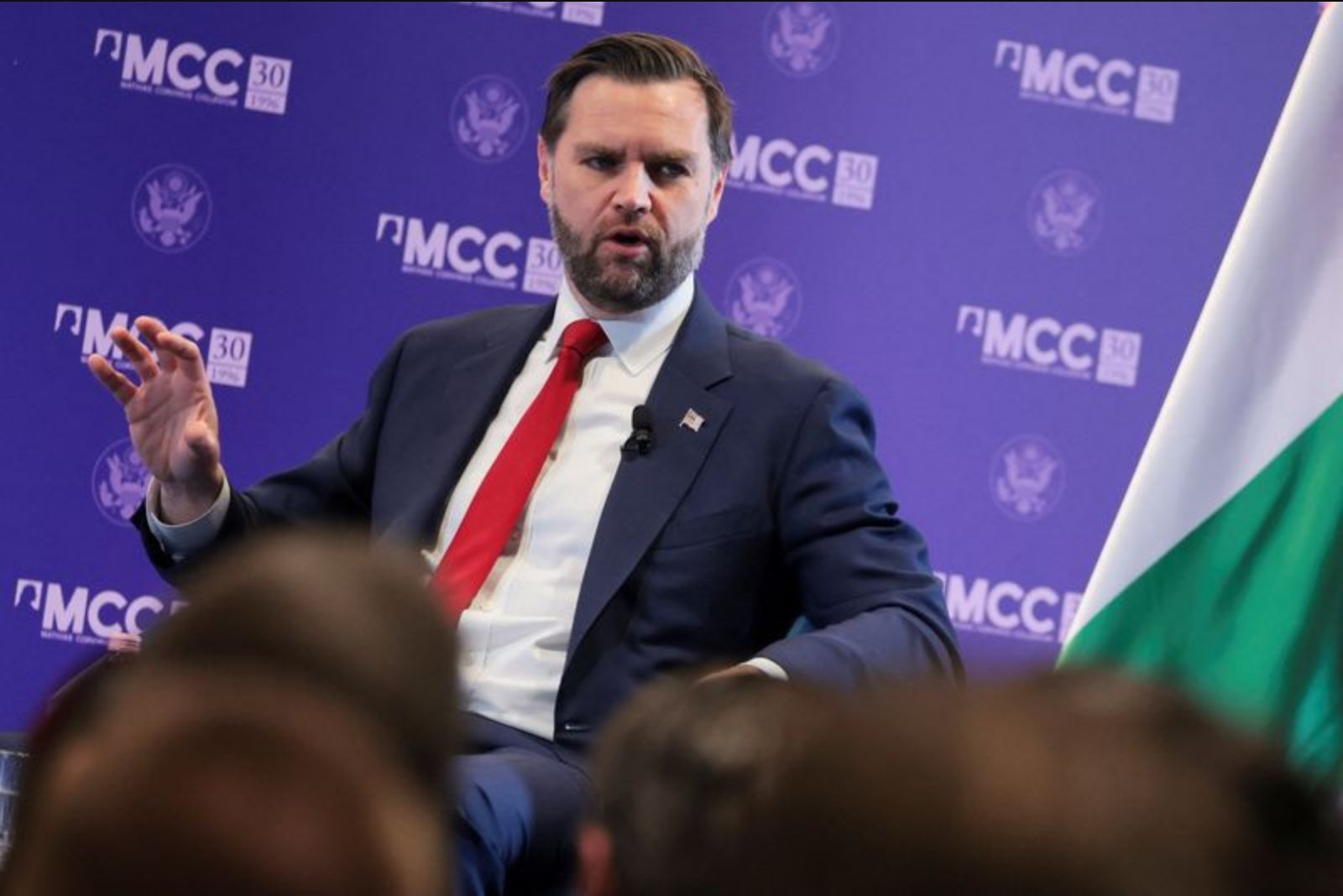
U.S. Vice President JD Vance sharply criticized remarks attributed to Ukrainian President Volodymyr Zelenskiy about Hungarian Prime Minister Viktor Orban, calling them "scandalous" as he spoke in Budapest on April 8. Vance reiterated accusations made by Hungary that Ukraine deliberately disrupted Russian oil deliveries to influence Hungary's April 12 parliamentary vote.
The vice president's comments came amid a visit intended in part to bolster the position of Orban, who faces what is described as the stiffest challenge in his 16-year tenure during an election widely viewed as consequential for supporters of Donald Trump’s MAGA movement in Europe.
Hungary has publicly accused Kyiv of intentionally halting flows of Russian oil via the Druzhba pipeline to shape voter sentiment ahead of the ballot. Kyiv has rejected that characterization, saying the Druzhba pipeline sustained damage from a Russian drone attack in late January and that Ukrainian authorities are repairing the conduit as quickly as possible.
Relations between Budapest and Kyiv have been tense, and those strains have featured prominently in the Hungarian campaign. In response to the pipeline disruption and other disputes, Hungary blocked a proposed 90-billion-euro loan from the European Union to Ukraine.
The blockage of EU financial support prompted a forceful remark from President Zelenskiy, who said he could provide the address of whoever was responsible to the Ukrainian military, who could then "speak with him in their own language". Vance said those reported words crossed a line.
"It’s completely scandalous," Vance said, according to his remarks at a Hungarian university. "You should never have a foreign head of government... threatening the head of government of an allied nation."
Vance also used his platform to criticize perceived double standards in media coverage of foreign influence. He contrasted reporting on alleged foreign interference in the 2016 U.S. presidential election with what he framed as similar conduct surrounding Hungary’s vote.
"You saw this back in 2016 where a lot of the American media said that it was a true scandal that the Russian government bought like $500,000 of Facebook advertisements... That’s foreign influence," he said. "But what’s not foreign influence is when the European Union threatens billions of dollars withheld from Hungary because you guys protect your borders... What’s not foreign influence is when the Ukrainians shut down pipelines, causing suffering among the Hungarian people in an effort to influence an election."
Vance had previously criticized, at a news conference on the prior day, what he characterized as EU interference in Hungary's electoral process. Following his remarks on Wednesday, a European Commission spokesperson said Brussels would use diplomatic channels "to convey our concerns to our U.S. counterparts."
The Ukrainian presidency did not immediately reply to a request for comment on Wednesday. Financial detail cited at the time of reporting valued one U.S. dollar at 0.8557 euros.
This episode underscores how energy infrastructure, diplomatic disputes and election politics have become tightly interwoven in the current contest between Budapest and Kyiv, and how those tensions are drawing in external actors and institutions.