
Commodities March 3, 2026

U.S. Weighs Military Escorts for Tankers in the Strait of Hormuz

Administration considers maritime mission and potential insurance backing as oil prices climb amid regional threats

By Priya Menon
U.S. Weighs Military Escorts for Tankers in the Strait of Hormuz

The Trump administration is evaluating plans to provide military protection for oil and gas tankers transiting the Strait of Hormuz and to possibly support insurance for those voyages. The moves come as energy prices have risen sharply amid threats to vessels and ongoing fighting in the region, raising concerns about disruptions to natural gas and crude flows from key producers.

Key Points

  • U.S. administration is evaluating military protection for oil and gas tankers transiting the Strait of Hormuz.
  • Officials are also considering government support for insurance required by tankers operating in the area.
  • Energy markets are reacting - U.S. oil prices have risen nearly $10 per barrel since the end of last week as fighting continued in the region.

The Trump administration is considering measures to protect oil and gas tankers passing through the Strait of Hormuz, according to officials familiar with internal discussions. The consideration follows Iranian threats to attack vessels transiting the strategic waterway and a recent rise in energy prices.

A person familiar with the discussions said, "Military support for oil and gas supplies. It's becoming a growing concern that the energy markets could face pressures in the coming days as the military campaign intensifies and expands in geographic scope. Access to the Straits of Hormuz is obviously vital for both natural gas and crude oil shipments, especially from Qatar and Saudi."

U.S. oil prices have climbed nearly $10 per barrel since the end of last week as fighting has continued in the region, underscoring market sensitivity to the security of shipping routes that carry large volumes of energy commodities.

Officials are also examining the possibility that the U.S. government could provide backing for the insurance that tankers require to operate through the strait. While the waterway remains technically open, marine insurers are reacting to heightened risk by raising premiums and, in some instances, canceling coverage for vessels that transit the area.

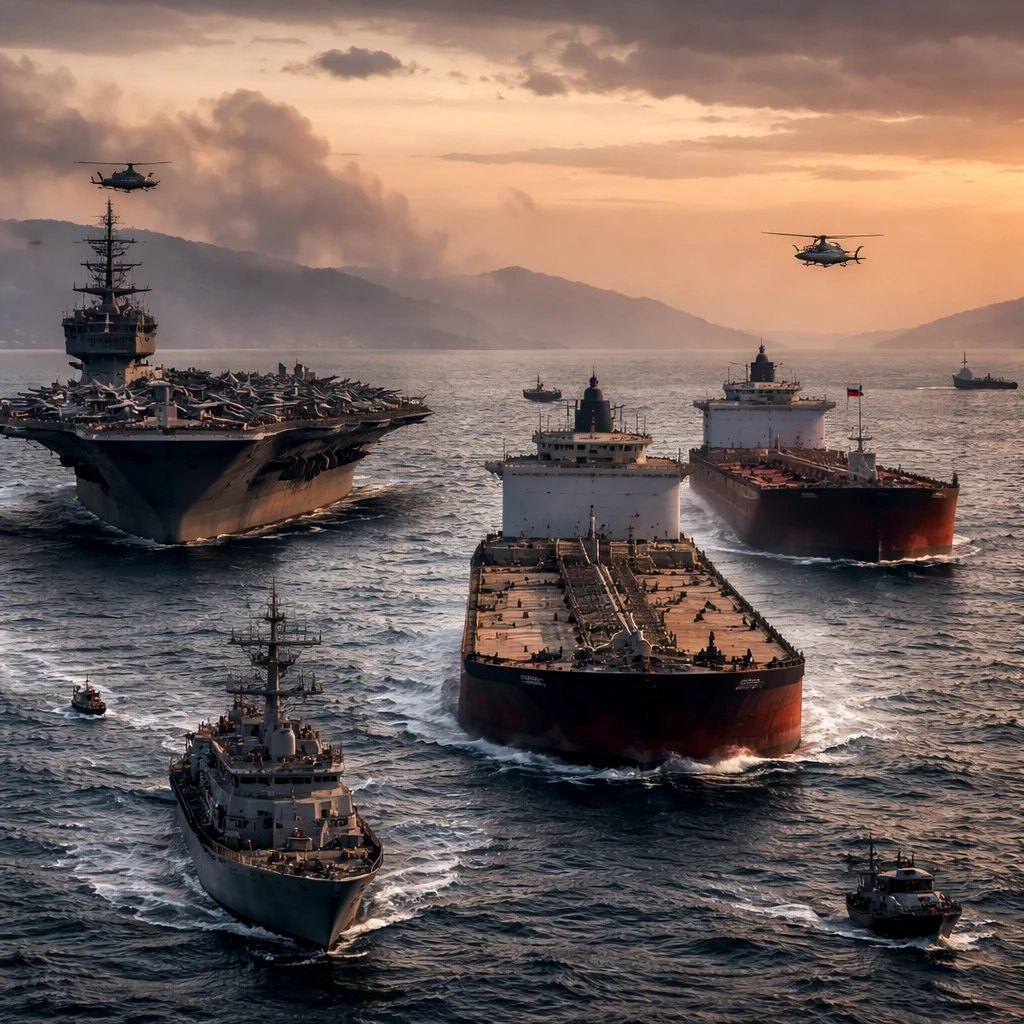
The Pentagon has been holding ongoing discussions about a maritime mission that would closely resemble past U.S. Defense Department operations in the Red Sea. Those earlier deployments included carriers and destroyers assigned to maintain freedom of navigation in the face of threats from an Iran-linked group.

The conversations in Washington reflect concern across government and industry about the combination of heightened military activity, the potential for expanding geographic scope of operations, and the direct consequences for energy shipments originating from major exporters in the region.


Background limitations - The administration's deliberations are ongoing and officials have not announced a formal decision. Details about timing, scope or force composition have not been released.

Risks

  • Escalation of military activity could place additional pressure on energy markets and shipping costs - impacting oil, natural gas and related sectors.
  • Rising or canceled marine insurance coverage increases operational risk for shipping companies and could disrupt supply chains for crude and LNG originating from the Gulf.
  • Uncertainty about the scope and timing of any U.S. maritime mission leaves markets and logistics planners unable to fully assess the transport and security outlook.

More from Commodities

U.S. Special Forces Recover Wounded Airman in Iran as Tensions Spike Over Strait of Hormuz Apr 5, 2026 Zelenskiy Meets Syrian Leader in Damascus to Discuss Security and Food Cooperation Apr 5, 2026 Explosive device located near Serbia-Hungary gas pipeline raises political and energy security concerns Apr 5, 2026 OPEC+ Poised to Approve Theoretical Output Increase as Strait Shutdown Sidelines 15% of Supply Apr 5, 2026 OPEC+ Poised to Approve Symbolic May Output Rise as Hormuz Paralysis Limits Supply Gains Apr 5, 2026