
Rescue operation and presidential warning
U.S. special forces carried out a deep-penetration operation inside Iran to retrieve a weapons officer from an F-15 that had been shot down on Friday, an operation the U.S. president described early Sunday as "one of the most daring" in the nation's history. The airman was wounded but, according to the president, "will be just fine." The jet's pilot was rescued later on the same day.
Following the rescue announcement, the president escalated his public rhetoric, telling Iran to reopen the Strait of Hormuz by Tuesday to allow the flow of oil and natural gas that underpin global energy markets. On his social media platform he wrote: "Tuesday will be Power Plant Day, and Bridge Day, all wrapped up in one, in Iran," threatening strikes on energy and transport infrastructure. In a subsequent expletive-laden post he added: "Open the Fuckin Strait, you crazy bastards, or youll be living in Hell - JUST WATCH! Praise be to Allah. President DONALD J. TRUMP"
Regional military activity and allied actions
Israeli operations have been linked to recent attacks on Iranian infrastructure; Israeli forces struck a major petrochemicals facility in Iran on Saturday. A senior Israeli defence official said Israel was preparing additional strikes on energy facilities next week and was awaiting approval from the United States. Despite those preparations, the president told Fox News on Sunday that Iran was engaged in negotiations and that a deal was possible by Monday, creating a mix of public signals from Washington.
Iranian response and cross-border strikes
Iran has condemned the U.S. threats and expanded its offensive posture across the Gulf. Iran called for an end to hostilities, and its parliamentary speaker, Mohammad Baqer Qalibaf, criticized the U.S. president's threats on social media, saying he was being misled by Israeli Prime Minister Benjamin Netanyahu and posting: "Your reckless moves are dragging the United States into a living HELL for every single family, and our whole region is going to burn because you insist on following Netanyahu's commands."
Demonstrating its ability to strike across borders, Iran launched drone and missile attacks on petrochemical plants in Kuwait, Bahrain and the United Arab Emirates, while the Islamic Revolutionary Guard Corps reported it had struck an Israeli-linked vessel at Dubai's Jebal Ali port. In Kuwait, drone strikes touched off fires and inflicted what state-linked companies described as "severe material damage" at petrochemical facilities run by affiliates of the state oil firm Kuwait Petroleum Corporation.
The strikes highlighted Tehran's capacity to sustain cross-border operations and to disrupt critical energy and maritime infrastructure across multiple Gulf states.
Impact in Israel and Lebanon
Inside Israel, media footage showed search-and-rescue teams working in Haifa after an Iranian missile struck a residential building. Israeli paramedics reported nine people were receiving treatment for injuries. The conflict has also spread to Lebanon, where Israel has resumed strikes against the Iranian-backed Hezbollah. According to Lebanon's health ministry, Israeli airstrikes killed another 11 people on Sunday, part of a wave of casualties concentrated primarily in Iran and Lebanon that amounts to thousands of deaths since the war began.
Details of the extraction and contested accounts
The rescue of the U.S. weapons officer removed the immediate threat of a hostage crisis complicating the U.S. administration's domestic standing. A U.S. official said the extraction, which Israel said it had assisted, involved dozens of military aircraft and met fierce resistance from Iranian forces.
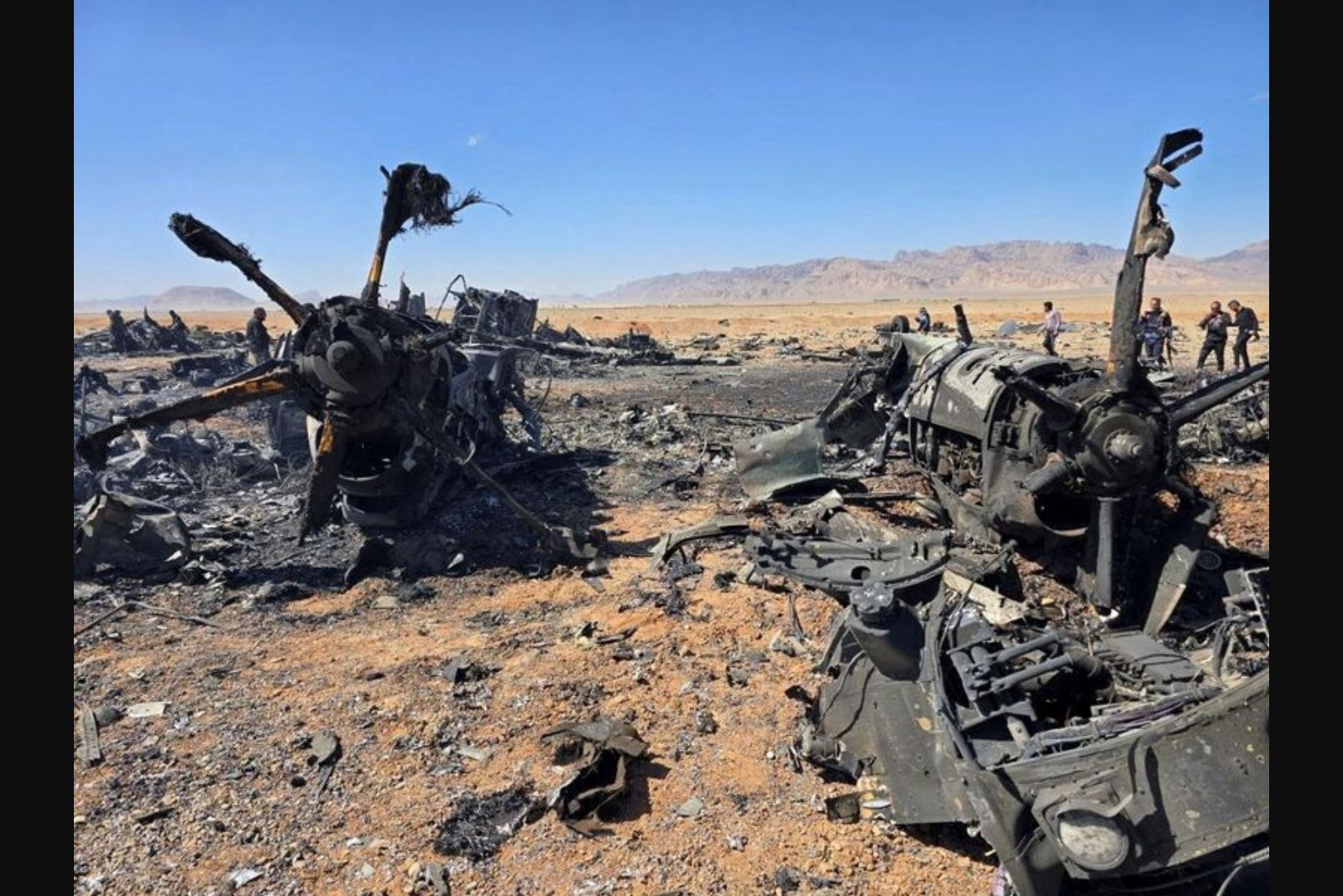
U.S. Senator Dave McCormick, citing a conversation with a Trump administration official, said the rescued pilot had climbed roughly 7,000 feet up a mountain to reach an evacuation point. Iran, however, asserted that several U.S. aircraft were destroyed during the operation, naming two military transport planes and two Black Hawk helicopters among the losses. Social media footage showed burned-out wreckage in the area, which was verified to be in the vicinity of the operation.
The New York Times reported that two U.S. transport planes initially involved in the extraction became immobilized and were subsequently destroyed by U.S. commanders to prevent capture, and that three additional aircraft were dispatched to recover the U.S. personnel. A senior U.S. administration official described the mission as involving a CIA deception campaign that circulated false information inside Iran indicating that U.S. forces had already located the missing airman and were conducting a ground exfiltration. While Iranian forces were uncertain and disoriented, the weapons officer was discovered sheltering in a mountain crevice and was extracted.
Diplomatic efforts and enduring hostilities
Efforts to negotiate an end to the fighting, including mediation attempts brokered by Pakistan, have not produced an agreement. Iran's foreign minister, Abbas Araqchi, reiterated Tehran's position on social media: "What we care about are the terms of a conclusive and lasting END to the illegal war that is imposed on us."
The conflict initially widened after coordinated U.S. and Israeli air strikes across Iran on February 28, and has rapidly broadened its geographic scope and impact. Iran's effective control over the narrow Strait of Hormuz has led to a near-shutdown of the shipping lane, sending crude prices higher and exerting pressure on consumers and businesses worldwide.
What this means for markets and energy infrastructure
The combination of concentrated military activity, targeted strikes on petrochemical and energy sites across multiple Gulf states, and the temporary closure of a strategic chokepoint has intensified uncertainty across energy markets. The rescue operation removed an immediate political flashpoint in Washington, but the broader pattern of strikes, retaliation and threats - including the U.S. president's public warnings to target power plants and bridges - underlines how fragile regional energy and maritime infrastructure has become amid ongoing hostilities.
As diplomatic channels show limited progress and mediation attempts remain stalled, the near-term outlook for regional stability and uninterrupted energy flows remains uncertain.