
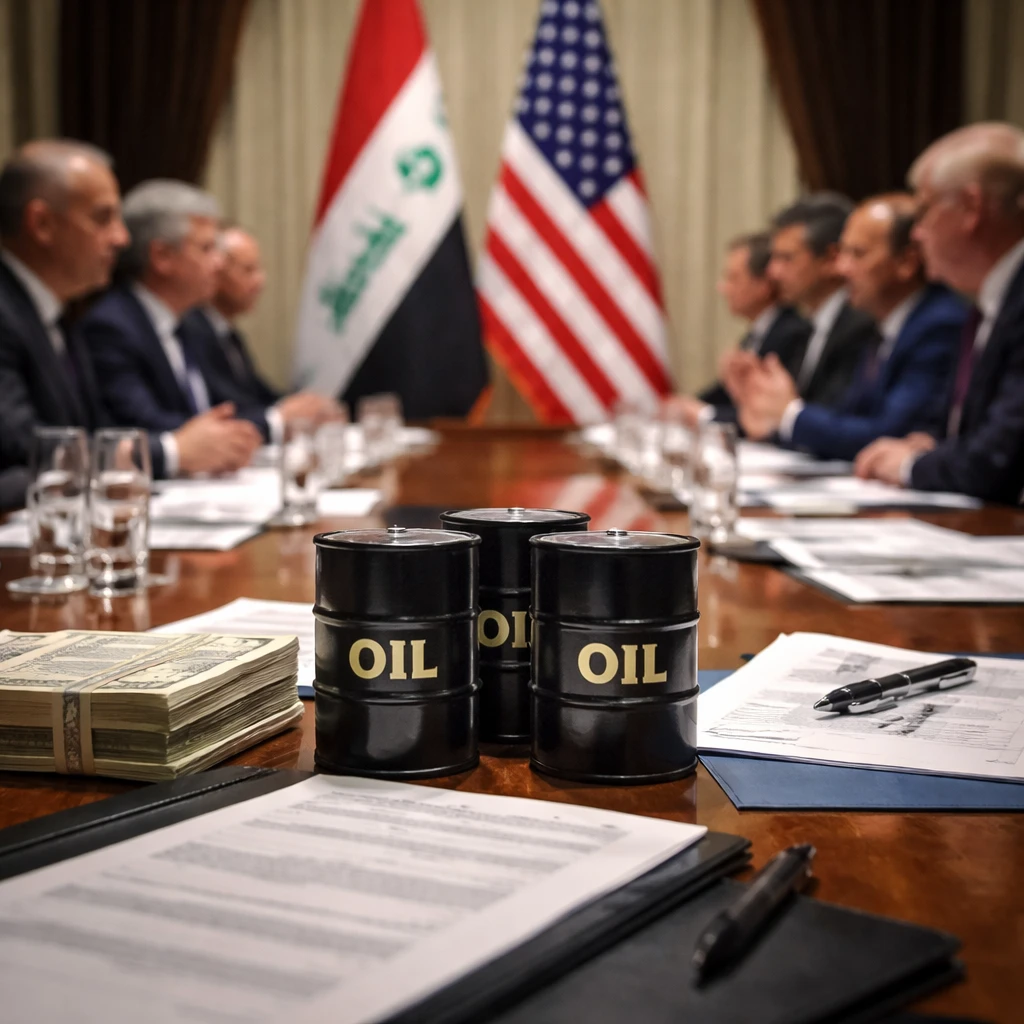
The U.S. government has conveyed stern warnings to senior Iraqi political figures indicating that the involvement of Iran-affiliated armed groups in Iraq's forthcoming government could result in comprehensive sanctions against the Iraqi state. Notably, this includes potential restrictions on the country's essential oil revenue, which is routed through the Federal Reserve Bank of New York. This was confirmed by four sources who spoke on condition of anonymity.
This action represents the most forceful indication to date of the Trump administration's campaign to curtail the political and military influence of Iranian-backed entities within Iraq. The country has traditionally navigated complex relationships with both Washington and Tehran, maintaining a delicate balance between the two.
Repeated messages over the past two months have been delivered through the U.S. Charges d’Affaires in Baghdad, Joshua Harris. His discussions with Iraqi officials, key Shi'ite leaders, and intermediaries connected with Iran-linked groups, have underscored Washington’s position. Three Iraqi officials along with a source close to the matter confirmed these diplomatic engagements, although Harris and U.S. embassy representatives declined requests for comment.
Since President Donald Trump assumed office a year ago, his administration has taken multiple steps aimed at weakening Iran's regional position, with particular focus on Iraq as a strategic conduit. Iran considers Iraq vital to sustaining its economy under sanctions and reportedly uses Iraqi banking channels to bypass financial restrictions, as stated by both U.S. and Iraqi authorities.
Historically, successive U.S. administrations have sought to disrupt this financial pipeline by imposing sanctions on over a dozen Iraqi banks. However, prior to the current stance, dollar transfers from the Federal Reserve Bank of New York to Iraq’s Central Bank have remained largely untouched.
A U.S. State Department spokesperson, responding to inquiries, reiterated America’s support for Iraqi sovereignty and emphasized that Iran-backed militias are viewed as forces promoting malign agendas, sectarian divisions, and terrorism throughout the region. The spokesperson did not specifically address the sanction threats highlighted in discussions with Iraqi officials.
Additionally, President Trump’s recent military actions against Iran’s nuclear program in June and threats of further intervention during recent protests reflect ongoing administration efforts to counter Iranian influence. Attempts to obtain comments from Iraq’s Prime Minister Mohammed Shia al-Sudani, the Central Bank of Iraq, and Iran’s mission to the United Nations were unsuccessful.
Amid these geopolitical tensions, investors and market participants remain attentive to sectoral implications, particularly within oil markets and regional banking institutions that are entwined with these political dynamics.