
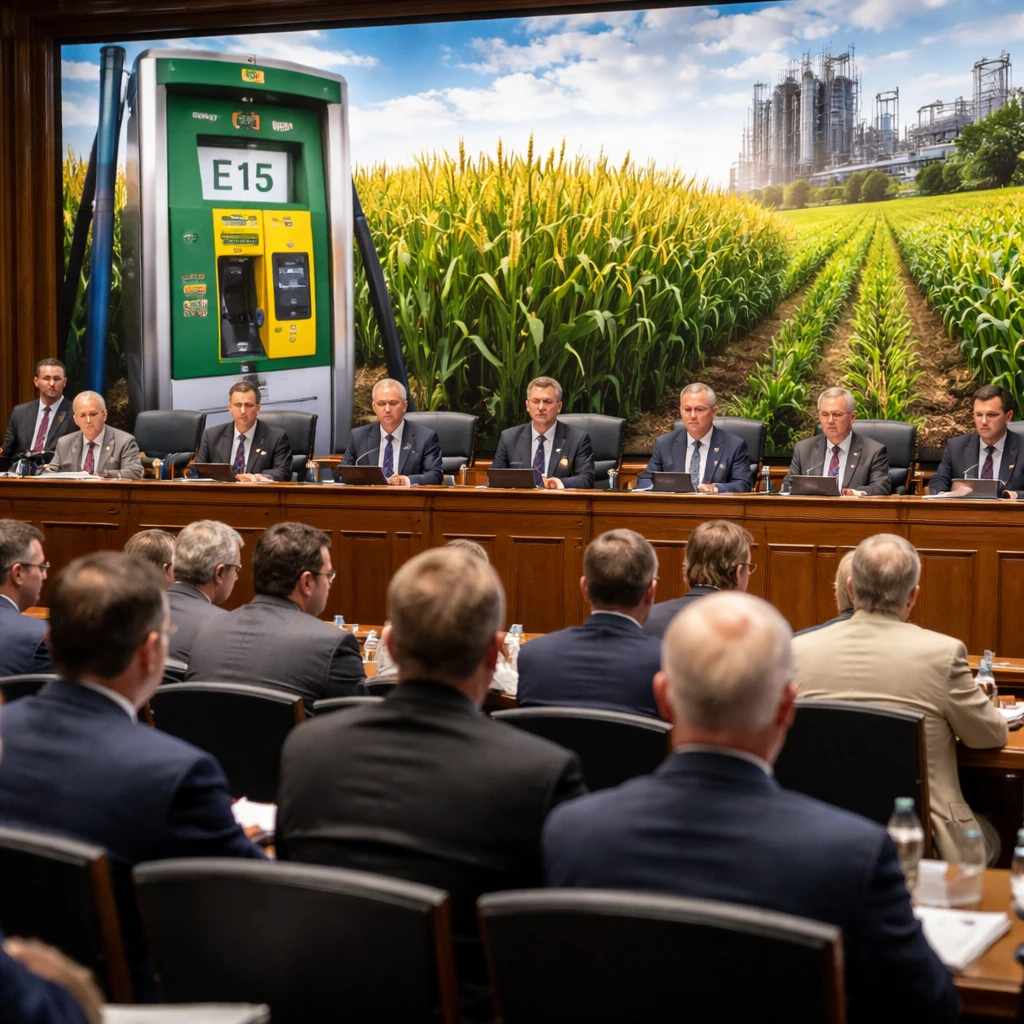
In Washington, D.C., Republican legislators have shifted their approach to advancing year-round availability of E15 gasoline, a blend containing more ethanol than the commonly used E10, following the collapse of an effort to include such provisions in a recent appropriations bill. The unsuccessful legislative push prompted the decision to establish a specialized task force, the "E-15 Rural Domestic Energy Council," which will investigate various aspects of the biofuels landscape.
Supporters of expanded E15 sales, predominantly farm organizations and advocates from the Midwest ethanol industry, strongly criticized this pivot to study and delay substantive legislative action. They view the creation of a task force as a setback for American agriculture, which has been grappling with depressed commodity prices, volatile international trade conditions, and uncertainty regarding U.S. biofuel policy direction.
The primary goal behind promoting year-round E15 sales is to increase demand for corn, the principal feedstock in ethanol production. However, oil refining groups have historically opposed enhanced biofuel blending mandates due to concerns over elevated production costs. Currently, regulations related to air quality limit E15 availability during the summer months.
The newly proposed council is tasked with examining diverse considerations including the domestic sale of E15, the capacity of U.S. refineries, and mechanisms such as biofuel blending credits. It aims to produce legislative recommendations by mid-February, as documented in a draft provision leaked ahead of an anticipated congressional vote.
Critics, such as Geoff Cooper, President and CEO of the Renewable Fuels Association, expressed that deferring decisions through the establishment of an additional council merely intensifies the apprehension already prevalent among rural communities. Democratic Representative Nikki Budzinski from Illinois echoed this sentiment, pointing out that bipartisan agreement with industry backing existed before the task force proposal was adopted, lamenting the withdrawal from direct legislative action.