
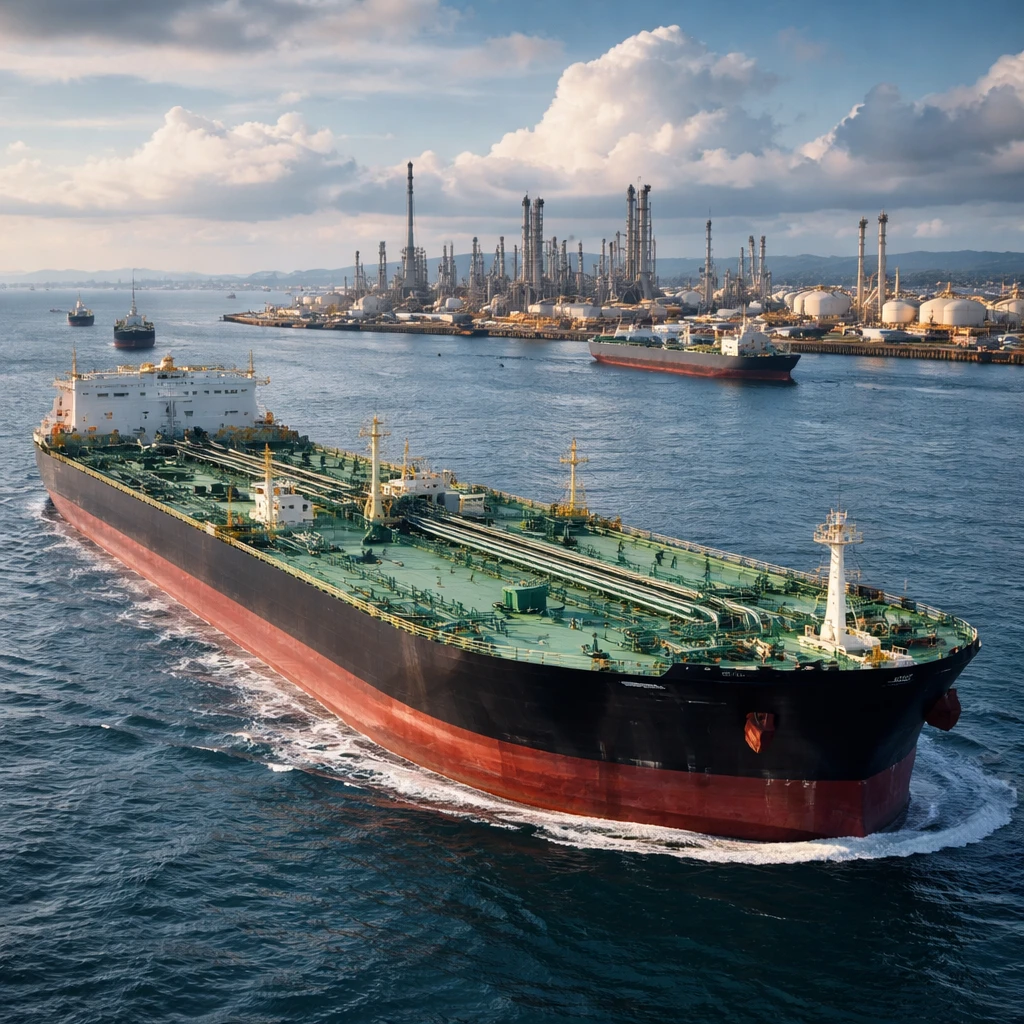
The Trump administration is allowing China to maintain purchases of Venezuelan oil, albeit under newly imposed conditions that prohibit the continuation of the discounted pricing that characterized transactions during Nicolás Maduro's leadership. A U.S. official, speaking anonymously, confirmed on Thursday that while the crude oil remains subject to global market sales, the administration has stipulated that a significant portion of this oil be sold to the United States.
Since the U.S. claimed control over Venezuela's oil exports after Maduro's capture on January 3, Washington has positioned itself to control the pricing and distribution of Venezuelan crude for the foreseeable future. The unnamed official stated, "Thanks to President Donald Trump’s decisive and successful law enforcement operation, the people of Venezuela will collect a fair price for their oil from China and other nations rather than a corrupt, cheap price."
Historically, China has been Venezuela's primary oil purchaser, often securing shipments as part of debt repayment agreements under debt-for-oil arrangements. The U.S. approach now requires these transactions to reflect fair market values, eliminating the "unfair, undercut prices" that Maduro’s government utilized to satisfy its financial obligations to Beijing.
U.S. Energy Secretary Chris Wright recently reported that the United States is receiving approximately $45 per barrel for Venezuelan crude, in contrast to the near $31 per barrel that Venezuela obtained prior to Maduro's detainment. Additionally, trading firms Trafigura and Vitol have facilitated the sale of roughly 11 million barrels of Venezuelan oil, representing about 25% of a $2 billion agreement aimed at redistributing the country's stranded crude.
Trafigura completed its inaugural crude transaction with Spanish energy company Repsol, while Vitol has brokered agreements for delivery to U.S. refiners, including Valero and Phillips 66, as well as its Italian refinery. However, industry analysts and traders anticipate a reduction in China's Venezuelan oil imports starting in February, attributed to a decrease in tanker departures following the U.S. seizure of Venezuela's oil sales control.
Key Points:
- The U.S. government now regulates Venezuelan oil pricing and requires that substantial sales be directed to the U.S. market.
- China remains a buyer of Venezuelan crude but must adhere to fair market pricing, marking a shift from prior discounted debt-for-oil arrangements.
- Major trading firms have initiated sales of Venezuelan oil to various refiners worldwide under newly structured terms.
Risks and Uncertainties:
- Potential decline in Venezuelan oil exports to China could impact the global oil trade dynamics and Chinese energy supply chains.
- The evolving control and pricing mechanisms imposed by the U.S. may introduce volatility or disruptions in Venezuelan crude availability.
- Uncertainties persist regarding the duration and extent of U.S. intervention in Venezuela's oil sector and the geopolitical ramifications thereof.
Disclosure: The information presented is based solely on statements from U.S. officials and publicly reported trading activities as of the dates referenced.