
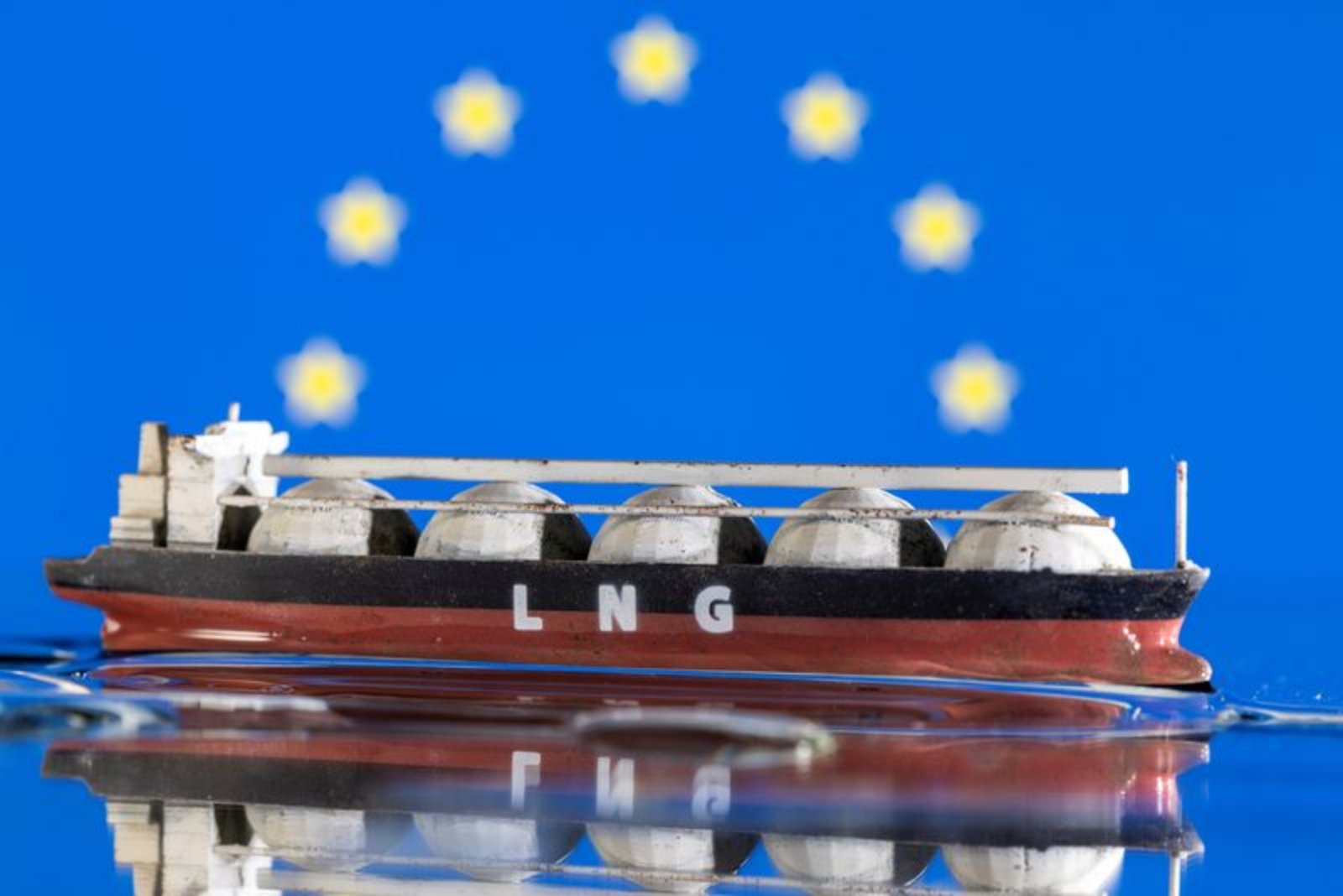
Data from analytics firm Kpler indicates that the United States provided 60% of the European Union's liquefied natural gas (LNG) imports in January. That share represents an increase relative to both the previous month and to January 2025, when the U.S. accounted for 53% of the bloc's LNG inflows.
In volume terms, the EU imported 5.36 million metric tons of U.S. LNG in January, which Kpler identifies as the second-highest monthly total recorded to date, topped only by October 2025. Kpler attributes part of the month-on-month rise to stronger gas demand as cold weather spread across the region.
Looking ahead, Kpler expects the trend of rising U.S. supply to continue. The firm projects that U.S. deliveries could make up roughly 65% of Europe’s total LNG imports this year, up from about 56% in 2025. Those projections point to an expanding role for U.S. exporters in the European gas market.
The shift in EU purchasing patterns has been driven in part by a strategic move to reduce dependence on Russian energy after Moscow's 2022 invasion of Ukraine. The EU increased purchases of U.S. gas as an alternative source, and last year the bloc agreed to commit $750 billion to U.S. energy under a trade arrangement with President Donald Trump.
At the same time, political tensions have sharpened debate within Europe about heavy reliance on U.S. fuel. Concerns intensified following President Trump's reported ambitions regarding Greenland and recent tariff threats, developments some EU governments view as heightening the risks of a new dependency.
EU energy commissioner Dan Jorgensen described the episode over Greenland as a "wake-up call" for energy security policy, warning that Europe risks "replacing one dependency with another" as it diversifies away from Russian supplies.
Kpler's data also shows that Russia still accounted for about 19% of the EU's LNG supplies in January. The EU has agreed a plan to ban all Russian LNG and pipeline gas imports by late 2027. The initial steps of this phased ban will begin in the coming months and will bar short-term Russian LNG contracts.
Observers say the unfolding balance between supply sources will be closely watched by energy market participants, utilities, and policymakers. The pace of substitution away from Russian supplies, the evolution of demand driven by weather and economic activity, and political developments affecting transatlantic relations will all factor into market outcomes.