
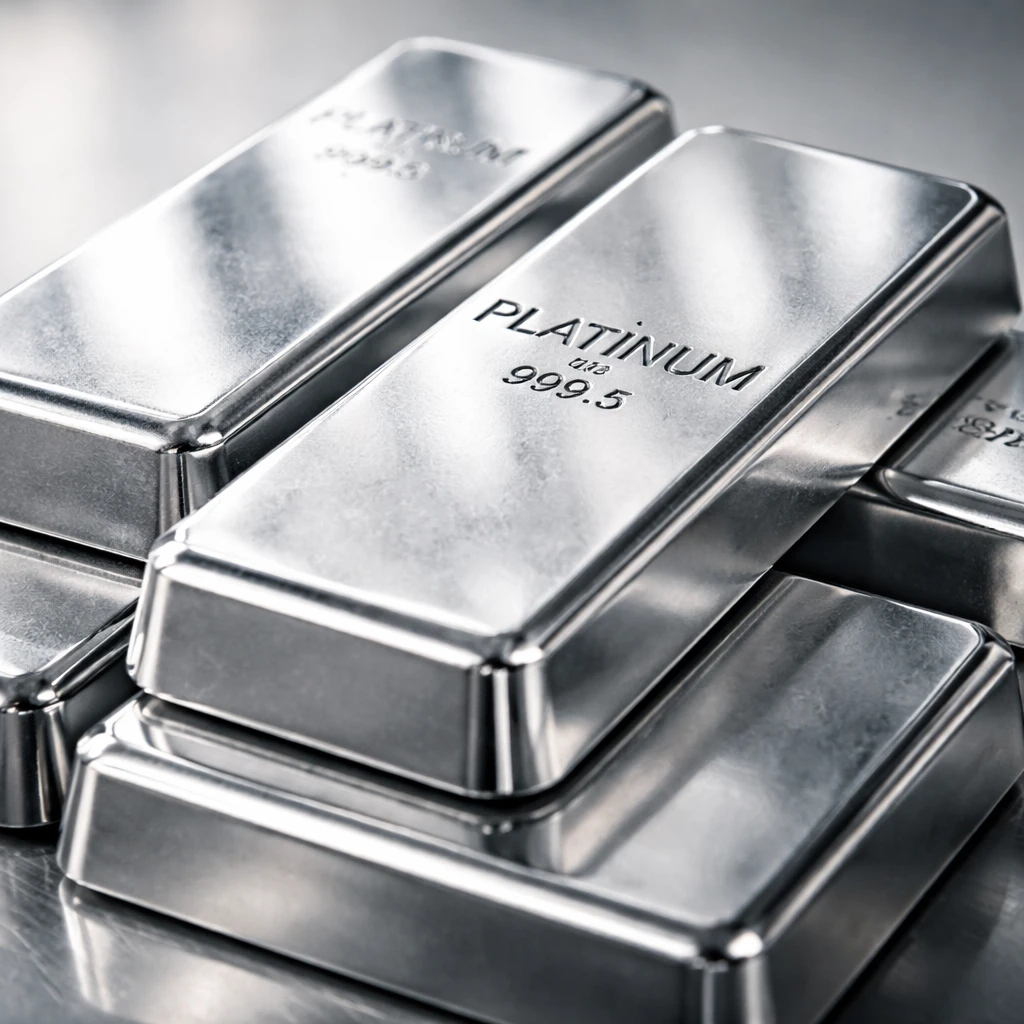
UBS has once again revised upward its price expectations for platinum, driven by a combination of increased investment demand and limited availability in the physical market, both of which have been instrumental in sustaining the metal's recent strong performance.
The firm now projects platinum to reach approximately $2,500 per ounce in the forthcoming months, marking a significant leap following a price doubling observed over the prior seven months that pushed the metal to record highs.
A variety of macroeconomic influences have contributed to this price surge. Among them, the anticipation of reduced interest rates in the United States, ongoing geopolitical risks, and worries about depreciation of the U.S. dollar have all played contributory roles. While demand from industrial applications and the jewelry sector have also positively influenced prices, UBS suggests these factors alone fail to fully account for the magnitude of the current rally.
According to strategists Giovanni Staunovo and Wayne Gordon, the predominant factor behind the rally is substantial investment demand. They emphasize this point by noting elevated lease rates for platinum bars in London, indicators that physical supply remains tight.
The relatively compact size of the platinum market amplifies price sensitivity. Annual consumption for platinum stands near 250 metric tons, a fraction compared to approximately 5,000 metric tons for gold. Additionally, since platinum is priced lower than gold, investors can acquire nearly twice as many ounces for an equivalent investment amount, which further magnifies price reactions.
As Staunovo and Gordon explain, if a subset of investors opts to purchase platinum rather than gold, the combination of a smaller market and lower price level could lead to disproportionately large price fluctuations.
Interestingly, the rise in investment interest has not yet fully manifested in traditional metrics such as exchange-traded fund holdings or futures market positioning, both of which have experienced slight declines this year. UBS infers that increased demand for physical platinum bars is likely the main driver behind the rally and expects this trend to become clearer once quarterly data from the World Platinum Investment Council is published.
The strategists also point to China as a potential contributor to additional demand growth. This follows the recent launch of physically backed platinum futures contracts traded on the Guangzhou Futures Exchange and denominated in local currency, potentially attracting further local investors.
Despite the encouraging near-term forecast, UBS urges caution due to possible price volatility. Excluding investment demand, platinum currently faces a fabrication surplus, which typically acts as a downward pressure on prices. Coupled with the metal's relatively small market size, this condition means substantial price swings are likely to continue in the upcoming months.
Looking ahead, sustained gains in platinum prices will depend heavily on continued strong investment demand, especially as mine production generally requires time to increase in response to higher prices.