
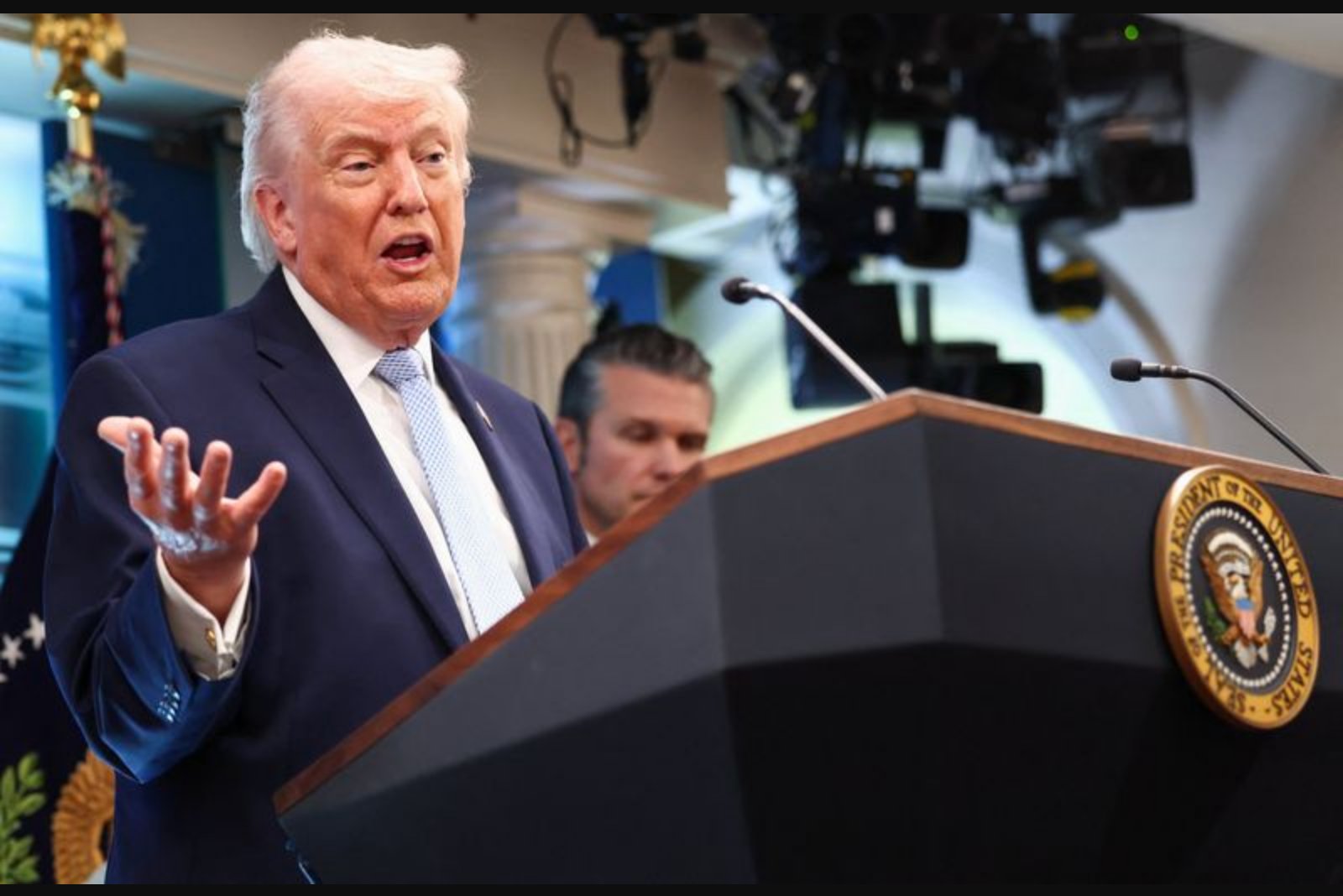
President Donald Trump’s dramatic retreat from an extraordinary and apocalyptic threat against Iran has laid bare the practical limits of a negotiating playbook built on extreme rhetoric and last-minute reversals. On Tuesday morning, the president posted a stark social media warning that unless Iran reached a deal "a whole civilization will die tonight, never to be brought back again." Within hours, he agreed to a Pakistani-mediated two-week ceasefire, announcing the truce only about two hours before a deadline he himself had imposed for Iran to open the blockaded Strait of Hormuz.
The sequence of events - an escalation to the brink followed by a rapid de-escalation - marked the most significant step yet toward cooling a 40-day-old conflict that has rattled the Middle East and disrupted global energy flows. Despite triumphalist language from the White House claiming that U.S. forces had "already met and exceeded all Military objectives," analysts caution the outcome may leave Washington with continuing strategic headaches.
Those critics note that while Iran appears militarily weakened in some respects, the leadership in Tehran has likely hardened, and the country retains de facto control over the vital oil-shipping route in the Strait of Hormuz. The country also maintains a buried stockpile of highly enriched uranium, a fact highlighted by U.S. and Israeli air strikes earlier in June that reportedly pushed some of that material underground. These conditions, analysts say, leave unresolved questions about whether the administration can achieve its stated goals, including permanently severing Iran’s path to a nuclear weapon - a point Tehran denies seeking.
Trump has long cultivated an image as a dealmaker and negotiator, tracing that self-portrayal back to his years as a real estate developer. Yet several analysts and Washington observers argue that his penchant for hyperbolic threats and maximum-pressure ultimatums can backfire by limiting his own options and undermining U.S. credibility abroad. "The president was trapped by his own hyperbole," said Jon Alterman of the Center for Strategic and International Studies think tank in Washington. "He could not have destroyed Iranian civilization, and the costs of even appearing to try would have been massive."
There is a broader concern that the effectiveness of this approach is diminishing. A Republican lawmaker who had been in contact with the White House on Tuesday night noted that the "surprise value is wearing off," referring to a pattern in which Trump issues severe threats and then reverses course. Such reversals invite both allies and adversaries to calibrate responses against the expectation that tough pronouncements may not be sustained.
White House press secretary Karoline Leavitt dismissed the suggestion that the president had backed down, telling reporters that his language is part of a "tough negotiating style" and insisting that the world should "take his word very seriously." Yet even with that defense, the episode illustrated the thin line between signaling resolve and creating a diplomatic or legal exposure - legal experts argued the rhetoric could have been interpreted as amounting to war crimes.
Trump’s pattern of adopting extreme positions and then retreating is well established, analysts say. At times it has looked intentional, designed to extract concessions through intimidation. At others it has appeared haphazard, with aides kept in the dark and subsequent reversals prompted by pressure from markets or core political supporters. This latest shift followed a recent spike in U.S. gasoline prices and a dip in the president’s approval ratings, factors that can reshape calculations in the Oval Office.
The political shorthand for such reversals - "TACO," or "Trump always chickens out" - surfaced around similar policy U-turns over the past year. The label gained traction when the president backtracked on steep tariffs that had initially been announced, moves that came after a sharp selloff in U.S. equities. In those cases, markets responded to the reversals, with benchmark indices rebounding sharply; on Wednesday, the S&P 500 rose 2.5% after the ceasefire announcement.
Beyond tariffs, Trump has dialed back on other ambitious or controversial proposals, from suggesting Denmark cede Greenland to the United States, to pursuing direct control over parts of Gaza. His public deadlines have occasionally produced results - for example, a push for a ceasefire in the Israel-Hamas war did yield a pause in hostilities - but other ultimatums, such as calls for militant groups to fully disarm, have not produced the desired outcomes.
At the same time, analysts note that the president’s second term has included instances where rhetoric translated into forceful action. In an operation that followed a substantial U.S. naval buildup off Venezuela and strong public threats, a special forces raid in January reportedly led to the capture of President Nicolas Maduro and a more U.S.-compliant leadership in Caracas. The administration also joined Israel in attacking Iran on February 28, part of a broader pattern of escalating military pressure even as diplomatic channels remained active over the Iranian nuclear program.
Observers disagree over whether the recent Iran episode represents a failure of grand strategy or a high-risk tactic that achieved an acceptable, if temporary, breathing space. Supporters argue the administration maneuvered Tehran to the edge and secured an off-ramp that it wanted, while critics say the heavy-handed language and abrupt about-face could produce longer-term costs.
Jonathan Panikoff, a former deputy U.S. intelligence officer for the Middle East now with the Atlantic Council, framed the result as a tactical escape. "I wouldn’t say he blinked," Panikoff said. "He took Iran to the edge and managed to escape with at least the temporary off-ramp he had been hoping would come."
Alexander Gray, who served as a senior official in the first Trump administration and now leads a consultancy, rejected the notion that the president simply backed down. Gray described the heated rhetoric as a method of "escalating to de-escalate," suggesting that confronting Tehran with extreme pressure was intended to force a negotiated easing of tensions.
Some proponents of the hardline approach draw on the so-called Madman Theory - the idea that cultivating a reputation for unpredictability and possible irrationality will compel opponents to offer concessions out of fear. That theory, associated with earlier U.S. presidents in different contexts, underpins a belief among some hawkish analysts that extraordinary threats can produce strategic gains.
Mark Dubowitz, chief executive of the Foundation for the Defense of Democracies, said he understood the logic of trying to "out-crazy the Iranians," while acknowledging significant drawbacks. "The problem with the Madman Theory of geopolitics is you’re not only going to scare your enemy, but you’re scaring your allies and you’re scaring your people," Dubowitz said. The tension between deterrence and alienation of partners highlights a central trade-off of this negotiating philosophy.
Implications for markets and security
The episode has immediate implications for energy markets, investor sentiment, and geopolitical risk pricing. The 40-day conflict had already disrupted global energy flows, and the prospect of a prolonged confrontation involving the Strait of Hormuz - a critical artery for oil shipments - heightened market volatility. The brief market rally following the ceasefire shows how sensitive equity markets are to headline developments in major geopolitical flashpoints.
Strategically, analysts caution that Iran’s residual capabilities and a potentially more hardline government could pose an ongoing challenge to U.S. objectives. Even if some military objectives have been met, the underlying issues of enriched uranium stockpiles and control over strategic waterways remain unresolved according to observers quoted above.
Summary
President Trump’s last-minute acceptance of a Pakistani-mediated ceasefire with Iran, after issuing a threat of unprecedented severity, highlighted the limits of a negotiation style based on extreme rhetoric and brinkmanship. While the administration framed the ceasefire as a success in meeting military goals, analysts warn Iran’s strategic position and internal politics could leave Washington facing continued challenges. The pattern of big threats followed by reversals raises questions about credibility, the durability of results, and the broader effects on markets and alliances.
Key points
- Trump issued an apocalyptic threat to Iran, then accepted a Pakistani-mediated two-week ceasefire about two hours before a self-imposed deadline to open the Strait of Hormuz.
- Analysts say Iran may be militarily weakened but likely to have a harder-line leadership, retain control over the Strait of Hormuz, and maintain buried stockpiles of highly enriched uranium.
- The president’s pattern of extreme positions followed by reversals - sometimes labeled "TACO" - has market and credibility implications, evidenced by a 2.5% rise in the S&P 500 after the ceasefire announcement.
Risks and uncertainties
- Political credibility risk: Repeated reversals after extreme threats may weaken U.S. bargaining power with adversaries and allies, affecting diplomatic leverage.
- Market volatility risk: Geopolitical flare-ups around critical shipping lanes and energy supplies can trigger sharp moves in oil and equity markets, as seen with gasoline prices and the S&P 500’s reaction.
- Strategic durability risk: Military actions may degrade some Iranian capabilities but leave unresolved issues such as enriched uranium stockpiles and control over the Strait of Hormuz.
Note: The article reflects statements and observations made by analysts and officials during the events described. It does not add or infer details beyond those reported by primary sources.