
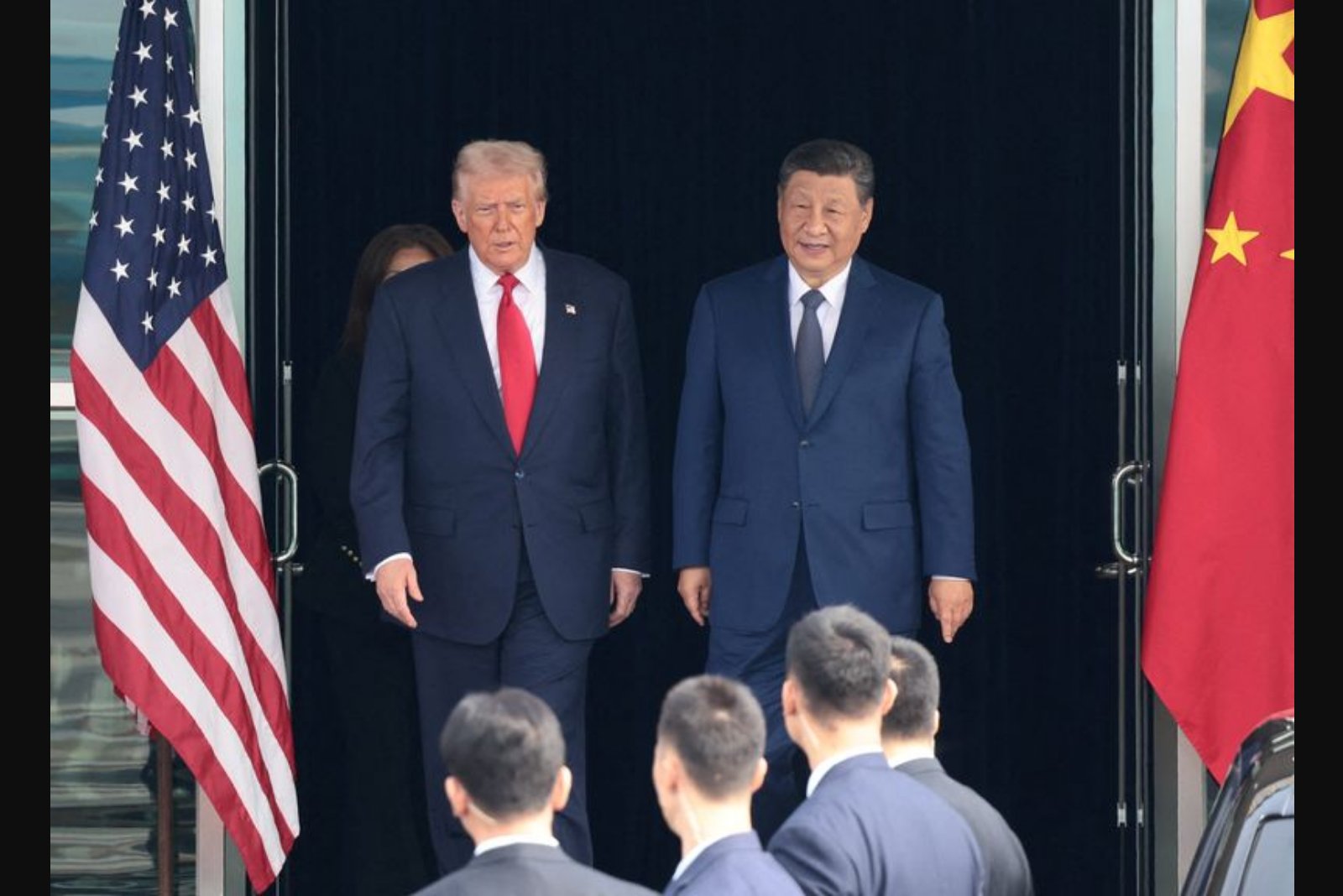
President Donald Trump said Wednesday that China is weighing larger purchases of U.S.-grown soybeans following a phone call he described as "very positive" with President Xi Jinping. The conversation, the first between the two leaders since late November, touched on a range of trade and security topics and included public affirmations from each leader about the importance of stable U.S.-China ties.
In what Trump framed as a goodwill gesture ahead of an anticipated state visit to Beijing, he said Xi would consider increasing China's soybean purchases for the current season to 20 million tons, up from the 12 million tons previously reported. The announcement prompted a sharp rally in soybean futures on the Chicago Board of Trade, where benchmark contracts climbed more than 3 percent to reach a two-month high after Trump’s post.
An official Chinese government account quoted Xi as saying, "I attach great importance to Sino-U.S. relations." Trump characterized the call as "all very positive," adding that his relationship with Xi is "extremely good" and that "we both realize how important it is to keep it that way." The messages from both capitals underscored a shared rhetorical interest in preserving stability between the world's two largest economies.
Despite the conciliatory tone, substantial areas of tension remain. Taiwan policy was a central point of friction. In December the United States announced what it described as its largest-ever arms package for Taiwan, valued at approximately $11.1 billion and intended to bolster the island's ability to defend itself. Taipei expects additional weapons sales, and Beijing reiterated the delicate nature of the issue in its post-call summary, saying, "The United States must carefully handle arms sales to Taiwan."
China regards Taiwan as its territory, a position rejected by Taipei. While Washington maintains formal diplomatic relations with Beijing, it also sustains unofficial ties with Taiwan and has long been the island's primary source of defense materiel. U.S. law obliges American authorities to provide Taiwan with the means to defend itself, creating a recurring flashpoint in bilateral ties.
The call also came in the context of other sensitive security developments. The article referenced an apparent dismissal or investigation affecting several senior military figures in China, including Central Military Commission vice-chairman Zhang Youxia. That development has raised concern about potential foreign policy implications, though Trump downplayed the matter, saying over the weekend that "as far as I’m concerned, there’s one boss in China," and "that’s President Xi."
On broader arms control, the piece noted that the last nuclear treaty between Russia and the United States is near expiration, a condition observers say raises the risk of a renewed arms competition. The article said China will play a key role in that prospective dynamic because of its expanding nuclear arsenal. Trump has expressed a desire to involve China in arms control discussions. The Kremlin indicated arms control was a subject in Xi's talks with Russian President Vladimir Putin; however, the White House did not respond to a request about whether arms control featured in the Xi-Trump exchange.
Economic frictions remain another major area of contention. Trump has placed tariffs at the center of his agenda to revive U.S. manufacturing employment. Still, the article notes that U.S. policy toward Beijing has eased in recent months on several fronts, including tariffs, advanced computer chips and drones. Experts and officials framed both sides' recent actions as signals that stabilizing the relationship is a priority.
U.S. Vice President JD Vance, the article states, unveiled plans for a preferential trade bloc of allied countries focused on critical minerals, a move described as an effort to neutralize one element of China's leverage stemming from its dominance over certain key metals. Both capitals, the article reports, are seeking pragmatic areas of concord ahead of Trump's expected April state visit to Beijing.
Soybeans emerged as a politically significant commodity in the dialogue. The article notes that struggling U.S. farmers are an important constituency for Trump, and China is the world's largest consumer of soybeans. Exports of U.S. soybeans have been hit by trade tensions, with overseas sales this year falling to their lowest level in 14 years, according to the reporting. The prospect of increased purchases by China is therefore a notable development for agricultural markets and rural economies.
China's commerce ministry had not immediately responded to a request for comment about the soybean purchases cited by Trump. In addition to soybeans, Trump said the leaders discussed Iran, Russia's war in Ukraine, airplane engines and oil and gas during their call.
The piece also touched on energy and geopolitics beyond Asia. China has been Venezuela's top oil buyer for years, and oil-for-loans arrangements have helped Caracas repay sizeable loans to Beijing through debt-for-oil deals. The article said the United States removed Venezuelan leader Nicolas Maduro last month, and that the U.S. has indicated China may be expected to purchase Venezuelan oil on terms favorable to Washington.
Overall, the call between Trump and Xi combined conciliatory rhetoric and concrete economic signals with reminders of persistent strategic dilemmas. Markets reacted to the soybean comments, while policymakers on both sides continue to balance domestic political pressures and broader security concerns as they prepare for further high-level engagement.