
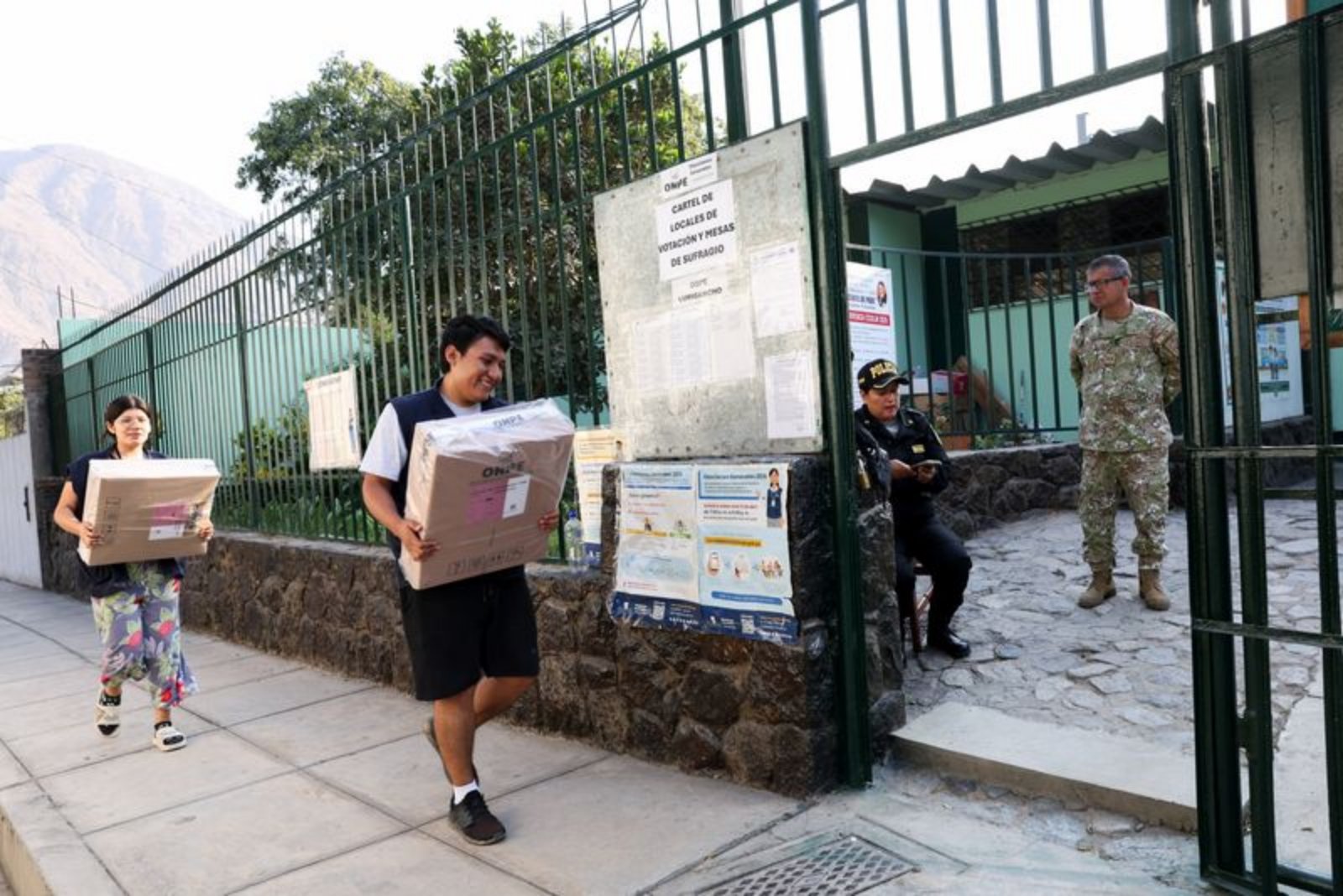
Peru’s electorate is heading to the polls on Sunday to choose a new president and members of Congress in a contest characterized by an unusually large roster of presidential candidates and widespread voter disillusionment. More than 30 contenders are listed for the first round, and with no candidate near the 50% mark needed for an outright victory, a June 7 runoff is likely.
Voting stations open at 0700 local time (1200 GMT). Around 27 million people are eligible to cast ballots. Polling is scheduled to end at 5 p.m. (2200 GMT), and preliminary tallies from the country’s election monitor are expected shortly thereafter.
Public sentiment entering the vote is sour. In the capital, a fruit seller, Gloria Padilla, expressed skepticism about the choice facing voters, saying, "Peru is a mess, and there’s no candidate worth voting for." Her comment reflects a broader sense of frustration that has built up after years of political turbulence.
Political instability has been a hallmark of recent Peruvian politics: since 2018 the country has cycled through eight presidents. That churn, driven by impeachments, corruption scandals and fragile governing coalitions, has eroded confidence in institutions and left many voters doubtful that any incoming administration will complete a full five-year term.
Observers point to widespread dissatisfaction with Congress as a central grievance. Martin Cassinelli of the Atlantic Council said voters "really despise the current Congress" and hold it responsible for much of the political turmoil of the last decade.
The crowded slate of candidates spans the ideological spectrum, with entrants ranging from established politicians to business figures and entertainers who have leveraged anti-establishment sentiment to gain traction.
Among the best-known contenders is conservative Keiko Fujimori, who is running for president for the fourth time after reaching the runoff in three prior races. Fujimori, educated in the United States and leader of the Popular Force party in Congress, has presented herself as a guarantor of order and economic stability, messaging that resonates with voters alarmed by a surge in violent crime. Her candidacy remains polarizing because of her family legacy and past legal troubles.
Former Lima mayor Ricardo Belmont, now representing the center-left Civic Works Party, has surged into a second-place position after a late rise in support. He is followed in the polls by popular comedian Carlos Alvarez, who has campaigned on a tough-on-crime platform. Both Belmont and Alvarez are widely characterized as outsiders who have benefited from public anger toward traditional politics.
On the right, former mayor Rafael Lopez Aliaga, a wealthy businessman with socially conservative views, has campaigned on an ultra-conservative platform though his level of support has fluctuated.
Security concerns have dominated the campaign agenda. Homicides and extortion have increased in recent years, with drug trafficking and illegal mining cited as contributing factors. Most leading candidates have proposed expanding the role of the armed forces in internal security operations as a response to rising public insecurity.
The election also carries geopolitical weight. Peru’s deepening economic ties with China - now its largest trading partner and a major investor in mining and infrastructure - have prompted concern in Washington, which has intensified diplomatic and security engagement in the run-up to the vote. Those international dynamics add another layer of consequence to the outcome, given Peru’s status as the world’s third-largest copper producer.
Whoever advances to the likely runoff will confront a fragmented Congress and a newly reinstated Senate, which could complicate attempts to pass legislation and raise the prospect of renewed impeachment battles. That institutional fragmentation is widely viewed as a factor that could limit the effectiveness of the next administration, regardless of the victor.
With ballots cast and stations closing in the evening, attention will quickly shift to preliminary results. The pace of post-vote developments and the likelihood of a runoff mean political uncertainty is set to continue for weeks, at minimum, with implications for governance and for sectors sensitive to policy and security developments, particularly mining and related trade relationships.