
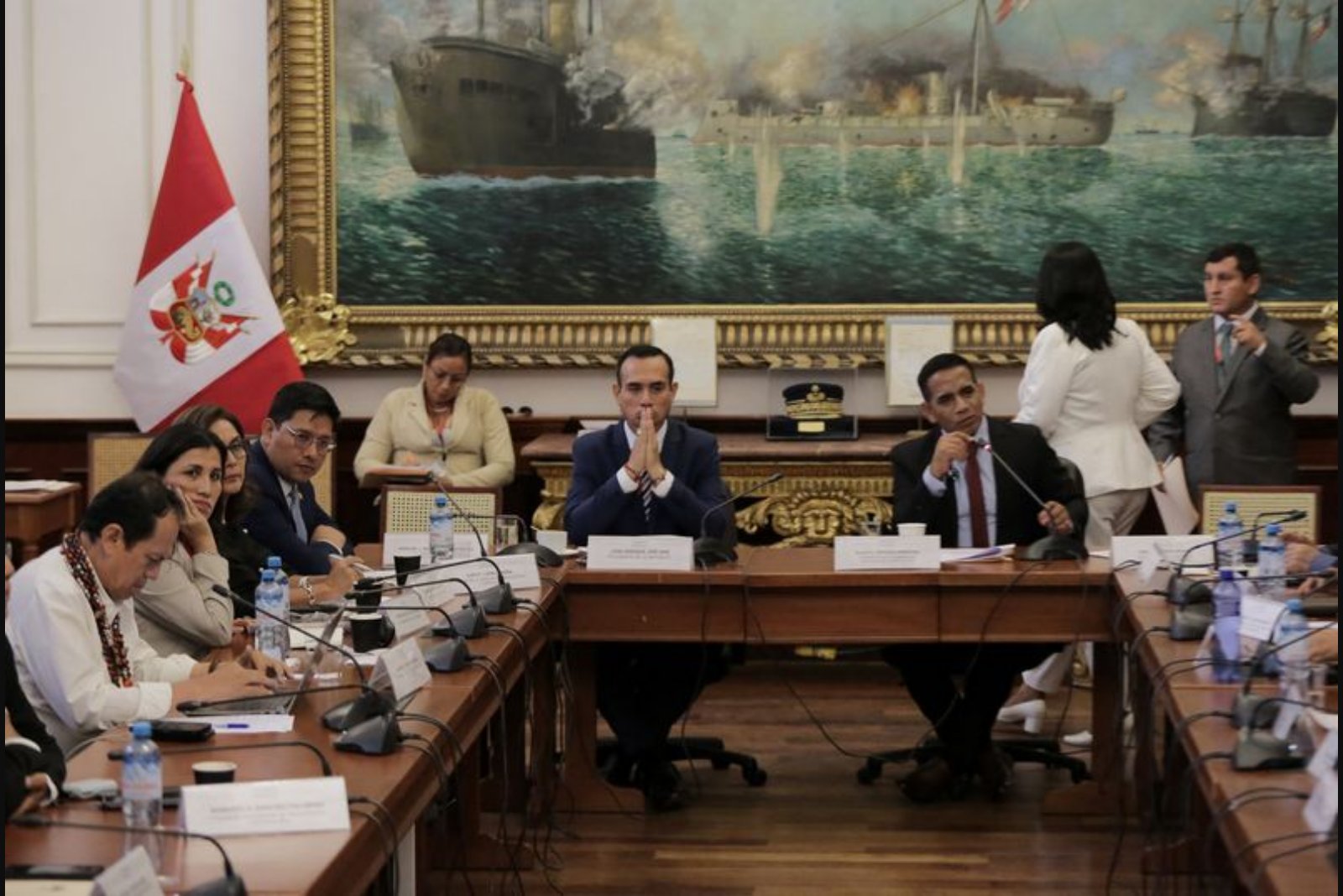
LIMA, Jan 27 - A political controversy over undisclosed meetings between Peru’s acting president and a Chinese businessman has intensified scrutiny of the South American copper exporter’s ties to China at a time when U.S. attention on Beijing’s presence in the region is increasing.
Jose Jeri, who assumed the presidency in October after the ousting of former President Dina Boluarte, acknowledged he held three meetings between December and January with Zhihua Yang, a businessman who owns Chinese import shops and holds a concession for an energy project. Jeri has denied any wrongdoing related to those encounters.
Yang has previously been named in congressional probes as allegedly providing logistical support to Chinese firms suspected of corruption, and the disclosure of his meetings with the acting president has prompted immediate political consequences. Opposition lawmakers have filed impeachment motions seeking Jeri’s removal, and the public prosecutor’s office has opened a preliminary investigation into alleged influence peddling, an accusation Jeri rejects.
The case - dubbed "Chifagate" in local media - arrives as Washington has stepped up influence efforts in the region aimed at limiting China's footprint. Analysts say the timing compounds pressure on Lima as it contends with internal political turbulence ahead of the presidential election scheduled for April 12.
"It wouldn’t be surprising to see the Trump administration questioning China’s investment in Peru. It did so in Mexico and Panama, and potentially using pressure tools to nudge Peru away from China," said Martin Cassinelli, a trade and investment analyst at the Atlantic Council.
For Jeri, who is charged with completing the current government's term through July, the fallout has been measurable in public opinion. Polling firm Datum Internacional reports his approval rating fell from 51% to 41% after the scandal surfaced. An Ipsos survey over the weekend found that 78% of respondents perceived signs of corruption in Jeri’s meetings with the businessman.
Beyond immediate political ramifications, the controversy has focused attention on the breadth and depth of Peru’s China ties. A free trade agreement signed in 2009 helped propel China past the United States as Peru's top trading partner beginning in 2015. Government data through November of last year show China accounted for 33% of Peru’s trade, compared with 14% for the U.S.
China also plays an oversized role in Peru’s copper sector and energy and infrastructure landscape. Chinese entities operate one of the country's largest copper mines and buy about 70% of Peru’s copper output. Chinese firms are owners of some of Peru’s largest power generators, and in late 2024 began operating the new Chancay megaport, establishing a direct South America-Asia trade route.
Given those linkages, some analysts and former diplomats say altering the commercial relationship would be challenging.
"We have several key instruments that sustain them, including a free trade agreement in force with China," said Juan Carlos Capunay, former Peruvian ambassador to China, arguing that the administrative and political structures supporting the relationship make it difficult for outside actors to quickly dismantle or weaken it.
Still, the scandal has drawn attention to less savory perceptions around how Chinese investment is handled in Peru. Critics say that if public trust in Chinese projects and contracts erodes, future investments may become harder to secure.
"If Peruvians, who up until now looked favorably upon Chinese investment projects, are to question the credibility of that investment, new Chinese investments and government contracts will be less welcome by a society sensitive to allegations of corruption and undue favoritism for foreign companies," Cassinelli said.
Jhon Valdiglesias of the Center for Asian Studies at Peru’s National University of San Marcos added that criticism of a Chinese businessman tends to be perceived as criticism of China more broadly. "I think it definitely casts a shadow over all relations with China," he said.
Representatives of China’s embassy in Peru did not respond to a request for comment.
Peru has experienced significant political turnover in recent years, registering seven presidents since 2018, but the country has maintained one of the region's stronger growth rates in recent periods, in part supported by steady mining revenues. That economic context may temper how readily Peru pivots away from established Chinese commercial ties even as political controversy unfolds.
As the investigation proceeds and the electorate prepares to choose a new president in April, the intersection of domestic politics, public perception and international influence campaigns is likely to remain central to debates about foreign investment, trade and strategic infrastructure in Peru.