
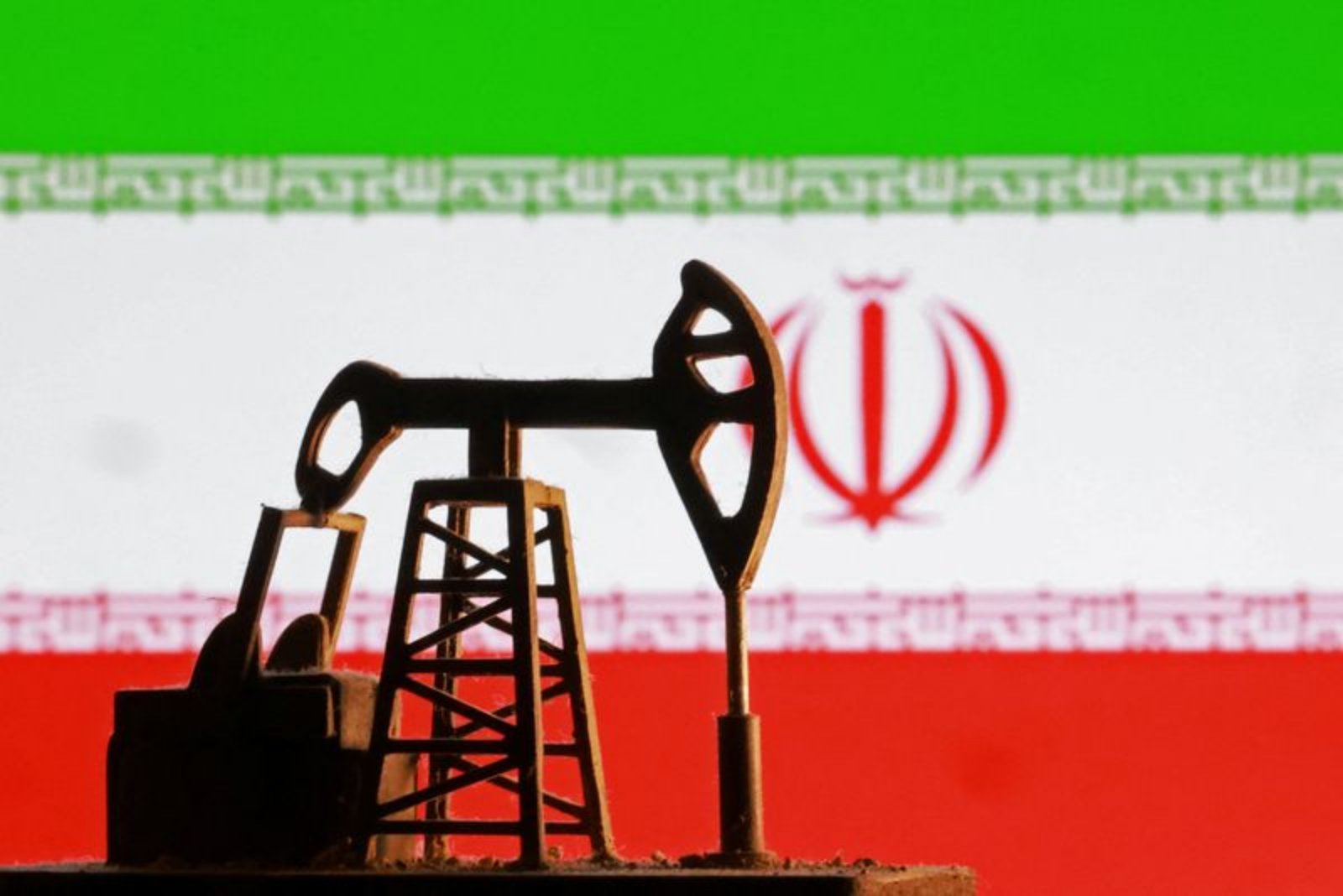
Summary: Oil prices extended gains amid renewed U.S.-Iran tension after a U.S. military strike on an Iranian drone and a separate episode in the Strait of Hormuz involving Iranian gunboats and a U.S.-flagged vessel. Benchmarks were higher in early Asian trade, supported by industry data showing a large weekly draw in U.S. crude inventories and by trade developments between the U.S. and India that have implications for global oil flows.
Brent crude futures were trading at $67.98 per barrel, up 65 cents, or 1.0%, at 0111 GMT. U.S. West Texas Intermediate (WTI) was at $63.90 per barrel, an increase of 69 cents, or 1.1%. Both contracts had climbed by nearly 2% on the previous trading day.
The U.S. military reported that it shot down an Iranian drone that had "aggressively" approached the Abraham Lincoln aircraft carrier in the Arabian Sea. In a separate encounter in the Strait of Hormuz, maritime sources and a security consultancy said a group of Iranian gunboats moved toward a U.S.-flagged tanker north of Oman. These incidents together revived concerns among traders about the risk of a wider escalation between Washington and Tehran, which in turn supported oil prices.
Heightened tension in the region was cited by market analysts as a key driver. "Heightened tensions in the Middle East provided support to the oil market," said Satoru Yoshida, a commodity analyst with Rakuten Securities.
Iran has also signaled conditions for talks with the U.S., requesting the meetings be held in Oman rather than Turkey and seeking to narrow the agenda to two-way nuclear discussions only. Those stipulations have created uncertainty over whether the scheduled meeting will go ahead.
The strategic importance of the Strait of Hormuz underpins the market reaction. Major OPEC producers - Saudi Arabia, Iran, the United Arab Emirates, Kuwait and Iraq - export most of their crude through that waterway, primarily to Asian markets. According to U.S. Energy Information Administration data cited in recent reporting, Iran ranked as the third-largest OPEC crude producer in 2025.
In addition to geopolitical influences, oil prices received support from industry inventory data. Sources citing American Petroleum Institute figures reported that U.S. crude stockpiles fell by more than 11 million barrels last week. The market was awaiting official confirmation when the U.S. Energy Information Administration releases its data at 10:30 a.m. EST (1530 GMT). Analysts polled by Reuters had been expecting a rise in U.S. crude inventories, making the reported API drawdown notable.
Market sentiment was also affected by trade and sanctions dynamics. On Tuesday, oil markets were bolstered by a U.S.-India trade agreement that traders said had raised hopes for firmer global energy demand. Continued Russian attacks on Ukraine have kept concerns alive that Russian crude would remain subject to prolonged sanctions, a factor that also lent support to prices. "India's trade agreement with the U.S. to halt purchases of Russian crude, along with the ongoing Russia-Ukraine war, is also providing support," Yoshida added, projecting that WTI would likely continue to trade around $65 a barrel for now.
With both geopolitical frictions in the Gulf and signs of tighter U.S. inventories, traders remain attentive to confirmation of the official EIA figures and to further developments in U.S.-Iran interactions and diplomatic negotiations.
Key points
- Geopolitical incidents involving a downed Iranian drone near the Abraham Lincoln carrier and Iranian gunboats approaching a U.S.-flagged tanker lifted oil prices.
- Industry data showed U.S. crude inventories fell by over 11 million barrels; official EIA data are due at 10:30 a.m. EST (1530 GMT).
- Trade developments between the U.S. and India and ongoing Russia-Ukraine tensions are adding to market support for crude.
Risks and uncertainties
- Escalation of military incidents between the U.S. and Iran could increase the risk of supply disruptions, affecting oil flows through the Strait of Hormuz and impacting crude-dependent sectors.
- Diplomatic uncertainty - including Tehran's conditions for talks with the U.S. - leaves the outcome of planned meetings unclear, which may prolong market uncertainty for energy and shipping sectors.
- Discrepancies between industry API figures and the official EIA inventory report create short-term volatility risk for energy markets and trading desks until official data are released.