
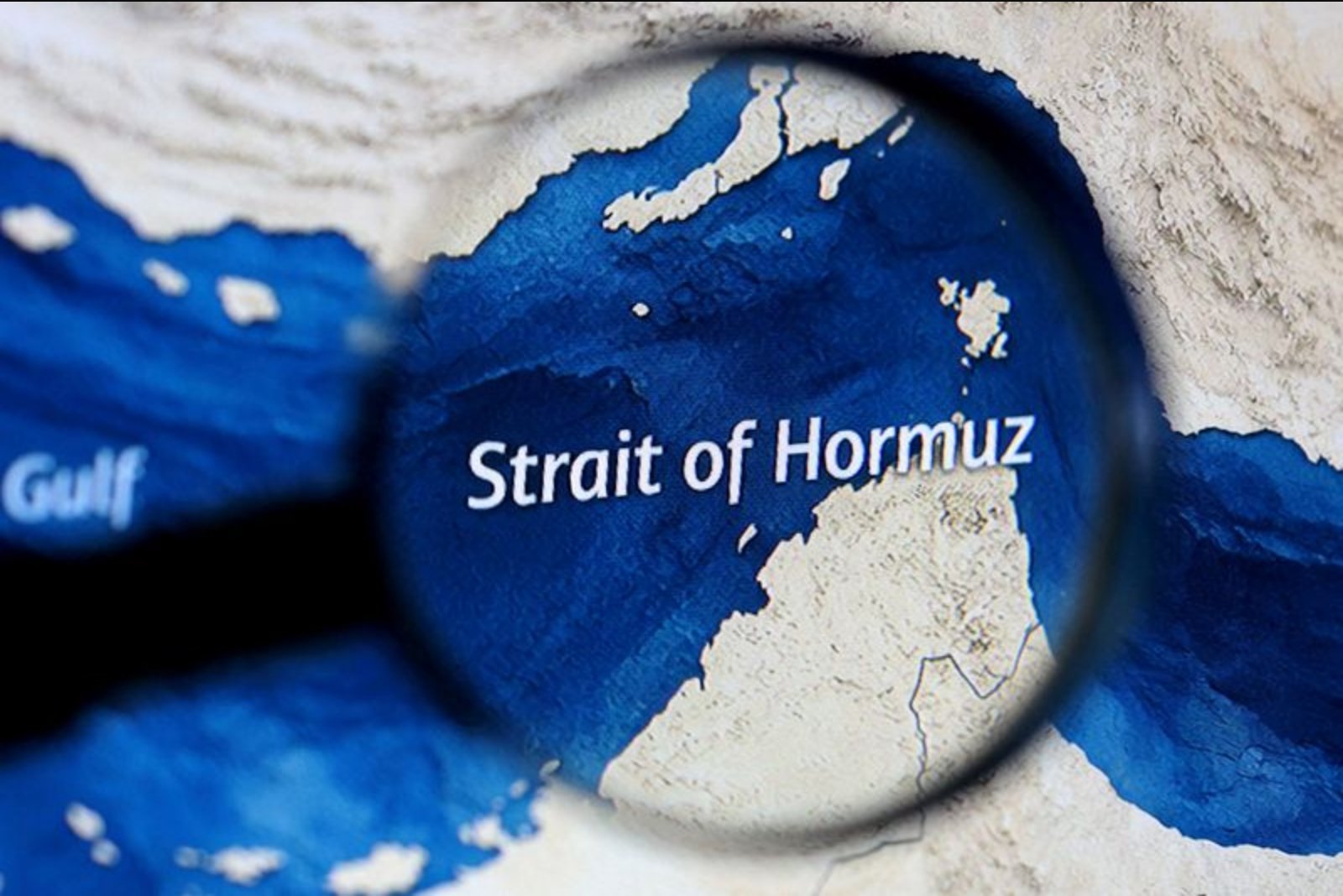
The shutdown of the Strait of Hormuz and the resulting jump in global oil prices have produced sharply divergent financial outcomes across Middle Eastern oil states. The tight waterway, which normally handles roughly one fifth of world oil and LNG shipments, was effectively closed after U.S. and Israeli airstrikes on Iran at the end of February. The closure, combined with a broader widening conflict, has propelled an extraordinary shock through energy markets.
Iran later said it would permit passage only for vessels that had no U.S. or Israeli links. That proviso allowed some tankers to traverse the narrow channel, but markets still experienced disruptions on a scale not seen before: international Brent crude rose 60% in March, marking a record monthly increase.
Geography has been decisive
Not all producers have been affected equally. The distribution of physical export options - pipelines, ports and alternative sea routes - has largely determined which countries have benefited and which have lost revenue. Countries that can route oil around the Strait have been able to capitalize on higher prices or at least limit revenue losses. Those that depend exclusively on the Hormuz chokepoint have found exports effectively trapped.
Iran, which exercises control over the Strait, has been one of the countries to record a revenue gain. Oman and Saudi Arabia have also seen increases because they possess infrastructure that allows shipments to bypass Hormuz. By contrast, Iraq, Kuwait and Qatar have been most directly harmed because they lack alternative overland or seaward routes to major markets.
Political escalation and immediate responses
U.S. President Donald Trump has issued stark warnings to Tehran, threatening to rain "hell" on the country unless it agreed to terms by the end of Tuesday that would allow traffic to resume through the Strait. Following that threat, an Iranian official said Iran would not reopen the waterway as part of a temporary ceasefire. Iranian authorities have rejected previous ultimatums, saying they will not be humiliated.
Some analysts see the conflict dynamic as strengthening Tehran's position in certain respects. "Now that Hormuz has been closed, it can be closed again and again, and that poses a major threat to the global economy," said Neil Quilliam, associate fellow at Chatham House. "The genie is out of the bottle."
The International Energy Agency has characterized the confrontation as the largest energy supply shock to date in the current crisis, estimating more than 12 million barrels per day of regional shut-ins and damage to roughly 40 energy facilities.
How revenues shifted - the data behind the headlines
A Reuters analysis of March export data, employing export volumes from ship-tracking firm Kpler and JODI statistics where available, multiplied those volumes by average Brent prices and compared the resulting values against the same month a year earlier. The analysis used Brent for simplicity, while noting that many regional crudes are priced against other benchmarks that have been trading at significant premiums to Brent.
- Iran's estimated oil export revenues rose by 37% year-on-year.
- Oman's revenues increased by 26%.
- Saudi Arabia recorded a 4.3% rise in oil export revenues.
- The United Arab Emirates saw a 2.6% decline in estimated oil export value, as the price surge offset lower exported volumes.
- Iraq and Kuwait experienced the sharpest falls, with estimated notional export revenues plunging by about three-quarters year-on-year.
Among Gulf producers, Iraq's revenue fall was the steepest in absolute terms, plunging by 76% to $1.73 billion. Kuwait's estimated revenue fell by 73% to $864 million. For Iraq, that figure was close to the March oil revenue number released by its state oil marketer SOMO, which put March receipts at about $2 billion.
Pipelines and ports that offered alternatives
Saudi Arabia has long invested in ways to avoid dependence on Hormuz. Its principal bypass is the East-West pipeline, a 1,200-kilometre (746-mile) link constructed in the 1980s during the Iran-Iraq war to move crude from eastern fields to the Red Sea port of Yanbu. The line has been expanded to a capacity of 7 million barrels per day and is in operation at that expanded capacity. Aramco uses roughly 2 million barrels per day domestically, leaving roughly 5 million bpd available for export via the Red Sea.
Despite the advantage that pipeline provides, Saudi Arabia's overall crude exports fell 26% year-on-year in March to 4.39 million bpd, according to Kpler and JODI data. Yet higher world prices meant the value of those exports rose by roughly $558 million compared with a year earlier. Yanbu loadings alone averaged near-capacity 4.6 million bpd in the week starting March 23, even after March 19 attacks targeting the hub.
Riyadh had also pre-emptively increased exports in February to their highest since April 2023, a move designed to create headroom in the event of a U.S. strike on Iran.
The UAE's Habshan-Fujairah pipeline, which can move about 1.5-1.8 million bpd and bypasses the Strait, offered the emirates some protection. Nevertheless, the UAE's estimated oil export value still fell by more than $174 million year-on-year in March, a decline influenced by a series of attacks on Fujairah that led to loading halts.
Why some producers were left exposed
Countries without alternative routes have seen exports trapped. For Iraq, Kuwait and Qatar, the lack of bypass infrastructure meant their crude could not be shipped to international markets at scale while the Strait was effectively closed. Some cargoes did manage to sail in the early days of the conflict, slightly mitigating the March figures for the most affected states, but those shipments were the exception rather than the norm.
In one example, a tanker loaded with Iraqi crude sailed through the Strait after Iran announced Iraq would be exempt from restrictions. That shipment illustrates how ad hoc exemptions and carefully curated permissions can affect individual cargoes, but they do not change the broader pattern of sharply reduced flows from producers lacking alternative routes.
Fiscal implications and policy options
For countries whose revenues rose, higher oil prices translate into larger royalties and taxes on state oil companies. In Saudi Arabia's case, that has translated into higher receipts from Aramco, the state-controlled oil giant. The additional revenue is particularly welcome to a kingdom that has been running significant expenditure programs aimed at diversifying the economy away from oil and that had been managing a budget deficit.
For the nations facing sharp revenue drops, governments have a limited set of options to manage the shock. Gulf states generally have fiscal buffers: policy makers can draw on sovereign savings or, if necessary, access international capital markets to issue debt. Adriana Alvarado, vice president of sovereign ratings at Morningstar DBRS, noted that apart from Bahrain, Gulf governments mostly have fiscal room to handle the shock, with government debt at moderate levels below 45% of GDP. She did caution, however, that longer-term impacts are uncertain.
Beyond fiscal responses, some companies and policymakers in the West are pressing for renewed investment in fossil fuel infrastructure to insulate markets from similar shocks. Other analysts, pointing to commercial actions taken in the crisis, see a potential acceleration of investment in renewables. One immediate commercial signal of that shift was a recent joint venture between TotalEnergies and UAE state-backed Masdar to deploy renewable energy in Asia, a deal valued at $2.2 billion.
Outlook and remaining vulnerabilities
Even producers with alternative routes remain exposed to other attack vectors and to actions by militia groups. Analysts caution that Iranian allies or proxies, including Houthi forces in Yemen, could strike at western energy infrastructure or target vessels transiting the Bab el-Mandeb Strait en route to the Red Sea, potentially interrupting flows from Red Sea ports.
The crisis has thus highlighted a structural vulnerability: control over chokepoints and overland pipeline access can insulate some exporters from immediate losses, but regional conflict can still threaten key nodes in the rerouted supply chain. The pattern of winners and losers is therefore not permanent and could change if conflict dynamics evolve.
For now, the earnings picture is clear: some Gulf producers have received unexpected windfalls from higher crude prices, while others have seen revenues collapse as shipments were curtailed. The IEA estimates and the export value calculations underscore the scale of the disruption, but the ultimate fiscal and economic consequences will depend on how long the Strait remains effectively constrained and on whether countries can further diversify their export logistics or their revenue bases.