
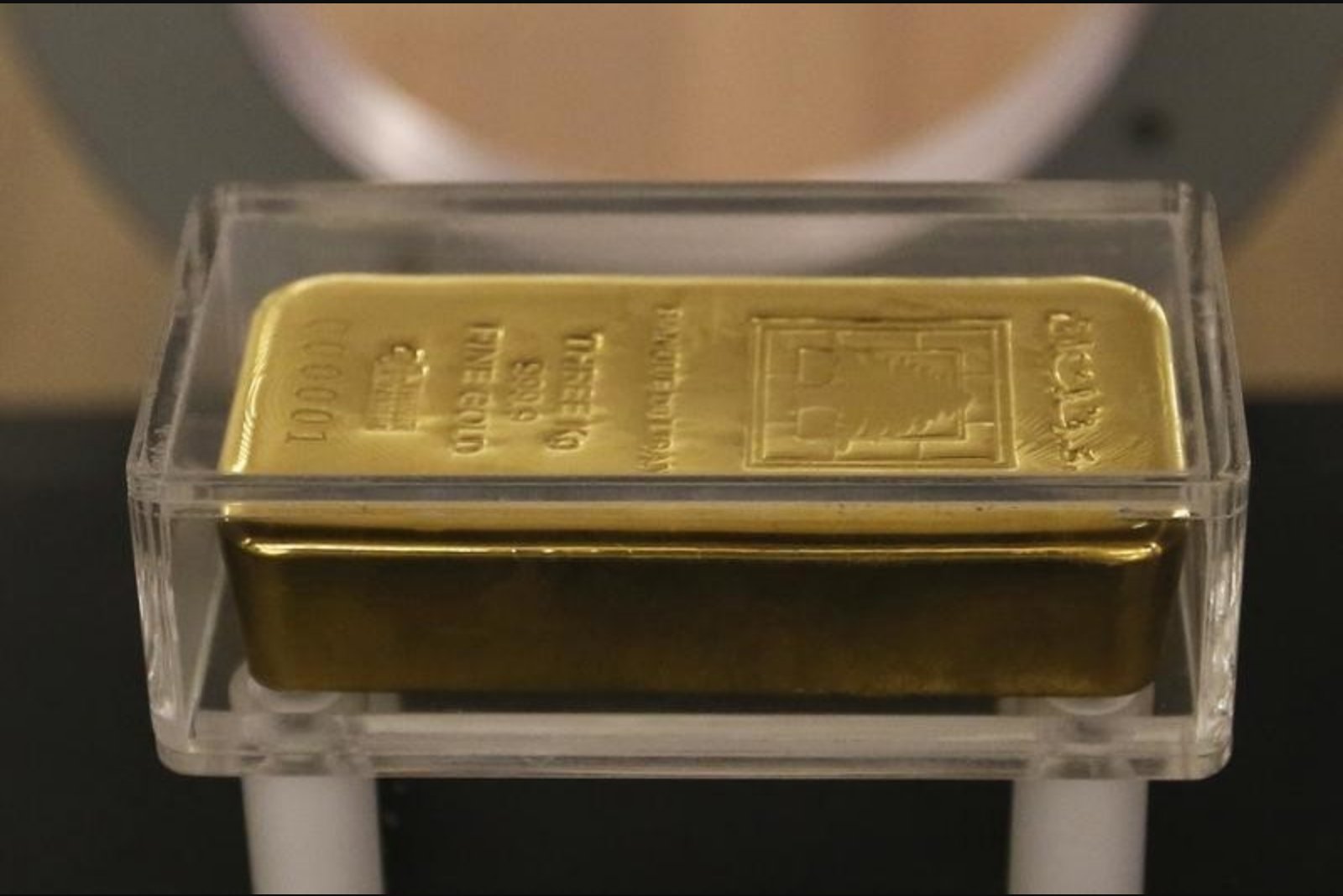
Gold came under renewed selling pressure on Monday as a stronger U.S. dollar and hotter-than-expected inflation data in the United States dented demand for the metal. Market participants sought the greenback as a safe haven after ceasefire discussions between the U.S. and Iran produced little agreement.
Spot gold fell 0.6% to $4,720.67 an ounce by 01:06 ET (05:06 GMT), while gold futures declined 0.9% to $4,743.20/oz.
Other precious metals moved lower as well. Spot platinum slipped slightly to $2,047.06/oz, and spot silver dropped nearly 2% to $74.3975/oz.
Geopolitics lift the dollar
The dollar index gained roughly 0.4% on Monday as investors increased holdings of the U.S. currency amid elevated haven demand. The rise in the dollar followed a weekend of marathon talks in Pakistan between U.S. and Iranian representatives that failed to produce meaningful de-escalation.
Officials from Washington and Tehran remained at odds over several issues cited during the talks, including Iran's nuclear activities, the status of the Strait of Hormuz, and Tehran's support for militant groups in the Middle East. The lack of consensus contributed to a stronger dollar as traders sought refuge from geopolitical uncertainty.
In response to the breakdown in talks, U.S. President Donald Trump ordered a naval blockade of the Strait of Hormuz. The order was later clarified to indicate the blockade will specifically target Iran's ports and ships. The blockade is scheduled to begin from 10:00 ET (14:00 GMT). Tehran largely rebuked U.S. plans for the blockade. The prospect of a U.S. blockade was described in market commentary as increasing the risk of military escalation and as limiting near-term prospects for reopening the Strait of Hormuz, a key energy shipping route.
Inflation jump adds pressure
Adding to bullion's challenges, U.S. consumer price index inflation data showed a sharp increase in March, reflecting higher energy costs linked to the Iran conflict. The CPI rose 3.3% year-on-year in March, below expectations of 3.4% yet up markedly from 2.4% in February.
Markets interpreted the CPI print as reinforcing concerns about higher oil and gas prices feeding through to broader inflation. The Strait of Hormuz has been described as remaining largely closed since late-February, and a U.S. blockade was cited as offering little encouragement that the route would reopen soon. Higher energy prices tied to disruptions in shipping were seen as a factor lifting inflation readings.
The stronger inflation data prompted traders to pare back expectations for interest rate cuts by the Federal Reserve over the next 12 months, according to measures compiled by CME FedWatch. Reduced expectations for easing by the Fed are generally viewed as negative for gold and other non-yielding assets, and concerns about steady rates were noted as a key factor behind gold's underperformance since the onset of the Iran war. Observers also pointed to a prior, strong rally in gold through late-2025 as a restraint on fresh buying interest.
U.S. producer price index inflation is scheduled for release later this week, a data point markets will watch for further direction on price pressures.
Market implications
The combination of heightened geopolitical risk, constrained energy shipping routes, and a firmer U.S. dollar alongside rising consumer inflation has pressured precious metals. The interplay between elevated inflation readings and the shifting outlook for U.S. monetary policy was described by market participants as central to recent moves in gold and silver prices.
Traders will monitor developments surrounding the Strait of Hormuz, any shifts in U.S.-Iran diplomatic activity, and upcoming U.S. inflation releases for cues on both the dollar and metal prices.