
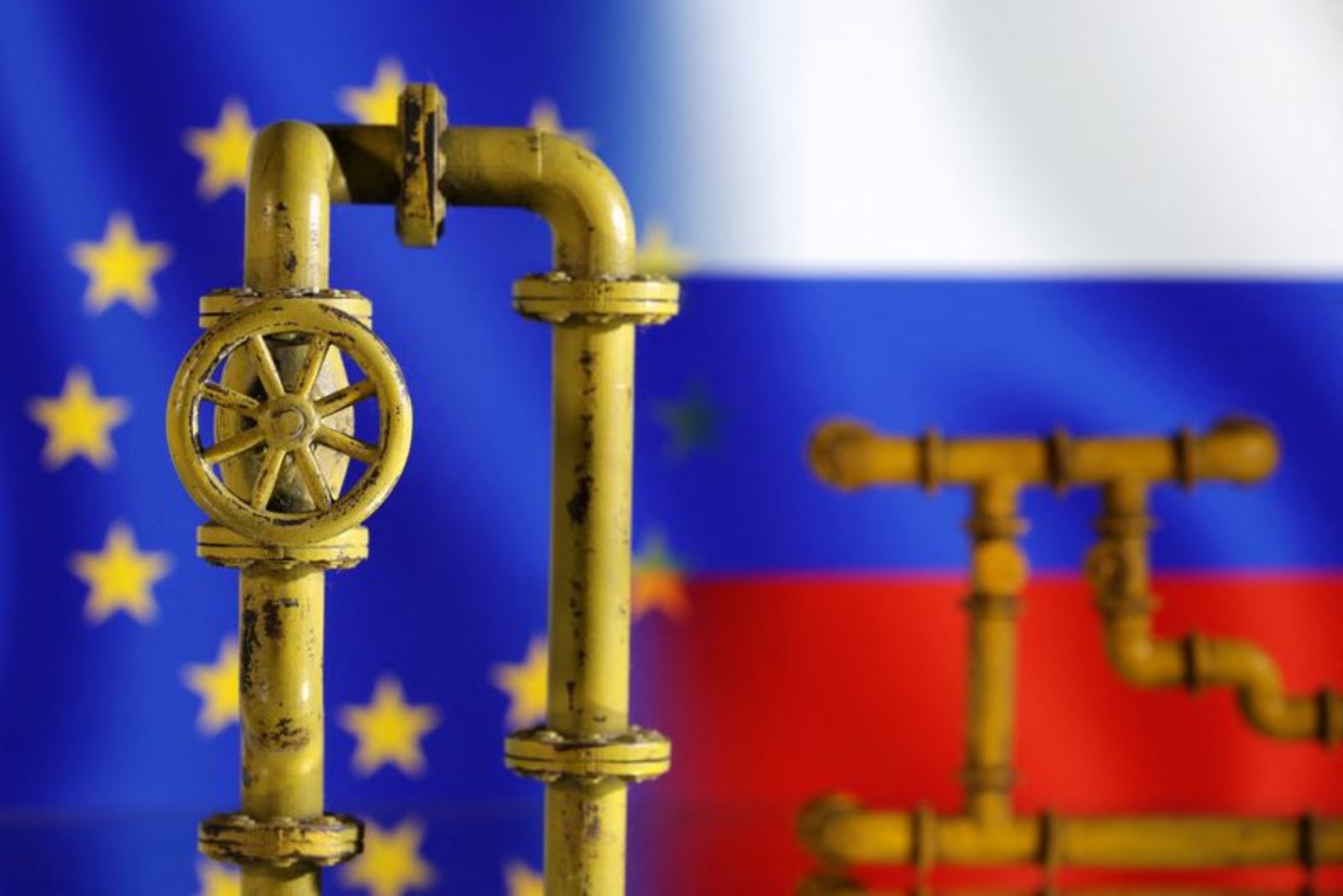
European Union governments on Monday gave the final green light to a law that will prohibit Russian gas imports by late 2027, making the bloc's pledge to sever dependence on its former principal supplier legally enforceable almost four years after the escalation of hostilities in Ukraine.
Ministers meeting in Brussels approved the statute, although the vote was not unanimous: Slovakia and Hungary voted against, and Bulgaria abstained. Hungary notified it will challenge the measure at the European Court of Justice.
The legislation was structured to pass with a reinforced majority, enabling it to prevail despite opposition from Hungary and Slovakia, both of which retain relatively high reliance on Russian energy and seek continued close relations with Moscow.
Key provisions set concrete deadlines for the phase-out: imports of Russian liquefied natural gas will be halted by the end of 2026, while pipeline gas will be banned from September 30, 2027. The law does allow a single extension to November 1, 2027 at the latest for countries that demonstrate difficulty filling their underground storage caverns with non-Russian gas before the onset of winter.
Prior to 2022, Russia supplied more than 40% of the EU's gas. That share had fallen to roughly 13% in 2025, according to the latest EU data referenced in the legislation. Nonetheless, some member states continue to purchase Russian oil, pipeline gas and LNG, a practice that the law aims to curb as part of efforts to limit funding to Russia's wartime economy.
Last month, the bloc's five largest importers of Russian energy reportedly spent a combined 1.4 billion euros on supplies from Russia, primarily gas and LNG. Among them, Hungary was identified as the largest purchaser, followed by France and Belgium. The cited figure uses an exchange reference of 1 US dollar equaling 0.8432 euros.
The law contains strict contractual provisions. Companies will be barred from entering into new gas supply agreements with Russian entities and will be required to wind down existing contracts in order to comply. Short-term contracts in effect before June 17, 2025 will be treated differently depending on delivery type - imports under short-term LNG agreements will be banned on April 25, 2026, and short-term pipeline gas contracts will be banned on June 17, 2026. Long-term contracts must be phased out by the final deadlines.
To enforce the ban, the law permits fines of up to 3.5% of a company's total global annual turnover for non-compliance.
Beyond gas, the European Commission also intends to bring forward proposals in the coming months to phase out Russian pipeline oil and to reduce reliance on Russian nuclear fuel.
The passage of this legislation represents a legal turning point in the EU's energy policy toward Russia, prescribing clear timelines and compliance mechanisms while acknowledging potential operational constraints for certain member states. Several aspects of implementation - including legal challenges and the practicalities of securing alternative supplies and filling storage - will shape how swiftly and smoothly the transition proceeds.