
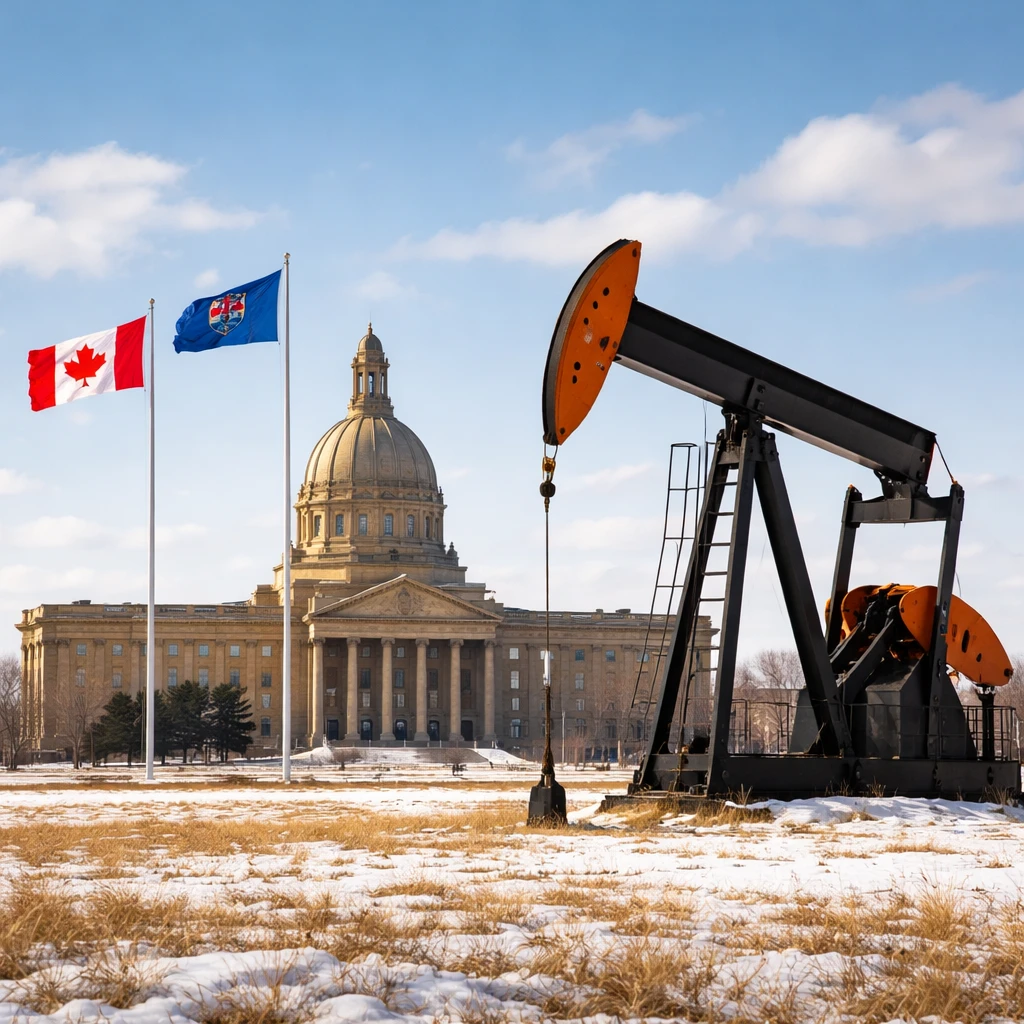
Canadian Prime Minister Mark Carney addressed questions about reported contacts between U.S. officials and advocates of Alberta separatism, saying he expects the U.S. administration to respect Canadian sovereignty. The comments came after media reports that State Department representatives had met three times with the Alberta Prosperity Project (APP), a group campaigning for a referendum on whether the province should separate from Canada.
At a press conference, Carney said: "We expect the U.S. administration to respect Canadian sovereignty. I’m always clear in my conversations with President Trump to that effect," and added that the U.S. president had never raised the question of Alberta separatism with him.
The APP, which argues that federal policies are constraining the province, has reportedly asked for another meeting next month with both State and Treasury Department officials to press for a $500 billion credit facility, according to the reports. The group is said to be pushing a referendum on whether the energy-producing Western province should break away from Canada.
Alberta's premier, Danielle Smith, reiterated that she wishes for the province to remain part of Canada, while noting that polls indicate roughly 30% of the population are frustrated with what they perceive as excessive federal interference.
Geography and infrastructure constraints underline some of the tensions. Alberta is landlocked and Ms. Smith has been advocating for construction of another oil pipeline to the Pacific Coast to boost market access. That proposal would require the pipeline to cross neighboring British Columbia, whose premier, David Eby, has declined the idea.
Eby, whose relationship with Ms. Smith is generally described as chilly, was quoted saying that "to go to a foreign country and to ask for assistance in breaking up Canada ... is treason" when asked about the reported outreach to U.S. officials.
Separately, U.S. Treasury Secretary Scott Bessent was quoted last week on a radio program as saying: "I think we should let them come down into the U.S." When asked about a potential Alberta referendum, he reportedly added: "People want sovereignty. They want what the U.S. has got."
The exchanges come amid a period of heightened public disagreements between Carney and President Trump. Carney has described the U.S. president as a skilled negotiator, and has suggested that some of Mr. Trump's recent remarks may be connected to an upcoming review of the U.S.-Mexico-Canada trade pact, which is due to begin later this year.
Context and implications
While provincial politics and energy infrastructure sit at the center of the reported outreach, the matter has spilled into diplomatic remarks and responses from senior officials on both sides of the border. The combination of separatist advocacy, a substantial requested credit facility, and divergent provincial positions adds complexity to federal-provincial relations, cross-border diplomacy, and sectors tied to energy transport and trade.