
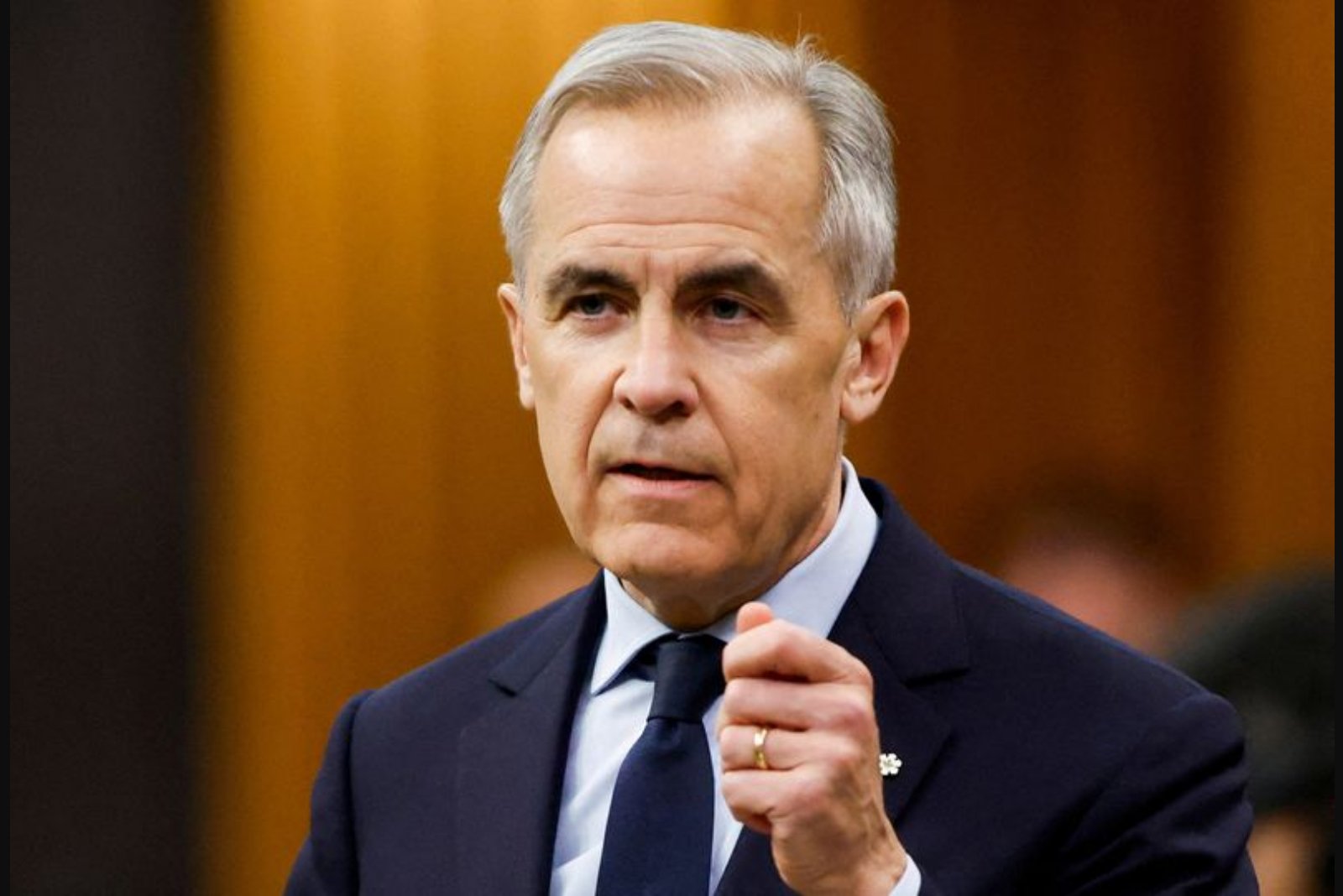
OTTAWA, April 13 - Prime Minister Mark Carney is on track to convert his party's minority position into a parliamentary majority after three special elections being held Monday in Ontario and Quebec, a result that would give his Liberal government a clearer path to pass legislation.
The Liberals hold 171 seats in the 343-seat House of Commons. Victory in just one of the three ridings being contested would lift the party above the threshold for a majority. Two of the contests are in districts that have long voted Liberal, and opinion polls suggest the Liberals are likely to pick up at least two of the seats.
Carney has argued that a majority would strengthen his ability to navigate an increasingly uncertain geopolitical environment, including the trade dispute with the United States initiated by President Donald Trump. With a parliamentary majority, his government would be able to pass measures without having to secure opposition support for each vote, giving Carney a freer hand to govern and potentially consolidating his leadership through to the national elections due in 2029.
Parliamentary arithmetic and political maneuvering
Currently operating as a minority administration, the Liberals have relied at times on selective backing from the Conservative Party to advance trade and economic legislation over the past year. Political analysts say a majority would both remove that dependence and allow Carney to set the timing of the next federal election, a prerogative minority governments do not reliably enjoy because they can be toppled by a confidence motion.
"He will be able to pass legislation without having to go to the opposition to secure enough votes," said Andrew McDougall, assistant professor in Canadian politics at the University of Toronto.
Carney's margin may be slightly larger than a single seat even before the by-elections, after five opposition lawmakers defected to the Liberals within a five-month period. Historical comparisons are notable: only governments led by John A. Macdonald and Jean Chretien have seen more politicians switch to the ruling party.
Notable defections and contested ridings
This week, former Conservative MP Marilyn Gladu crossed the floor to join Carney's Liberal caucus, citing the need for "a serious leader who can address the uncertainty that has arrived due to the unjustified American tariffs." Gladu, a one-time chemical engineer, has previously attracted criticism for endorsing unproven COVID-19 treatments, opposing a ban on conversion therapy, and suggesting the military be used to end Indigenous-led protests against oil pipelines. Upon joining the Liberals she thanked Carney for inviting her into "the large Liberal tent."
Carney has responded by stressing that the party's core values - including inclusivity, diversity and upholding protections in Canada's Charter of Rights and Freedoms - remain unchanged, and that members of the government caucus are expected to support those principles.
The separatist Bloc Quebecois leader, Yves-Francois Blanchet, observed that "the ideological differences between the Liberals and Conservatives are getting thinner and thinner by the minute." The Bloc remains in an especially tight contest with the Liberals in the Terrebonne riding in Quebec, a seat the Liberals won by a single vote at the last federal election but which saw that result overturned by Canada's Supreme Court because of a misprint on a voter's envelope.
The two other ridings in play are located in Ontario: one vacated by former Deputy Prime Minister Chrystia Freeland and another previously held by former Liberal lawmaker Bill Blair, who resigned after his appointment as ambassador to the United Kingdom. Political expectations are that the Liberals will retain both Ontario seats.
Shifting party focus and public perceptions
Observers note a change in the Liberals' emphasis under Carney compared with his predecessor. Laura Stephenson, chair of the political science department at the University of Western Ontario, said the party under Justin Trudeau moved leftward, emphasizing reconciliation with Indigenous peoples, minority rights and immigration. Under Carney, the party appears to be pursuing a more centrist, pragmatic agenda focused on stabilizing the economy and managing external shocks.
"He is focused on helping Canada survive the economic turmoil, not remaking society," Stephenson said. "When we're in tough times like this, there are different calculations being made."
Recent polling from Nanos suggests that more than half of Canadians prefer Carney as their prime minister, with just 23% naming Conservative leader Pierre Poilievre. Before Carney assumed leadership of the Liberal Party last year, Poilievre had been projected to win the next election by a margin of more than 20 points.
McDougall said Carney has demonstrated competence in handling the Trump-era trade conflict and managing the economy, and that Canadians have not been notably enthusiastic about the available alternatives. "Carney has done a fairly good job showing Canadians he can handle Trump," McDougall said. "He's shown Canadians he's a competent manager of the economy and the country. And so far Canadians have not been overly impressed by the alternatives."
What is at stake
A successful by-election outcome delivering a majority would materially alter the Liberals' legislative prospects. It would allow the government to move more quickly and independently on economic and trade policy at a time when cross-border tariffs and geopolitical uncertainty are front-of-mind for policymakers. The outcome will also shape the political calculus in Ottawa over the coming years, including the timing of the next general election.
For now, the contests in Ontario and Quebec will determine whether Carney secures that broader authority or continues to operate in the constraints of a minority parliament.