
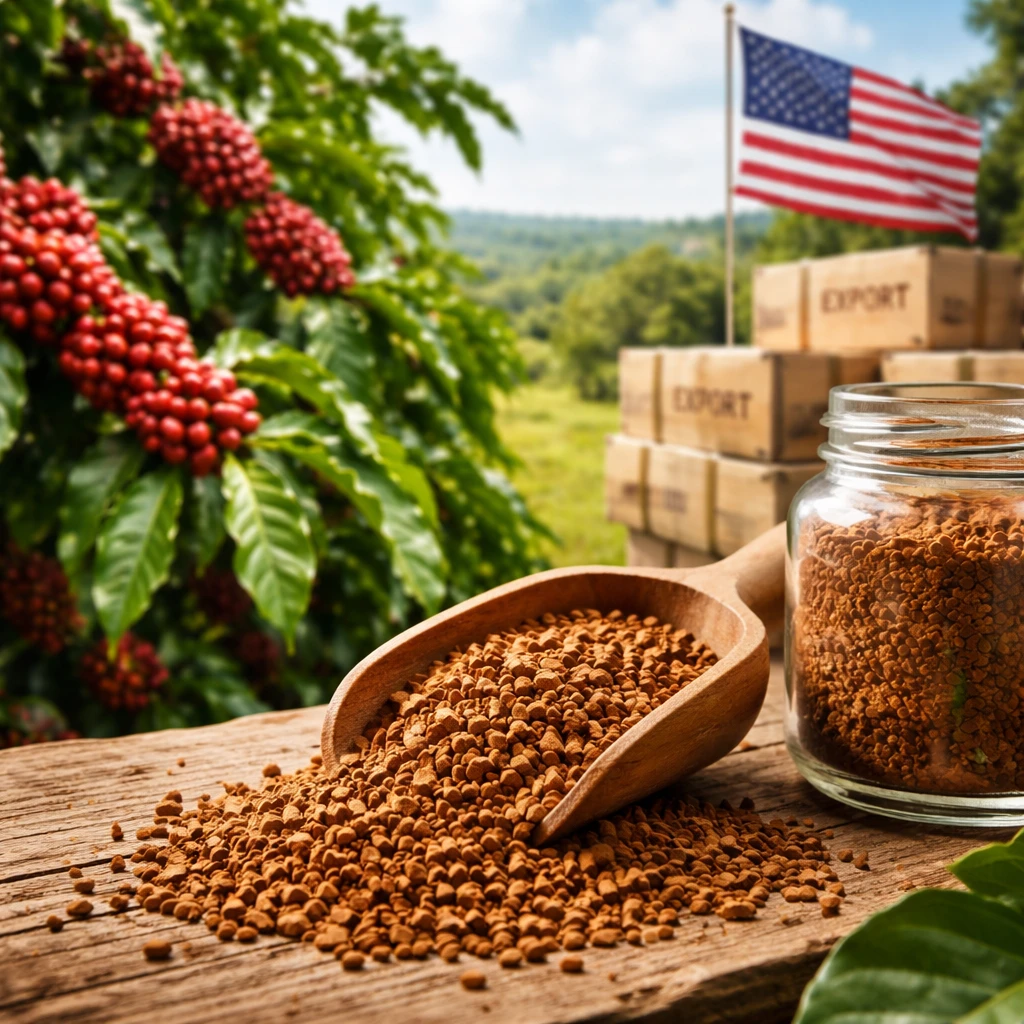
Brazil's instant coffee sector is currently seeking clear understanding regarding the sustained 50% tariff imposed by the United States, a duty that has persisted even though most other Brazilian coffee export categories had their tariffs lifted recently. Industry representatives have reported frustration over the continuing restrictions, which contrast with the easing of charges faced by other coffee products from the South American country.
In 2025, during heightened tensions stemming from disagreements with Brazil's then-government and its far-right former president Jair Bolsonaro, who aligned politically with U.S. President Donald Trump, tariffs were established on a wide range of Brazilian goods, instant coffee among them. Towards the end of last year, however, the U.S. administration reversed its position on many Brazilian coffee exports, removing tariffs except in the case of instant coffee.
Aguinaldo Jose de Lima, who directs institutional relations for ABICS, the Brazilian instant coffee industry group, highlighted the disparity. He noted that while whole bean coffee, roasted coffee, flavored instant coffee variants, cappuccino-style blends, and coffee mixed with milk had their tariffs lifted, plain instant coffee did not enjoy the same exemption.
Even with the tariff burden, Brazilian coffee exports reached a record-setting $15.6 billion in 2025, according to the exporters association Cecafe. Nonetheless, the overall volume of coffee exports declined by nearly 21%, totaling 40 million 60-kilogram bags. Specifically, total green coffee exports fell by 18% in December, following the tariff removals, while instant coffee exports fell more sharply by 35%, amounting to 273,466 bags.
Lima expressed uncertainty regarding the reasons behind the exclusion of regular instant coffee from tariff exemptions, suggesting that there might have been misunderstandings connected to export classification codes and that ongoing investigations aim to clarify the situation.
The United States has long been the largest consumer of Brazilian instant coffee. Celirio Inacio, executive director of ABIC, explained that the association is collaborating with American counterparts like the National Coffee Association to communicate that the tariffs negatively affect stakeholders on both sides of the trade equation.
"There is no apparent justification for maintaining tariffs on instant coffee," Inacio stated, emphasizing the shared economic disadvantage imposed by the tariffs.
However, Inacio acknowledged that an immediate resolution appears unlikely without additional developments, particularly those pertaining to upcoming coffee harvests and weather conditions that could influence production and international prices. Despite active efforts, stakeholders anticipate a period of waiting before any tariff adjustments are forthcoming.