
Introduction
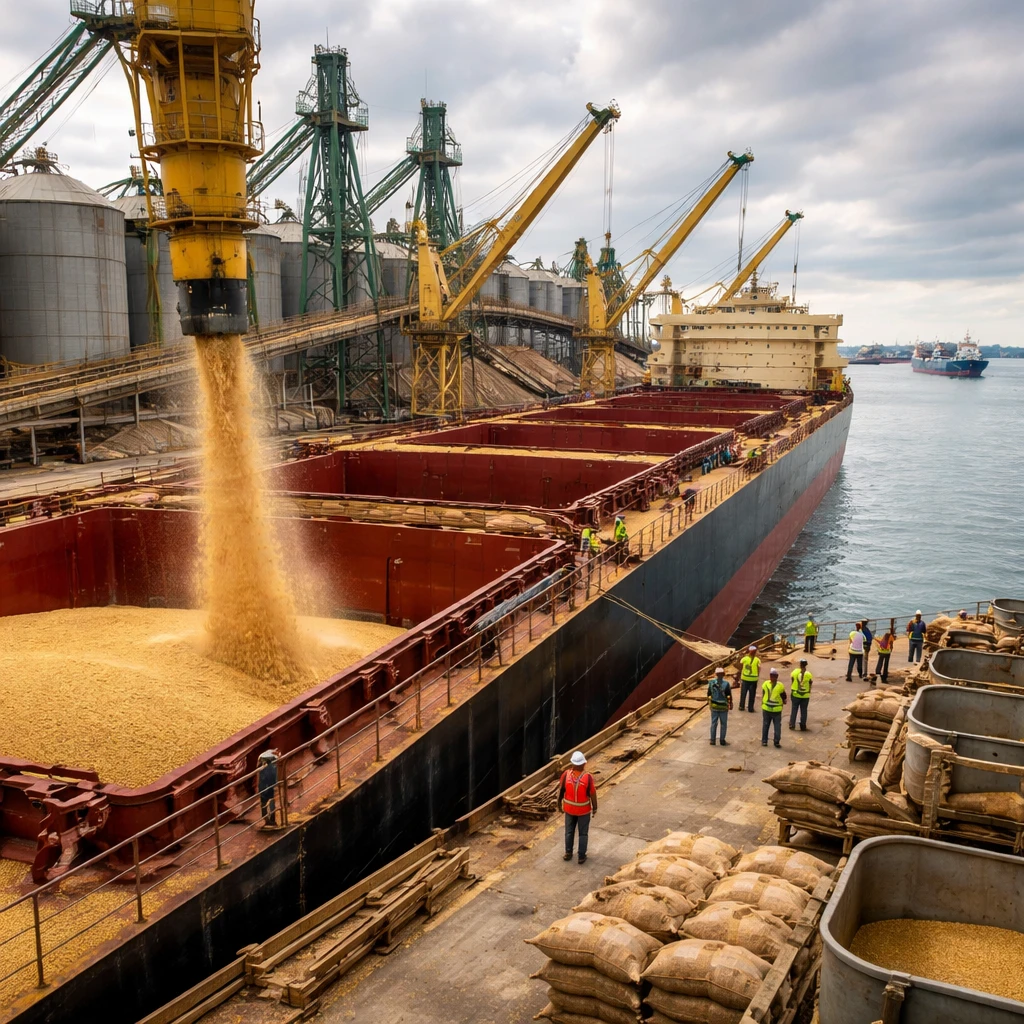
Private buyers in China are moving to lock in Brazilian soybeans for shipment beginning in February, driven by an accelerating harvest in South America and price gaps that favor Brazilian cargoes. Traders and analysts say these purchases are likely to lift Brazilian shipments to China in the first half of 2026, reinforcing South America's dominant position as the primary supplier to the world's largest oilseed market - even as U.S. supplies have started to re-enter the trade.
Buying patterns and market timing
Sources in trade say private crushers are securing deals for Brazilian soybeans to be shipped from February onward as harvest volumes increase and exert downward pressure on prices. This buying pattern follows a period in which Beijing and Washington thawed relations late in the previous year and state-owned firms purchased U.S. soybeans. Those state purchases - about 12 million metric tons - were made entirely by state-owned Sinograin and COFCO and were prompted in part by bilateral commitments.
Even so, private traders have largely been sidelined from buying U.S. soybeans because U.S. supplies have been more expensive once China's tariffs are applied. Traders say the burst of Brazilian shipments in the March to June window looks set to compete directly with U.S. cargoes when the North American export season resumes in September, potentially displacing some U.S. business.
Price and tariff dynamics
Price spreads and tariff differences are central to the shift in buying. China imposes a 13% tariff on U.S. soybeans, while Brazilian supplies face a 3% duty. On a cost-and-freight basis for December shipment, Brazilian soybeans were quoted at $507.90 per metric ton, compared with $516.90 for U.S. Gulf supplies and $510.50 for U.S. Pacific Northwest origin, excluding tariffs. At those price points, China would have paid roughly $31 million to $108 million more for 12 million tons of U.S. soybeans than for Brazilian equivalents.
Traders and analysts also report that crush margins for Brazilian beans arriving between March and June remain attractive enough to secure new deals. One trader at a large global firm said, "We will probably see higher exports (from Brazil) to China in the period from March to June, higher than last year. Brazil’s soybeans are way cheaper than U.S. soy in this period." All trade sources requested anonymity because of the sensitivity of the topic.
Political context and potential shifts
State-backed purchases of U.S. soy have fulfilled a pledged volume, and official comments indicated a multiyear buying plan beginning in 2026. The White House said China had agreed to buy at least 25 million tons a year over the next three years, starting in 2026. Analysts caution that current state purchases of U.S. soy are limited in scale and may be intended primarily to maintain a constructive political climate ahead of key diplomatic engagements.
Dan Wang, China director at Eurasia Group, said current U.S. purchase volumes by China are "limited, sufficient only to maintain a positive political atmosphere ahead of the April meeting between the two countries' leaders." Wang added that if the April meeting produced tariff reductions and political assurances, China might commit to more U.S. soybean purchases, although volumes would likely remain constrained.
On the diplomatic calendar, U.S. and Chinese leaders have signaled reciprocal travel: U.S. President Donald Trump said he would visit China in April, while Chinese President Xi Jinping is expected to visit the United States toward the end of 2026. Those engagements form part of the backdrop to potential changes in trade dynamics, but traders continue to emphasize cost and availability as principal determinants of buying.
Supply fundamentals in South America
Traders and analysts point to large crops in Brazil and Argentina as a primary reason U.S. bookings may remain limited. A grain broker in southern Brazil, Adelson Gasparin, said the sizable South American crop makes the product cheaper than U.S. supplies and expects China to sustain import levels.
Brazilian beans shipped in February are reported to be at least 50 cents a bushel cheaper than U.S. Gulf shipments on a free-on-board basis, and up to 75 cents cheaper for March shipments. As the Brazilian harvest accelerates, traders say prices are likely to face further downward pressure. Dan Basse, president of AgResource Co., suggested the gap could widen further, saying, "I think the difference is going to widen out. Maybe to something like a dollar."
Agribusiness consultancy Agroconsult forecasts Brazil's 2025/26 soybean production at a record 182.2 million tons. Rabobank's senior grain and oilseeds analyst Marcela Marini expects Brazil to export about 85 million tons to China for the September 2025 to August 2026 window, an increase of 6 million tons from the previous year.
Bookings and forward cargoes
Market participants estimate China has already booked roughly 42 million to 44 million tons of Brazilian soybeans for the September-to-August year, including about 23 million to 25 million tons earmarked for February to August, according to two Asian traders. Traders add that while some U.S. purchases are possible during the peak South American export season, they would likely be minimal unless there is a government directive to buy U.S. supplies or an unusual surge in South American corn exports that limits soy shipments.
One trader observed, "I don’t think it works without a government enforcement," highlighting that significant U.S.-origin volumes to China in the near term would likely require state-level intervention.
Domestic demand and crushing economics
China's domestic soymeal demand remains robust, underpinned by a large pig herd that has resisted policy efforts to reduce overcapacity. Analysts cited in the market see little likelihood of a meaningful herd decline before the end of the second quarter, which supports steady soymeal consumption in the first half of 2026.
For the 2024/25 crop year, China imported 109.37 million metric tons of soybeans; the farm ministry expects imports for 2025/26 to fall to 95.8 million tons. That projected decline reflects the interplay of large South American supplies arriving in the earlier months of the marketing year and softer demand expectations across the full year.
Implications for logistics and markets
From a transportation and logistics perspective, the shift toward higher Brazilian shipments in H1 2026 implies continued strong demand for South American export capacity and associated maritime freight. Port throughput in Brazil is likely to remain busy during the peak shipping window, and private crushers in China will coordinate inward logistics to match early-season arrivals. At the same time, U.S. exporters face a compressed window to secure business once American supplies become available from September onwards.
Conclusion
Record South American production, competitive pricing and tariff differentials are aligning to boost Brazilian soybean shipments to China in the first half of 2026. While state-owned Chinese firms have purchased U.S. soy to meet political commitments, private-sector buying remains focused on cheaper Brazilian cargoes. The extent to which diplomatic developments alter this pattern will depend on any tangible tariff shifts or government directives emerging from scheduled high-level meetings, but current market signals favor Brazil through the H1 shipping season.