
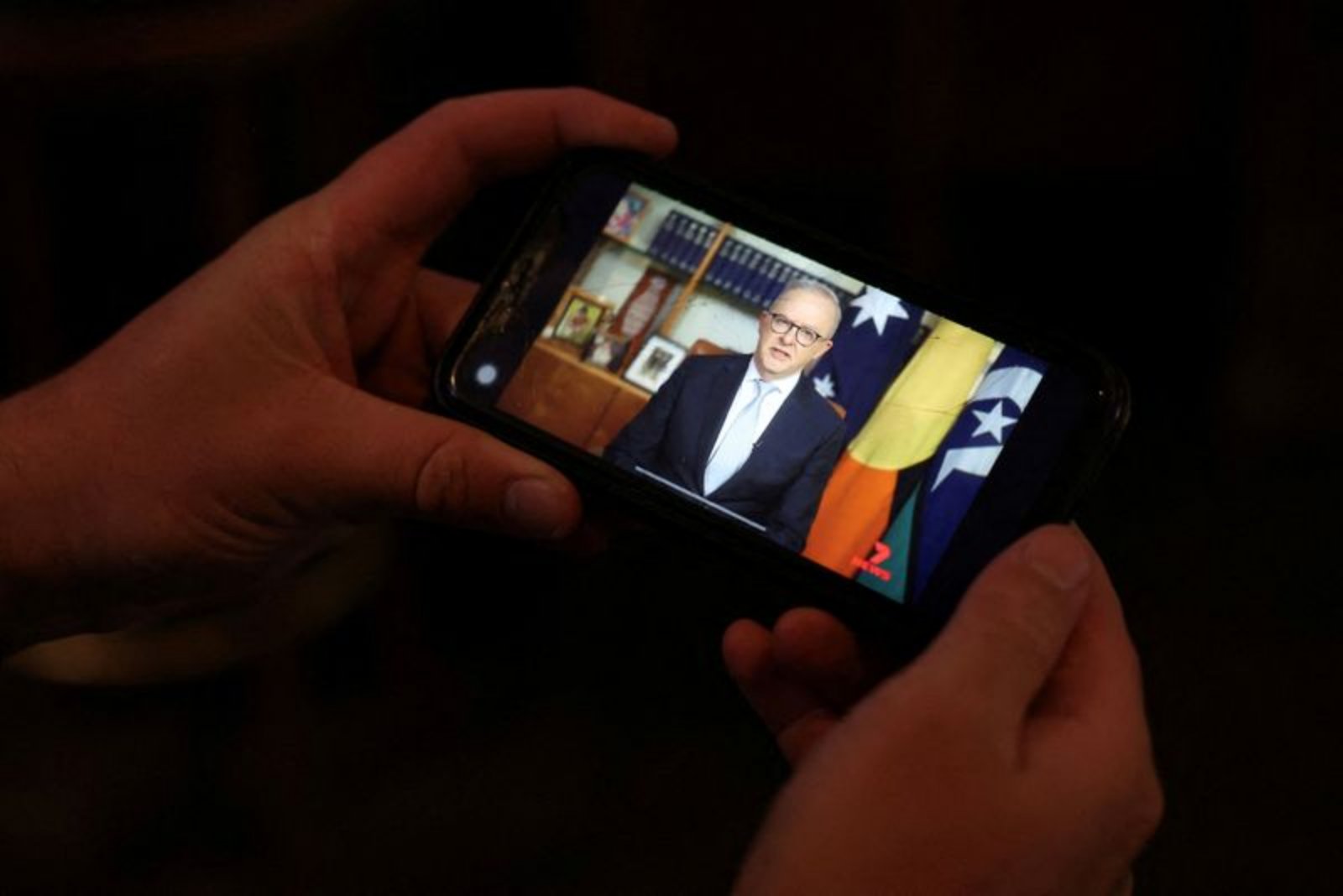
Australian Prime Minister Anthony Albanese on Wednesday said he welcomed a ceasefire in the Middle East reached by the United States, Israel and Iran, but added that the tone used by U.S. President Donald Trump was troubling.
The ceasefire, announced by Trump on social media, covers a period of two weeks and came less than two hours before a deadline the U.S. president had given for Tehran to reopen the Strait of Hormuz or face "devastating attacks on its civilian infrastructure." The announcement represented a sudden reversal from earlier in the same day, when Trump issued an extraordinary warning that "a whole civilization will die tonight" if his conditions were not satisfied.
Speaking in an interview with Sky News, Albanese said he welcomed the cessation of hostilities but questioned the appropriateness of the president's language. "I don’t think it’s appropriate to use language such as that from the President of the United States, and I think it will cause some concern," he said.
Albanese has backed U.S. strikes on Iran during the opening phase of the war, but in recent weeks has voiced discomfort about the conflict's direction. Last week the prime minister said he wanted more certainty from Trump regarding the war's objectives and urged all parties to work toward de-escalation.
Separately, Trump criticised Australia this week for not providing assistance he expected. At a news conference he singled out Australia, along with Japan and South Korea, saying, "Australia didn’t help us."
The ceasefire and the public exchange between the leaders underscore tensions among allies as well as concern about rhetoric that could escalate fear or instability. Albanese's comments highlight a desire for clearer strategic aims from the U.S. while welcoming steps toward lowering immediate hostilities.
Context limitations: The information above reflects public statements and the timeline surrounding the ceasefire announcement as presented by the parties involved. It does not include additional context or analysis beyond those statements.