
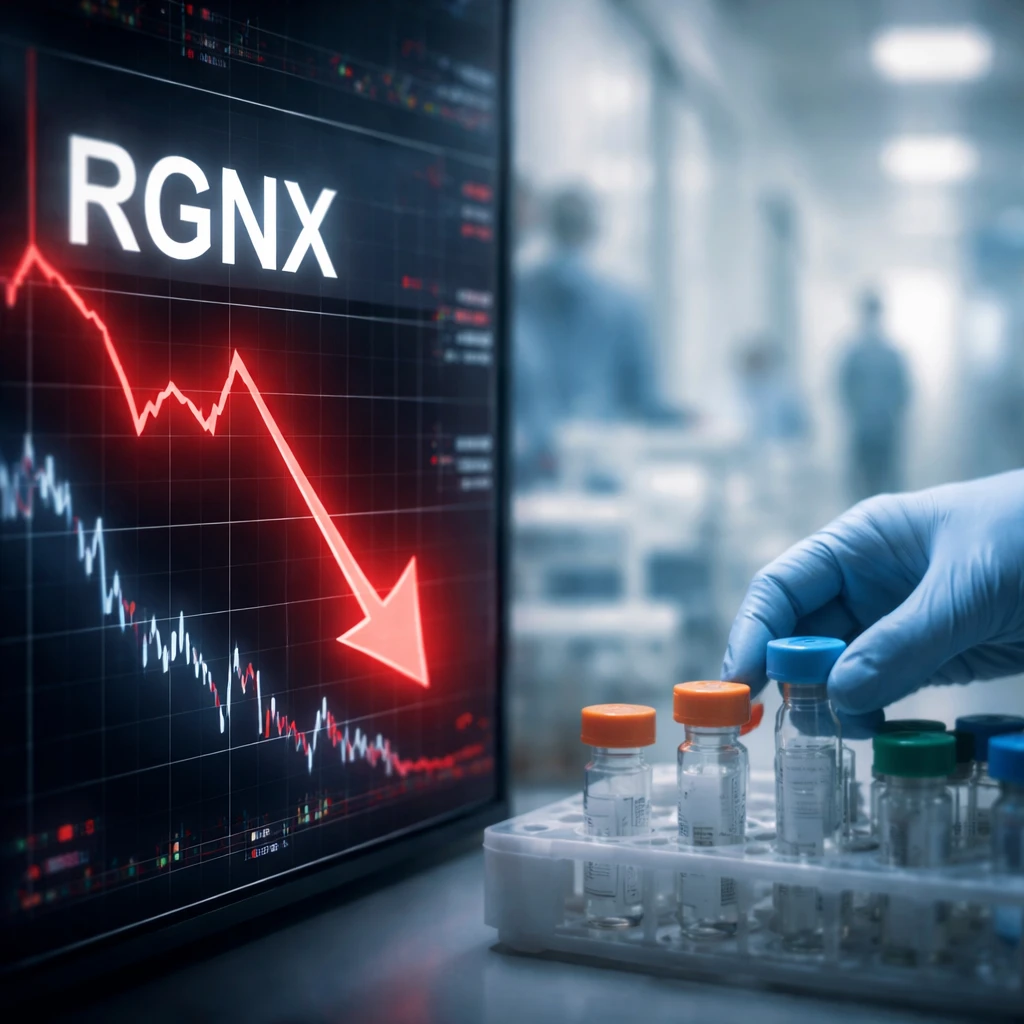
Shares of Regenxbio Inc. (RGNX) tumbled after regulators placed clinical holds on two of the company's lead gene therapy programs. The action follows the identification of a tumor in a child who received RGX-111 for mucopolysaccharidosis type I (MPS I, Hurler syndrome) during a Phase 1/2 trial four years ago.
The FDA's hold covers RGX-111 and RGX-121. The RGX-121 program had been approaching a regulatory milestone - a PDUFA date - scheduled for February 8, though some analysts had described the PDUFA timing as February 2026. Regulators said the early finding of a neoplasm in the RGX-111-treated pediatric patient prompted a broader safety review because of similarities across products, patient populations, and shared risks. The two therapies are both delivered with the AAV9 viral vector, even though they differ in transgene and process elements and no neoplasm cases have been reported in RGX-121-treated patients.
Market reaction was swift. The company's stock fell sharply over the prior week - down 31.1% - reversing much of a 30.9% gain the shares had posted over the prior six months. On the day the holds were announced, Regenxbio shares declined about 18%, while the biotech exchange-traded fund XBI fell roughly 2%.
Analysts responded with a mix of caution and affirmation. Goldman Sachs left its rating at Neutral and maintained a $14.00 price target, while updating its model to reflect a later commercialization start for RGX-121, moving anticipated launch activity to the fourth quarter of 2026. The firm also noted the company expressed confidence in its ability to resolve the issue in a timely manner.
Other firms continued to express bullish stances on the company despite the regulatory setback. Baird reiterated an Outperform rating with a $39.00 price target. Stifel kept a Buy rating with a $45.00 price target, while signaling that the clinical hold is likely to delay the RGX-121 PDUFA date that had been expected in February 2026. H.C. Wainwright also maintained a Buy rating and a $34.00 price target, citing positive data from Regenxbio's AFFINITY DUCHENNE trial.
The AFFINITY DUCHENNE results were highlighted as a recent positive: the company reported that all four patients in the trial exhibited gains on the North Star Ambulatory Assessment, surpassing expected disease trajectory. Those trial outcomes have been a counterpoint to the current regulatory concerns, though they do not directly alter the FDA's decision regarding RGX-111 and RGX-121.
Investors and analysts have also flagged the potential implications for a priority review voucher, noting that the FDA's action complicates near-term monetization prospects. The regulatory holds raise uncertainty around timing for approval and commercialization, and they have prompted adjustments to internal forecasts and valuation models at several firms that follow the company closely.
The FDA's stated rationale emphasized similarities in products and overlapping patient populations as the basis for extending the clinical hold to RGX-121 despite the absence of observed neoplasms in RGX-121-treated individuals. The two therapies share the AAV9 vector platform, though Regenxbio has pointed to differences in transgene constructs and manufacturing process elements between the programs.
At this stage there are open questions about how quickly the company and regulators can resolve the safety signal and what the ultimate impact will be on the timing of RGX-121's regulatory review and commercial launch. For investors, the immediate effect has been a pronounced re-pricing of the stock and a reassessment of near-term revenue expectations tied to RGX-121.
Context and next steps
Regulatory reviews of safety signals can include retrospective data assessments, additional monitoring, or requirements for further studies. The specific steps Regenxbio and the FDA will take in response to the clinical holds have not been detailed beyond the agency's initial decision to place the two programs on hold. That lack of further procedural detail leaves timing and specific remedial actions uncertain.