
Overview
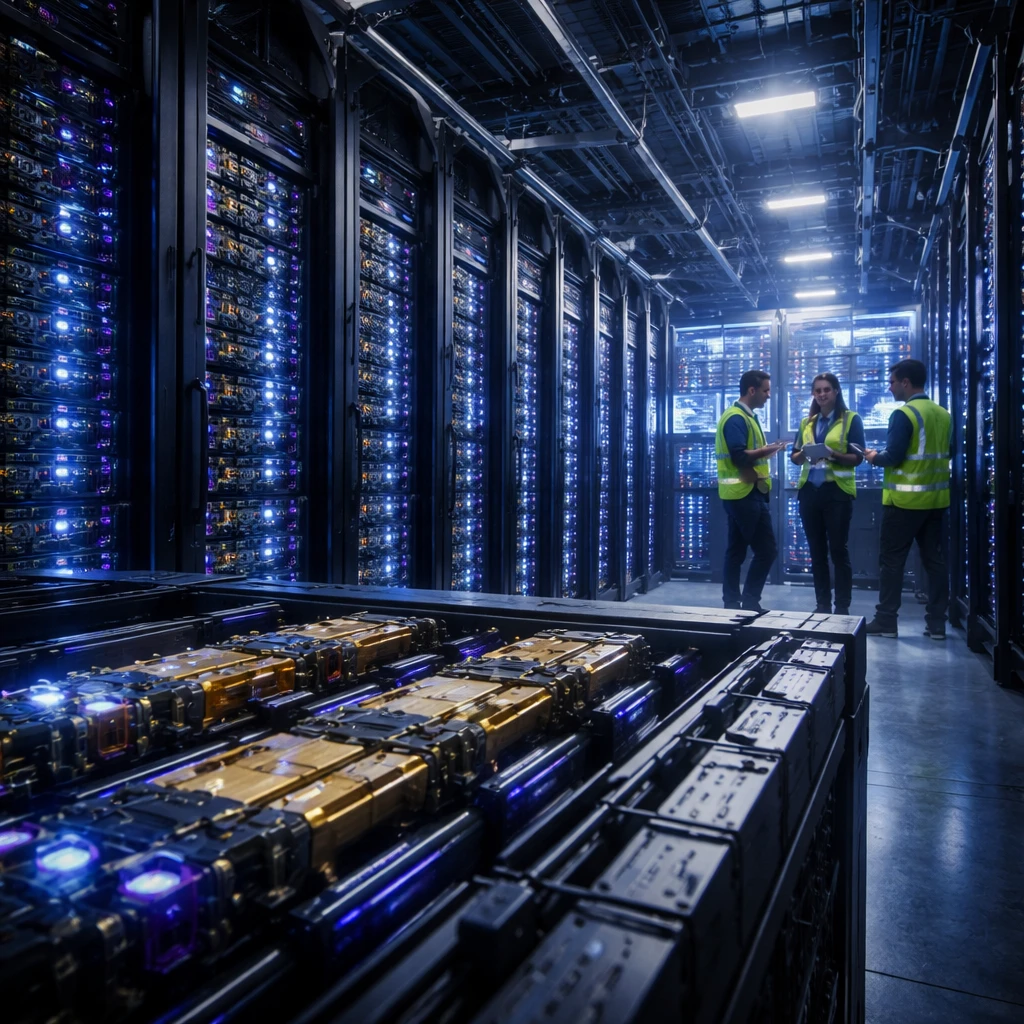
Nvidia has invested $2 billion in CoreWeave, purchasing shares at $87.20 each as part of an expanded collaboration intended to accelerate the deployment of AI data center capacity. The joint push targets the development of more than 5 gigawatts of AI-optimized “factories” by 2030, with the two firms deepening technical ties as CoreWeave integrates additional Nvidia hardware into its cloud operations.
Financial and market projections
Analyst firm Raymond James has put forward estimates suggesting the build-out could generate between $60 billion and $90 billion in revenue for Nvidia across 2026-2030. Those figures rest on an assumption of $9-13 billion in GPU sales per gigawatt and include a modeled 40% uplift from accompanying system and networking equipment sales. Raymond James maintains a Strong Buy rating on Nvidia and interprets the investment as a strategic effort to bolster a merchant-driven ecosystem that can compete with hyperscalers developing their own accelerators - rather than as the source of net-new revenue.
Implications for CoreWeave
For CoreWeave, Raymond James assigns an Outperform rating and views the Nvidia investment as an important endorsement of the company’s AI Cloud. The firm’s financial model anticipates CoreWeave expanding active power by roughly 2GW between 2025 and 2028, bringing active power to about 3GW in that period. Raymond James projects annual recurring revenue for CoreWeave could climb from approximately $6 billion to about $30 billion across the same timeframe.
Technology alignment and product adoption
As part of the enhanced relationship, CoreWeave will adopt Nvidia’s new CPU and Blue Field Storage. Nvidia’s leadership confirmed the expanded product integration, which further aligns CoreWeave’s infrastructure with Nvidia’s hardware and networking stack and tightens the operational partnership between the two companies.
Related company developments
In parallel to the CoreWeave investment, Nvidia announced the Earth-2 family of open models and tools tailored for weather forecasting, aimed at broadening access to climate prediction technology for scientists, startups, developers, enterprises, and government agencies. Separately, London-based AI firm Synthesia, which has received backing from Nvidia’s venture arm NVentures, secured $200 million in Series E funding at a $4 billion valuation. That round was led by Google Ventures and included participation from both existing and new investors.
The company also disclosed that Persis Drell has resigned from Nvidia’s Board of Directors to pursue another professional opportunity; the company noted there were no disagreements regarding operations. On the sell-side, Jefferies raised its price target for Nvidia to $275 while retaining a Buy rating, citing an updated model of accelerator builds. Wolfe Research reiterated an Outperform recommendation with a $250 price target even as it flagged a new 25% tariff on certain advanced semiconductors that is affecting shipments of Nvidia’s H200 products to China.
Takeaway
The $2 billion investment by Nvidia into CoreWeave at $87.20 per share represents both a commercial and technological deepening of their partnership. Analysts see material revenue opportunity tied to large-scale build-outs of AI capacity through the latter half of the decade, and they frame the transaction as part of a broader strategy to support a merchant ecosystem for AI infrastructure.
Key points
- Nvidia invested $2 billion in CoreWeave at $87.20 per share to support the construction of more than 5 GW of AI data center capacity by 2030.
- Raymond James projects $60-90 billion in potential revenue for Nvidia over 2026-2030 under specific GPU and systems-sale assumptions, while rating Nvidia Strong Buy and CoreWeave Outperform.
- CoreWeave is modeled to expand active power from roughly 1GW to about 3GW by 2028 and to raise annual recurring revenue from around $6 billion to near $30 billion during that period; CoreWeave will adopt Nvidia’s new CPU and Blue Field Storage.
Risks and uncertainties
- Regulatory and trade developments - a new 25% tariff on certain advanced semiconductors is affecting Nvidia’s H200 shipments to China, which could influence near-term revenue and supply dynamics for semiconductor firms and cloud providers.
- Revenue expectations depend on specific pricing and sales assumptions - Raymond James’ $60-90 billion estimate for Nvidia relies on assumed GPU sales per GW and uplift from systems and networking sales; if those assumptions do not hold, projected revenue may differ.
- Execution and adoption - the planned multi-gigawatt build-out and integration of new CPU and storage products hinge on successful deployment and customer uptake, which present operational and market adoption risks for the infrastructure and cloud sectors.