
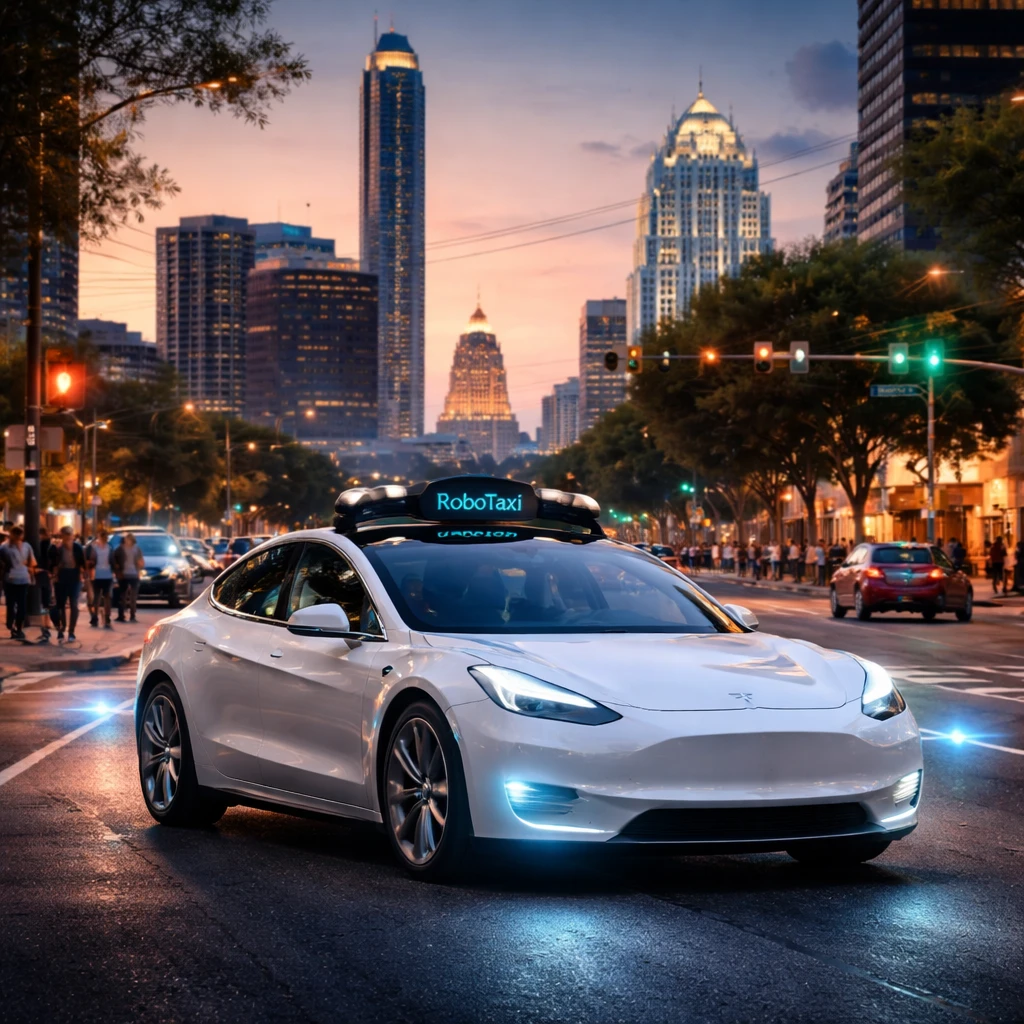
Barclays recently adjusted its price target for Tesla Inc. (NASDAQ: TSLA), raising it from $350 to $360 while maintaining an Equalweight recommendation on the stock. This update aligns with Tesla’s latest achievement in autonomous vehicle technology: the initiation of driverless robotaxi rides available to the public in Austin, Texas. Trading at $449.36, Tesla’s shares reflect a high price-to-earnings ratio of approximately 309, based on InvestingPro data.
This advancement marks the first instance since the robotaxi program began in June 2025 whereby passengers can utilize fully autonomous rides without an onboard safety operator, resembling services offered by competitors such as Waymo and Zoox. The rollout of these driverless rides commenced roughly a month following Tesla’s mid-December trials of cars operating without safety drivers. Barclays emphasizes, however, that only a limited number of unsupervised vehicles are currently deployed, with the majority still requiring safety monitors.
Regarding operational scale, Barclays highlights that Tesla’s robotaxi presence in Austin remains modest. Approximately 30 to 50 vehicles are active in total after seven months, yet only about ten vehicles run concurrently, a figure substantially lower than Tesla CEO Elon Musk’s projection in October of 500 vehicles by the end of 2025.
The limited supply of robotaxis is attributed to high consumer demand coupled with a comparatively small fleet size. Tesla had earlier indicated during a November conference that expanding the robotaxi network depends on fully embracing driverless operations to mitigate labor costs associated with having safety monitors present. With the company’s next earnings report due within five days and current analyses signaling a possibly overvalued stock, investors should closely monitor updates concerning the progress of the robotaxi business segment.
Additional noteworthy developments include Tesla’s full rollout of its driverless Robotaxi service in Austin, symbolizing a significant step forward in the company’s autonomous driving initiatives. Complementing this, Lemonade Inc. has introduced a specialized insurance product tailored for Tesla vehicles equipped with Full Self-Driving (FSD) technology. Developed in conjunction with Tesla, this insurance offering features reduced per-mile rates that reflect the diminished risk profile associated with autonomous driving operations. Morgan Stanley notes that this product affirms the viability of Tesla’s FSD system, retaining an Equalweight rating and a $425 price target for Tesla.
In contrast, Ford Motor Company faces criticism, specifically from Peter Navarro, who voiced concerns over its reported battery supply negotiations with Chinese electric vehicle maker BYD. Navarro’s apprehensions revolve around potential vulnerabilities arising from dependence on a competitor’s supply chain.
Overall, Tesla's entrance into fully autonomous robotaxi services represents an important milestone for the company’s growth prospects in the autonomous vehicle market. Nevertheless, the scaling challenges and external factors warrant careful examination by stakeholders as the company navigates this evolving landscape.