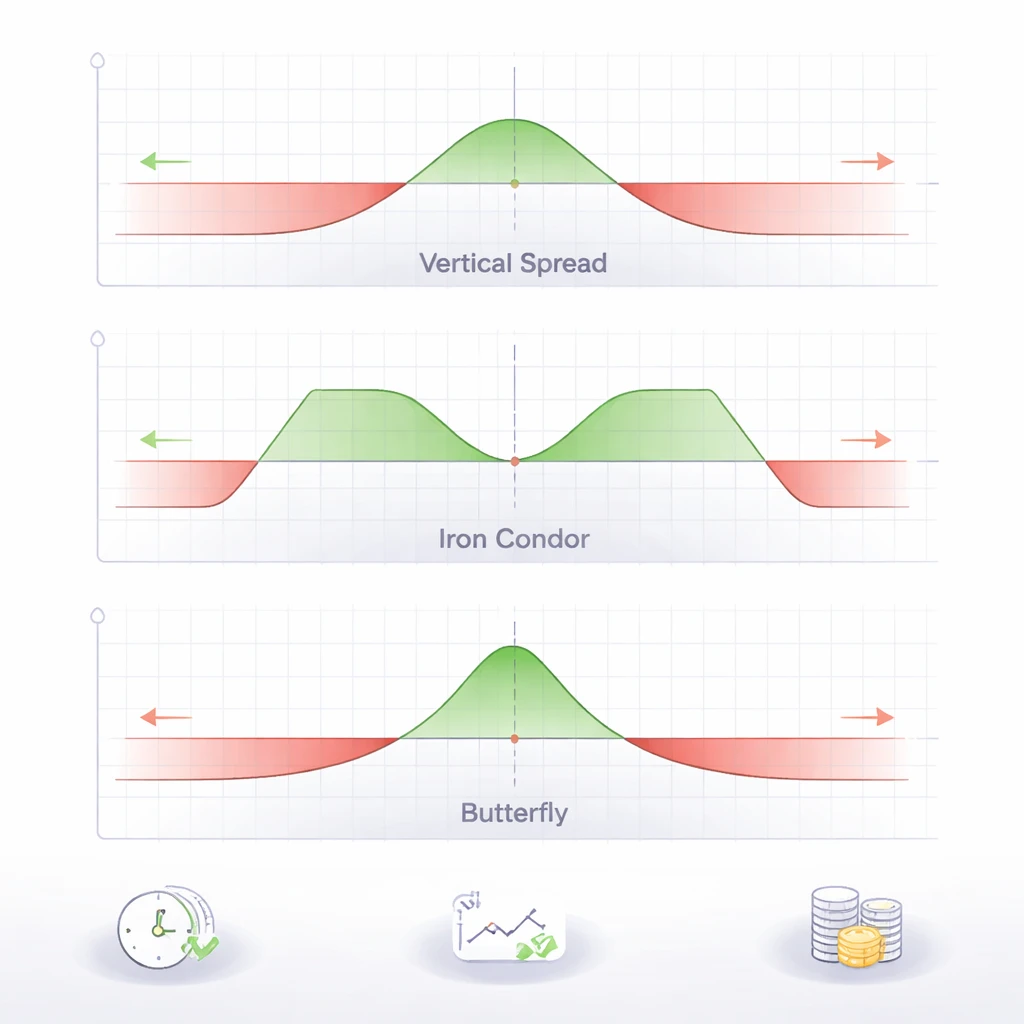
Options Strategies

Using options to express directional, neutral, or volatility-based views.

Part of Trading Strategies

What you will learn

This scope is designed to help you build a practical understanding of Options Strategies. Lessons move from core definitions to real-world context and common failure points.

Lessons

Reading in order is recommended, but each lesson stands on its own.

12 min read
Intermediate

Risk Management in Options Trading

A structured explanation of risk management in options trading, focusing on how sizing, Greeks, execution controls, and portfolio rules combine to create repeatable systems that limit downside variability and support consistent process discipline. Includes practical, non-prescriptive examples.


12 min read
Intermediate

Implied Volatility Explained

A rigorous explanation of implied volatility in options, how it is inferred from market prices, and how traders incorporate it into structured, repeatable strategies with defined risk controls and measurable performance metrics. The discussion covers the volatility surface, regime classification, Greeks, risk management, and a high-level example wo…

13 min read
Intermediate

Position Sizing with Options

Position sizing with options converts abstract risk budgets into concrete contract counts by linking payoff structure, Greeks, margin, and portfolio limits. This article outlines the logic, calculations, and controls that place sizing at the core of structured, repeatable options strategies.

12 min read
Intermediate

Limits of Options Strategies

A rigorous explanation of what “limits” mean in options strategies, why bounded payoffs and risk constraints are central to disciplined trading systems, and how to integrate these limits into repeatable processes without prescribing specific trades or signals.

11 min read
Intermediate

Common Options Strategy Mistakes

A structured review of frequent errors in options strategy design and execution, and how disciplined, repeatable systems reduce avoidable risk without relying on prediction or discretionary decisions under stress. Focus on alignment between thesis and payoff, volatility and time dynamics, liquidity, assignment, and portfolio-level controls.