
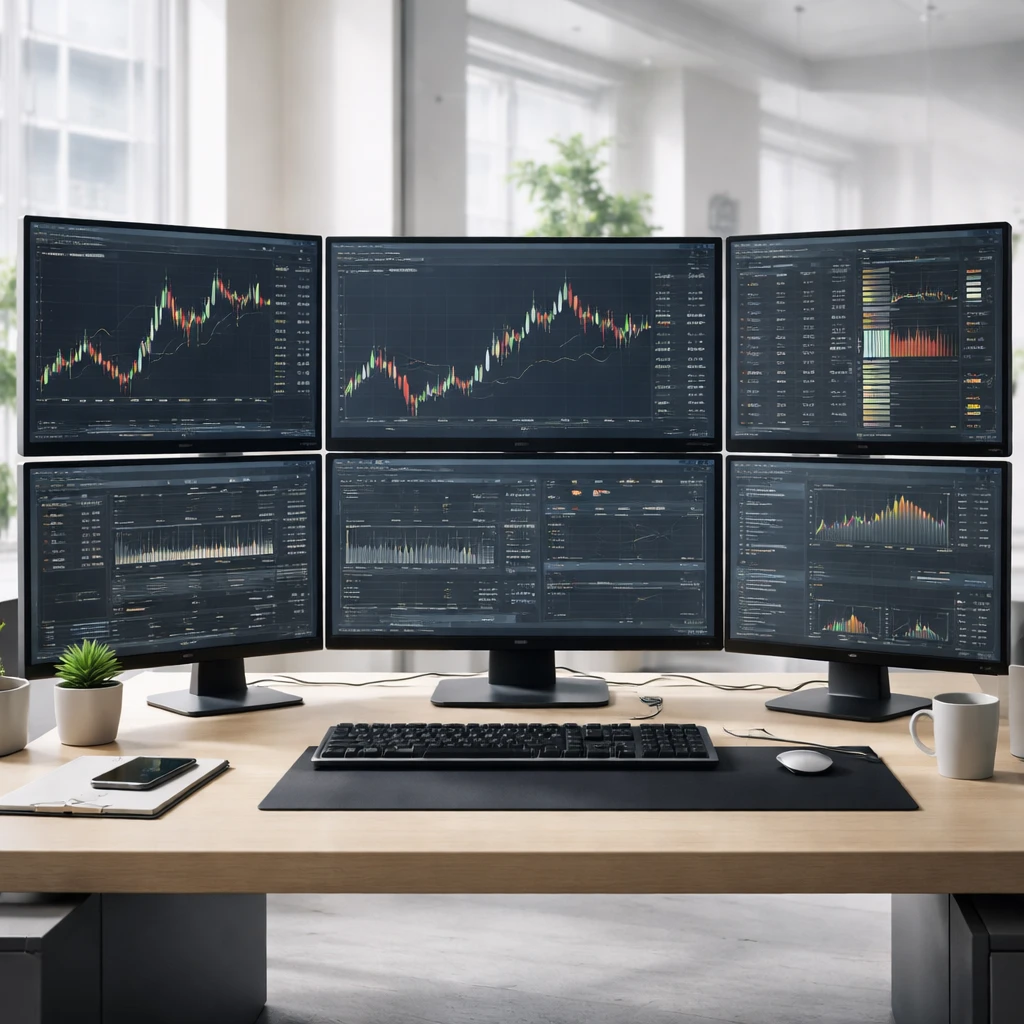
Paper trading tools provide a simulated environment where orders, positions, and portfolio outcomes are tracked using market data but without the transfer of real money. They allow learners, professionals, and institutions to rehearse the mechanics of trade execution and risk management, evaluate workflows, and test operational readiness in a controlled setting. Although outcomes are hypothetical, the tools are designed to mirror the logistics of placing orders, receiving fills, managing positions, and reviewing performance.
What Paper Trading Tools Are
Paper trading tools are software features within brokerage platforms, standalone simulators, or institutional systems that replicate the trading lifecycle. A user can enter a symbol, choose a quantity, select an order type, and submit the order to a simulated execution engine. The system maintains a ledger of cash and positions, calculates realized and unrealized profit or loss, and updates the portfolio as market data progresses. The goal is to emulate the operational aspects of trading while isolating the user from real financial exposure.
Modern paper trading is not merely a notepad exercise. It is an event-driven simulation tied to live or delayed market feeds, configurable execution assumptions, and accounting rules that approximate real brokerage ledgers. The closer the simulation matches the live environment, the more useful it becomes for learning platform behavior, preparing for exchange microstructure, and validating processes.
Why These Tools Exist
Paper trading tools emerged to address several practical needs in markets:
- Skill development and platform familiarization. Users can practice order entry, risk controls, and portfolio monitoring without capital at stake.
- Operational testing. Teams can verify routing rules, order management workflows, and data integrations before enabling real trading.
- Compliance and training. Some firms use simulation accounts to test adherence to procedures, exchange rules, and internal limits in a low-risk environment.
- Process calibration. Paper environments allow measurement of error rates in order entry, reconciliation steps, and reporting pipelines before migration to live systems.
- Pedagogy. Educators can assign exercises that focus on execution mechanics, record keeping, and risk arithmetic without creating real exposures.
In short, paper trading supports learning and operational readiness. It is a practical bridge between theory and the demands of real trade execution and position management.
How Paper Trading Works Inside a Platform
Although implementations vary, most paper trading systems contain a common set of components:
- Market data input. A stream of prices, quotes, and events, often live or slightly delayed, forms the timeline for the simulation.
- Order management and execution simulator. The system receives simulated orders and determines fills based on a chosen model.
- Risk and margin engine. Margin requirements, buying power, and risk limits are calculated from positions and prices.
- Ledger and portfolio accounting. Cash, positions, realized profit or loss, and corporate action adjustments are maintained in a double entry style record.
- Reporting and analytics. Trade logs, performance summaries, and exports are produced for review and audit.
At a practical level, the user experiences the same interface as a live account. The difference lies behind the scenes. Orders do not reach an exchange or a dealer. Instead, an execution model determines whether and when an order would have filled, at what price, and in what size. The accounting engine then updates the hypothetical portfolio.
Market Data Considerations
The realism of a paper trading environment depends heavily on data quality. Several dimensions matter:
- Latency and freshness. Live feeds approximate the experience of trading during the session. Delayed feeds are adequate for learning interface mechanics but do not reflect real-time decision constraints.
- Depth of book. Level 1 data provides top-of-book quotes. Level 2 or full depth allows a simulator to model queue position and partial fills in more detail.
- Trade and quote alignment. Accurate sequencing of quote updates and trades is important for reproducing realistic fill logic.
- Corporate events. Splits, dividends, symbol changes, and halts need to be reflected to maintain consistent accounting.
- Session structure. Opening and closing auctions, premarket and postmarket sessions, and exchange holidays influence order eligibility and fill assumptions.
When a simulator uses delayed or aggregated data, fills may appear easier or harder than they would be in a live market. Awareness of the data source and its limitations helps interpret results appropriately.
Order Types and Execution Logic
A central design choice in paper trading tools is how orders are filled. Common models include:
- Last trade match. A market or marketable limit order is filled if the last trade price crosses the order price, with size assumptions determined by the simulator.
- Top-of-book match. Orders are filled when the best bid or offer touches the order price. Some systems require the quote to improve through the order price before filling.
- Volume participation. The simulator allocates a fraction of observed trade volume to the hypothetical order, producing partial fills that accumulate over time.
- Queue modeling. With depth-of-book data, the tool can place the simulated order in the order book and fill it only when sufficient opposite-side volume trades at the price, taking queue priority into account.
Order types are typically the same as in live trading. Market, limit, stop, stop limit, and various time-in-force instructions are commonly supported. Advanced conditional structures such as bracket orders or one-cancels-the-other are often available so that users can rehearse complex workflows. A high-quality simulator also respects exchange session rules, order eligibility during auctions, and halts where orders are paused or canceled according to real venue behavior.
Two factors have an outsized effect on perceived performance in simulation: slippage and liquidity. If the simulator grants instant full fills at the best price observed, results may look unrealistically favorable. More conservative models delay fills, require prices to cross through the order level, or cap fill size based on observed volume. Understanding the configured model is important when evaluating outcomes.
Risk, Margin, and Buying Power
Paper accounts typically maintain margin and buying power just as a real broker would. The system computes requirements from positions, asset class rules, and regulatory frameworks, then compares them with simulated equity to determine available capacity. Key concepts include:
- Regulation-based margin for equities and options. Some simulators apply simplified Reg T formulas for overnight margin and intraday allowances. Others approximate portfolio margin by stressing positions to compute theoretical worst-case loss.
- Futures and SPAN-like methods. Futures margin reflects contract specifications and exchange risk parameters. Quality simulators update requirements as volatility changes.
- Short selling constraints. Borrow availability and hard-to-borrow designations are difficult to model. Many tools assume borrow availability, which can overstate what is practical in live markets.
- Leverage and liquidation rules. Simulators may trigger margin calls, reduce positions, or block new orders when requirements are not met. The transparency of these rules improves training value.
Because borrowing costs, borrow availability, and intra-day margin policies vary by broker and venue, paper results can differ from live experiences. Platforms that allow custom margin parameters help narrow that gap.
Fees, Rebates, Interest, and Regulatory Rules
Transaction costs and cash flows materially influence portfolio paths. Many paper trading tools provide settings for commission schedules, exchange fees, and market data charges so users can observe their effect on ledger entries and realized returns. Some systems also include:
- Rebates or maker-taker fees. Simulated routing choices may lead to modeled rebates or fees depending on whether the order provides or takes liquidity.
- Interest on cash balances. Interest accruals or financing charges on margin debit balances can be simulated at configurable rates.
- Regulatory flags. Pattern day trading status, short sale price tests, and order marking can be enforced to mirror common jurisdictional rules.
Accurate cost modeling encourages careful attention to execution details and reinforces the importance of operations and record keeping.
Lifecycle Events and Corporate Actions
Real portfolios experience events that change positions without a discretionary trade. Paper trading tools that track these events improve accounting realism:
- Splits and dividends. Share counts and cost basis adjust automatically when corporate events occur.
- Options expiration and assignment. Exercise, assignment, and automatic expiration handling affect positions and cash. A robust simulator also models early assignment risk for in-the-money short options under defined assumptions.
- Futures expiration and delivery. Many paper systems cash-settle expiring futures automatically to avoid physical delivery. The rules should be clearly documented.
- FX rollovers and funding rates. In spot FX and some crypto markets, overnight financing or periodic funding payments affect cash flows and unrealized profit or loss.
When these events are implemented accurately, the simulated ledger becomes a reliable training ground for reconciliation procedures and end-of-day reporting.
Platform Interfaces and Workflow Practice
Paper trading is most valuable when it reproduces the exact workflow of a live platform. Interfaces frequently include:
- Order tickets. Controls for symbol selection, quantity, order type, limit or stop price, routing preference, and time-in-force.
- Order management panels. Queues for working, filled, and canceled orders, with modification and cancel actions.
- Position and portfolio views. Real-time updates to position size, average price, unrealized and realized metrics, and risk measures.
- Conditional and staged orders. Brackets, triggers, and linked orders to practice coordinated exits and risk controls.
Rehearsing complex tickets, verifying pre-trade checks, and reviewing fills against audit trails are routine tasks that paper trading tools can replicate closely.
Analytics, Journaling, and Post-Trade Review
Effective learning from a paper environment depends on high-quality records. Common analytical features include:
- Trade logs and audit trails. Timestamps for submission, modification, and fill events support reconstruction of a session.
- Performance summaries. Realized and unrealized profit or loss, drawdown measures, and win or loss distributions are frequently provided for descriptive insight.
- Path-dependent metrics. Maximum favorable excursion and maximum adverse excursion help characterize how positions evolved during their lifespan.
- Tagging and notes. Users can annotate trades with categories such as asset class, time of day, or workflow objective for later analysis.
- Export and integration. CSV or API access enables independent study, custom dashboards, and archival storage.
These features do not make predictions. They support disciplined review of what happened in the simulation so that execution processes and risk controls can be refined.
Backtesting, Paper Trading, and Live Trading
It is useful to distinguish backtesting from paper trading. Backtesting evaluates the historical performance of a defined rule set by simulating trades across past data. Paper trading evaluates operations in a forward environment where new data arrives in real time or intraday replay. The goals are different. Backtesting focuses on rules and historical sensitivity, while paper trading emphasizes workflow, data handling, and operational readiness.
Some platforms integrate all three modes. A user can prototype a workflow with a backtest, rehearse it intraday in paper trading with real-time data, then deploy it to a live account. Consistency of tax lots, order identifiers, and accounting conventions across modes improves continuity and helps uncover issues before they affect real capital.
Behavioral Aspects
Paper trading removes financial consequences, which changes behavior. Without the possibility of loss, users often accept fills that a live market might not provide, adjust orders more aggressively, or hold positions in ways that are inconsistent with their usual risk limits. Recognizing this gap is part of the value of simulation. It highlights where process discipline depends on external pressure rather than well-defined rules and controls.
For instructional use, some educators create constraints within the simulator such as daily loss limits or order throttles so that behavior aligns more closely with realistic conditions. The intent is not to reward outcomes, but to encourage accurate execution and careful record keeping under plausible constraints.
Real-World Context: An Operational Drill
Consider a team that must process orders across equities, listed options, and futures during an earnings announcement. The operations lead configures a paper trading environment with live data and a conservative execution model that requires prices to cross order levels to fill. Margin parameters are set to approximate the broker's intraday policy. Commission schedules and exchange fees are entered to reflect the expected cost structure.
During the simulated event, the team places staggered limit orders in equities and futures, links contingency orders in options to practice complex routing, and monitors the evolving portfolio. The paper system generates partial fills and delays under heavy volume. An unexpected exchange halt occurs in the underlying equity, and the simulator pauses related option orders, leaving staged orders in place. The team must decide whether to cancel, maintain, or adjust these orders when the halt is lifted. The paper account enforces margin checks that block new orders when combined requirements exceed available equity.
After the session, the audit trail and trade logs allow the team to reconstruct every action. They identify two order entry errors, a position reconciliation mismatch from a corporate action, and a misconfigured conditional order. The drill concludes with updated procedures, a revised checklist, and a second run under a different fee schedule. The exercise improves confidence in the workflow and reveals where additional training is needed, without any real financial impact.
Limitations and Pitfalls
No simulation perfectly reproduces the nuances of real trading. Important limitations include:
- Fill quality and queue position. Without precise depth-of-book modeling and queue simulation, fills may look better than live results.
- Borrow and locate constraints. Short selling in paper often assumes borrow availability that may not exist in practice, and fees may be understated.
- Outages and venue behavior. Simulators rarely capture infrastructure failures, routing issues, or cross-venue interactions that affect live orders.
- Liquidity shocks. Sudden gaps, crossed markets, and extreme conditions can lead to fills or rejections in live markets that are hard to emulate.
- Behavioral differences. The absence of real gains and losses changes decisions, which complicates the interpretation of simulated performance.
These limitations do not negate the value of paper trading. They set boundaries for what conclusions are warranted. Results from a simulator are most informative about execution mechanics, operational reliability, and the bookkeeping of orders and positions. They are less informative about how a position would have behaved under the full range of live market frictions and human responses.
Signals of a Robust Paper Trading Tool
When evaluating paper trading features, certain characteristics tend to indicate higher realism and training value:
- Transparent execution model. Clear documentation of fill logic, including how partial fills, price improvement, and slippage are handled.
- Configurable costs and financing. Ability to set commission tiers, exchange fees, interest rates, and borrowing costs.
- Accurate corporate action handling. Automatic adjustments to positions and cost basis for splits, dividends, and symbol changes.
- Margin realism. Support for asset-class specific requirements and clear liquidation rules.
- Depth-of-book and session awareness. Integration of auction mechanics, halts, and multi-session trading hours where relevant.
- Comprehensive audit trails. Detailed logs for submissions, modifications, fills, and cancellations that can be exported.
- Multi-asset coverage. Consistent treatment across equities, options, futures, FX, and digital assets if the platform supports them live.
- API and data access. Programmatic control to integrate with research tools, analytics, and educational dashboards.
These features do not guarantee outcomes. They improve the fidelity of the environment and increase the usefulness of the training data it produces.
Using Paper Trading in Educational and Team Settings
Paper trading is frequently incorporated into coursework, certification programs, and internal training. The emphasis is on process:
- Define the scope of the drill. For example, focus on order entry and reconciliation accuracy under a specific set of market conditions.
- Pre-set constraints. Configure buying power, acceptable order types, and cost settings so participants learn within realistic boundaries.
- Measure operational metrics. Track order entry errors, cancel or replace latency, reconciliation mismatches, and compliance with internal rules.
- Require documentation. Use notes, tags, and post-trade reviews to create a permanent record that can be assessed.
- Iterate under varied conditions. Repeat the exercise with different volatility regimes, fee schedules, or session structures.
The outcome of such programs is not a verdict on profitability. It is a record of operational readiness and familiarity with the tools that govern trade execution and position management.
Applying Paper Trading Insights to Real-World Execution and Management
Insights from paper environments translate most directly to execution logistics. Examples include:
- Order entry proficiency. Practicing the exact steps to create, modify, and cancel orders reduces clerical errors in live contexts.
- Contingent workflows. Testing linked orders and staged instructions ensures that complex tickets behave as intended.
- Risk checks. Rehearsing pre-trade controls and margin usage improves awareness of constraints that affect timing and sizing.
- Reconciliation discipline. Verifying end-of-day positions and cash in a simulator builds habits that aid accurate accounting later.
These operational competencies support real-world execution quality. Although a simulator cannot replicate every market nuance, it can closely reproduce the steps, checks, and records required to manage orders and positions responsibly.
Choosing Between Live Data, Delayed Data, and Replay
Paper trading tools often offer multiple data modes:
- Live streaming. Suitable for practicing the timing and pace of intraday operations.
- Delayed streaming. Useful for platform familiarization when live data costs are an obstacle.
- Historical replay. Allows intraday scenarios to be replayed at normal or accelerated speed for repeated drills.
Replay is particularly valuable for training. It provides a controlled way to rehearse rare events such as halts, auctions, or extreme volatility, and to measure how quickly procedures are executed under stress.
Data Integrity, Audit, and Governance
For institutions and educators, governance around paper trading data matters. Exportable logs enable external verification of what occurred during training. Consistent identifiers for orders and fills improve traceability when comparing multiple runs. Role-based permissions help instructors or supervisors review work while keeping control over risk settings. These features turn a paper environment into a credible platform for assessment and continuous improvement.
Practical Boundaries
It is tempting to equate success in a simulator with readiness for similar outcomes in live markets. A more conservative view is prudent. Treat simulated outcomes as descriptive records of process execution under defined assumptions. When assumptions change, results change. Paper trading is most informative about what can be controlled: correct order entry, adherence to procedures, and the mechanics of risk and ledger updates. It is less informative about how a live market would have interacted with the same orders, especially under stress.
Key Takeaways
- Paper trading tools simulate order flow, risk calculations, and ledger updates using market data while avoiding real financial exposure.
- Realism depends on data quality, execution modeling, cost assumptions, and accurate handling of corporate and lifecycle events.
- The strongest uses are operational: practicing order workflows, risk checks, reconciliation, and reporting under realistic constraints.
- Limitations include optimistic fills, simplified borrow and margin modeling, and the behavioral gap between simulated and live decisions.
- Detailed audit trails, configurable parameters, and multi-asset support enhance training value and support institutional governance.