
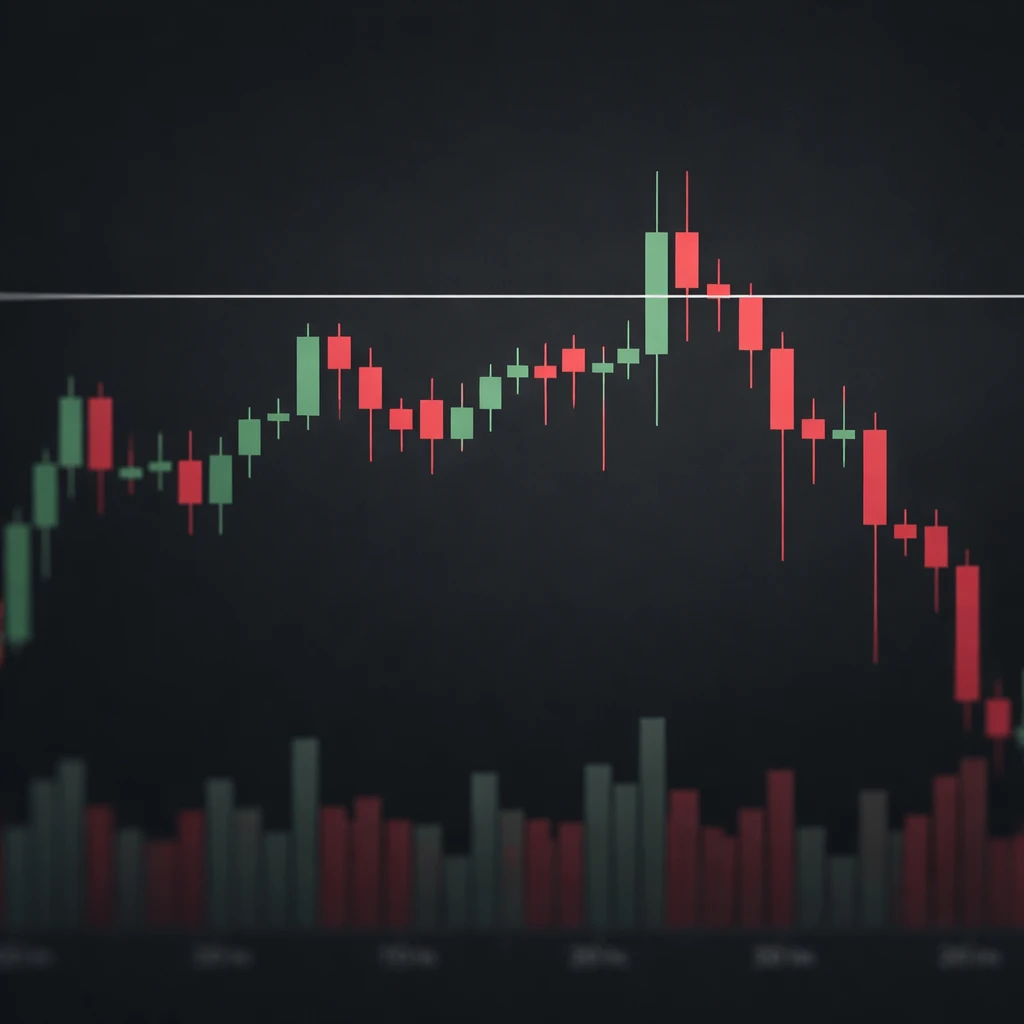
Price action analysis often centers on how markets interact with obvious reference points such as prior highs and lows, trendlines, and horizontal support or resistance. Among the more informative behaviors around these areas are false breaks and traps. These are moments when price moves beyond a widely watched level, appears to confirm a directional move, and then reverses back within the prior range. The sequence is visually simple yet analytically rich because it reveals how liquidity, positioning, and expectations interact.
Definition and Terminology
False break refers to a temporary breach of a technical level that fails to hold. Price moves through a boundary such as a range high, a prior swing low, or a trendline, but the market does not accept value beyond that level. The close, the time spent beyond the level, or the follow-on activity signals rejection rather than continuation.
Trap describes the behavioral side of the same event. The move past a level invites participation from traders who infer a breakout or breakdown. When price quickly returns through the level, those late entrants face adverse movement and are effectively trapped. Their subsequent exits and adjustments can add fuel to the reversal that follows the false break.
In practice, the two terms often overlap. A false break is a price pattern. A trap is the positioning consequence of that pattern. Analysts examine both, since the price failure and the participant response together shape the next phase of trading.
How False Breaks and Traps Appear on Charts
Price charts display this behavior in several recurring forms. The outward signs are straightforward. The interpretation depends on time, context, and the relative importance of the level that failed.
- Intraday spikes through a level: On short timeframes, a rapid move ticks above a prior session high or below a prior session low, only to retreat within minutes. Candles show long wicks beyond the level and bodies closing back inside the range.
- Daily or weekly failed breakouts: On higher timeframes, a session may push beyond a multi-week resistance, but the close settles back under the breakout line. The candle often has a long wick and a body that closes near the opposite end of its range.
- Outside reversal days: A market makes a marginal new high relative to the previous day, fails to hold, and closes below the prior close. The reverse sequence occurs on failed breakdowns.
- Gap tests that fill and reject: An open above resistance appears to confirm strength, but price quickly fills the gap and trades back into the prior range, leaving the gap as a one-session event.
Two chart features get particular attention. First, the close location relative to the breached level. Closing back inside the prior range signals rejection more than a mid-bar excursion would. Second, the time spent beyond the level. Prolonged acceptance suggests a valid break, while a quick poke and retreat suggests rejection.
Why Analysts Pay Attention
False breaks and traps provide information about market structure and positioning that is difficult to glean from trend lines alone. Several reasons stand out:
- Liquidity discovery: Many stop orders cluster just beyond obvious highs and lows. When price runs those stops, it reveals where liquidity resides and whether that liquidity absorbs or reverses flow.
- Positioning pressure: Traps create forced behavior. Participants who entered on the break may exit to limit losses, and those who were stopped may re-enter later, adding to short-term directional swings.
- Acceptance versus rejection: Auction theory frames each break as a test. If value is not accepted beyond the level, the market rejects the new territory and returns to previously accepted prices.
- Information assimilation: False breaks around news releases highlight how quickly new information is incorporated. An initial reaction can overshoot, then reverse as liquidity returns and order books refill.
These observations do not prescribe action. They inform how one might interpret the strength of a move and the balance of conviction among different participants.
Microstructure and Order Flow Drivers
At the microstructure level, a false break often coincides with the search for liquidity. Orders to buy above resistance and to sell below support are common because participants place stops and breakout orders at visible thresholds. When price probes a level, it triggers these resting orders. If a larger counterparty uses those orders as liquidity to enter in the opposite direction, the market can reverse abruptly. The reversal looks like rejection, but it is also a function of order matching.
This dynamic is especially pronounced in thin or fragmented markets. Around the open, during lunch hours, or in holiday sessions, order books may be less deep. A relatively small imbalance can push price through a level, vacuum up stops, and then snap back once the temporary pressure exhausts. In contrast, during active periods with broad participation, a break has more potential to find acceptance because additional orders support the move.
From an auction perspective, think of the break as a test of value. If the test discovers willing transactors beyond the level and time accumulates there, the market signals acceptance. If the test quickly runs out of counterparties and price returns to the prior balance area, the market signals rejection. False breaks are simply failed tests.
Distinguishing False Breaks from Valid Breakouts
No single feature conclusively separates a false break from a valid breakout at the moment it occurs. Analysts therefore consider multiple dimensions of evidence, always with an eye to the possibility of error.
- Closes relative to the level: Multiple closes beyond a level show acceptance more credibly than a single intra-bar probe. A false break often closes back within the prior range.
- Time and rotation: The longer price trades beyond a level with two-way rotation, the greater the indication of acceptance. A brief excursion that quickly reverses suggests rejection.
- Range expansion: A healthy breakout often produces sequential range expansion and pullbacks that hold the new level as support or resistance. A failed break lacks follow-through and is followed by contraction or reversal back into the range.
- Participation: Increased activity in volume or breadth can support a breakout. A thin push through a level that occurs on light participation is more vulnerable to failure.
These elements are descriptive tools. They help frame what the market has shown rather than predict what it must do next.
Timeframe and Context
False breaks are highly sensitive to timeframe. A five-minute false break may be insignificant on a daily chart. Conversely, a weekly false breakout can dominate the narrative for weeks.
- Lower timeframes: Intra-session noise and order book dynamics create frequent minor false breaks around short-term reference points such as opening ranges, prior session highs and lows, and intraday moving averages.
- Higher timeframes: Weekly or monthly failed breaks usually occur at well-established structures like multi-month ranges or long-term trendlines. The informational content is larger because many participants monitor the same levels.
- Cross-timeframe interactions: A daily candle that closes back below a weekly resistance after probing above it can register as a false break on both timeframes. Alternatively, a lower-timeframe failure can simply be a pullback within a higher-timeframe trend.
Context also includes the catalyst. Announcements such as economic reports or earnings can trigger swift moves that either confirm acceptance or create traps. The same price pattern means different things at 2 minutes after a major release compared to 2 hours into a quiet session.
Role of Volatility and Liquidity
Volatility conditions influence how often false breaks occur and how far they travel. During high volatility regimes, price ranges expand and thresholds are crossed more easily. Breaks through levels are more common, but so are reversals. In low volatility regimes, breaks tend to be rarer and may carry more information when they occur.
Liquidity matters as well. In less liquid instruments or during off-hours, small orders can have disproportionate effects, producing wicks that look like traps but reflect thin trading. Instruments with deep liquidity may show cleaner breaks, yet they can still produce false moves when stop runs concentrate on widely watched levels.
Volume, Breadth, and Other Confirming Evidence
Participation measures can provide additional context without guaranteeing outcomes.
- Volume: A false break sometimes arrives with a volume spike that represents capitulation at the extremes, followed by reduced volume as price returns to the prior balance area. Other times, the probe occurs on low volume and fails because interest is insufficient to sustain trade beyond the level. The relevance depends on what is typical for the instrument and timeframe.
- Breadth: In indices, breadth indicators such as the number of advancing issues relative to declining issues add color. A breakout in the index with weak breadth is more vulnerable to failure than one accompanied by broad participation.
- Volatility measures: Tools such as average true range help gauge whether the excursion beyond a level represents a statistically meaningful move or a routine fluctuation within the current regime.
Common Chart Scenarios That Feature False Breaks
Many structures frequently exhibit false breaks and traps. The following are descriptive examples of where this behavior is often observed on charts.
- Range boundaries: The classic case is a well-defined horizontal range. Price tags the top or bottom, pokes beyond by a small margin, then slides back inside. The visual often includes a long wick with the close retracing much of the move.
- Prior swing highs and lows: Markets frequently test the level of a prior swing extreme because stops and orders accumulate there. A marginal new high that quickly fails is the textbook bull trap, while a marginal new low that quickly reclaims the level suggests a bear trap.
- Trendline tests: A breach of a trendline can draw attention, but if price fails to hold on retest and rotates back within the prior channel, it reads as a false break of the line rather than a structural shift.
- Gaps and opening drives: An early-session push that leaps beyond a reference level, then fills the gap and returns to the pre-open range, often marks a failure to find acceptance at the higher or lower open.
- Round numbers: Instruments often react around large round numbers because many orders congregate there. Quick moves through the figure that are followed by immediate reversion indicate rejection of prices beyond the figure.
Practical, Chart-Based Examples
Example 1: Range High Breach on a Daily Chart
Assume a stock trades between 95 and 100 for three weeks. One session opens at 99.80, surges to 101.20 by mid-day, then fades steadily. The candle closes at 99.10 with a long upper wick. The break above 100 did not draw acceptance. The close location back within the range indicates rejection of higher prices for that session. Observers would note the time above 100 was brief and that momentum stalled once early demand was filled.
Example 2: Weekly Probe Beyond Resistance
Consider an index that capped at 4,500 for several months. During a strong week, price trades up to 4,535 on Thursday but finishes the week at 4,492. The weekly candle prints a wick beyond resistance and a body back below it. That pattern communicates that the market tested for supply above 4,500 and found it. The failure does not predetermine the next week, but it records a rejection event on a timeframe that many participants monitor.
Example 3: Intraday Sweep Around a News Release
A currency pair trades near 1.2000 ahead of an economic report. On the release, price spikes to 1.2022, quickly reverses to 1.1985, then stabilizes near 1.1995. The spike likely triggered stops above the round number and invited momentum entries that were immediately challenged. The quick return through 1.2000 suggests the market did not accept value above the figure once the initial imbalance cleared.
Example 4: Gap Open That Fails
A futures contract opens 0.6 percent above the prior close, above a well-watched resistance. Early buyers push slightly higher, but within the first hour the gap is filled and price trades back within the prior day’s range. The gap did not attract sufficient new demand. The failed hold above the level reads as a false break produced by the overnight imbalance rather than a confirmed shift in value.
Example 5: Trendline Breach With No Acceptance
Suppose a downtrend line has connected lower highs for months. A daily candle closes marginally above the line, but two subsequent sessions return below it and trade in the prior channel. The visual breach without follow-on acceptance functions as a false break of the trendline rather than a durable reversal of the trend structure.
Behavioral and Psychological Considerations
False breaks and traps are closely tied to decision-making under uncertainty. Several biases contribute to their formation and persistence.
- Anchoring and salience: Visible levels attract attention. When price reaches them, expectations skew toward breakout confirmation, which increases order flow at the worst possible location for late entrants.
- Fear of missing out: Breaks are often chased because immediate confirmation is emotionally compelling. This pressure can result in entries far from favorable prices, making a reversal more painful and more likely to spark forced exits.
- Loss aversion: Stops sit near obvious levels because participants prefer small, defined losses. Once clustered stops are triggered, that flow can power a marginal break that lacks genuine conviction.
- Herding: When a level is widely discussed, participation concentrates. The initial move may be strong, but if it fails, the same concentration of positioning amplifies the reversal.
Analytical Tools and Diagnostics
Several descriptive tools help analysts assess whether a break is being accepted or rejected, always recognizing that no tool is definitive.
- Close Location Value: The close location within the session range provides a compact summary of rejection or acceptance. Closes near the opposite extreme from the breach often accompany failed breaks.
- Wick-to-body ratios: Long wicks beyond levels with relatively small bodies suggest probing and rejection. In contrast, full-bodied candles that close beyond the level communicate stronger acceptance.
- Time-above-level metrics: Annotating the number of minutes or bars spent beyond a level helps quantify acceptance. Quick excursions score as rejections.
- ATR framing: Expressing excursions as multiples of average true range allows comparison across regimes. A move of 0.2 ATR beyond a level may be routine noise, whereas 1.0 ATR may carry more informational weight.
- Session structure: Intraday, analysts compare behavior around the open, midday, and close. A break that fails early but is reattempted and accepted later suggests changing participation through the day.
Cross-Asset and Instrument Considerations
False breaks are not limited to a single asset class. Still, instrument characteristics affect how they appear.
- Equities: Earnings gaps frequently test and sometimes reject new price areas. Index components may display idiosyncratic reactions that differ from the index level.
- Futures: Nearly continuous trading produces probes around session changes and roll periods. Volume clusters near settlement and roll dates can distort apparent acceptance.
- Currencies: Liquidity differs across sessions. Asian hours often show tighter ranges, while London and New York overlap tends to generate tests and clearer acceptance or rejection.
- Fixed income: Economic data releases create notable spikes and immediate reversals. False breaks around those events are common and often reflect the recalibration of rate expectations.
Interpreting Aftermath and Subsequent Behavior
The aftermath of a false break often features volatility as trapped positions adjust. Analysts watch for the following without assuming a deterministic path:
- Back-and-fill: After the reversal, price may consolidate near the reclaimed level. This action can absorb residual order flow from trapped positions.
- Mean reversion toward prior balance: If the break failed decisively, price often returns to the center of the prior range where value was previously accepted.
- Retests: Levels that failed on the first push are frequently retested. Acceptance or rejection on retest can clarify whether the initial failure was an anomaly or a durable statement.
These observations are descriptive, not prescriptive. They help frame expectations around volatility and structure following an evident failure.
Limitations and Common Pitfalls
Relying on false breaks as a singular interpretive lens introduces risks that deserve explicit acknowledgement.
- Hindsight bias: It is easy to mark a trap after the reversal is clear. Real-time identification is uncertain because the same initial movement could have developed into a valid breakout.
- Overfitting to levels: Markets sometimes grind through levels without a dramatic failure or success. Overemphasis on a single line can ignore the broader context of trend strength, participation, and macro drivers.
- Ignoring regime shifts: A technique that describes failures well in quiet markets may underperform in highly volatile climates. Regime adaptation is necessary when evaluating any price action pattern.
- Data quality and charting differences: Adjusted versus unadjusted prices, different session definitions, and tick size variations can alter whether a level appears breached. Consistency in data handling matters for interpretation.
Data and Charting Considerations
Several practical details improve the reliability of chart-based interpretation.
- Session boundaries: Define what constitutes a session for the instrument. Intraday charts that splice overnight activity with regular hours can display different highs and lows than charts that exclude overnight data.
- Adjusted price series: For equities, dividend and split adjustments change historical levels. A break may be present or absent depending on the adjustment method.
- Logarithmic versus linear scale: On longer horizons, logarithmic scaling better reflects proportional moves. A small percentage poke may look larger on a linear axis.
- Time aggregation: Changing from 5-minute to 15-minute bars can turn a quick wick into a full-body candle. Analysts often cross-check multiple aggregations to avoid misclassification.
Integrating False Breaks into a Broader Analytical Framework
False breaks and traps form one component of a coherent price action framework. Their value arises when combined with an understanding of trend context, volatility regime, liquidity conditions, and the presence of catalysts. They also benefit from a consistent approach to level selection. Levels derived from multiple independent methods such as prior swing points, volume nodes, and round numbers are more likely to attract attention and produce meaningful tests.
In practice, charts are annotated with a small set of key reference points and updated as the market reveals whether it accepts or rejects prices beyond them. The narrative evolves as tests occur. When a test fails, a record of the failure helps interpret subsequent behavior, including whether future attempts show stronger or weaker acceptance.
Summary Perspective
False breaks and traps are not mere chart quirks. They encapsulate how markets discover price, locate liquidity, and adjust to new information. The pattern highlights the difference between a market moving to a level to trigger orders and a market moving through a level because the crowd is genuinely willing to transact there. Reading that difference requires attention to closes relative to levels, time spent beyond them, participation quality, and the surrounding volatility and liquidity regime. Used in this manner, the concept supports disciplined interpretation without implying certainty or prescribing specific actions.
Key Takeaways
- A false break is a breach of a key level that lacks acceptance and quickly reverses back into the prior range, while a trap describes the positioning consequences for participants caught by the move.
- Closes back inside the range, minimal time beyond the level, and long wicks are common visual markers of false breaks on charts.
- Liquidity concentration around obvious highs and lows, along with behavioral biases, helps explain why probes beyond levels often fail.
- Context matters: timeframe, volatility regime, liquidity conditions, and participation quality all influence whether a break is accepted or rejected.
- False breaks are descriptive signals of order flow and acceptance, best used to inform interpretation rather than to prescribe trades or recommendations.